What constitutes good TV is a highly subjective opinion. Last night, I observed just such an opinion from Charlie.
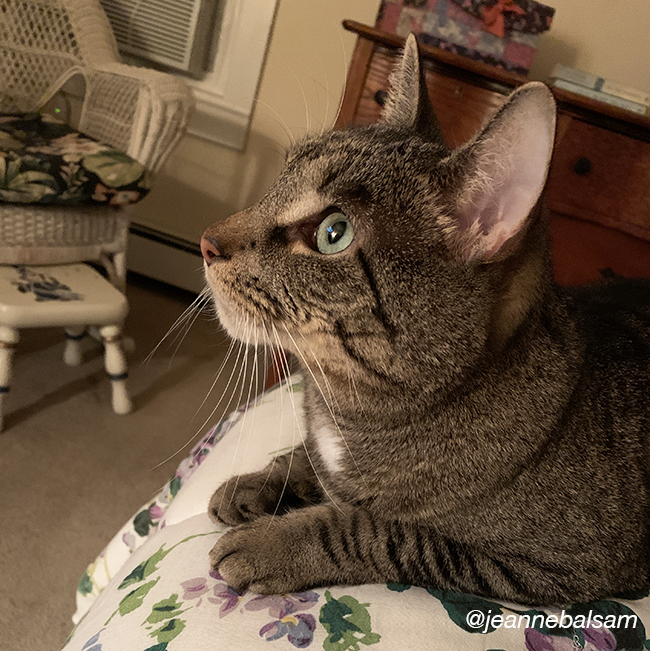
Charlie is my companion in the evening when I watch TV. He is generally curled up next to me, sometimes napping on the rocker in the corner.
Last night, flipping channels during endless commercials on another show, I stopped to watch a PBS nature documentary on Willow, a mountain lion and the six kittens she raised. It spanned ten years in Montana’s wilderness with amazing footage of every aspect of their lives and the animals who shared her environment.
It was when Willow approached a den of fox cubs, and the mother fox nearby began barking a warning to them that Charlie jumped up on high alert to the sounds.
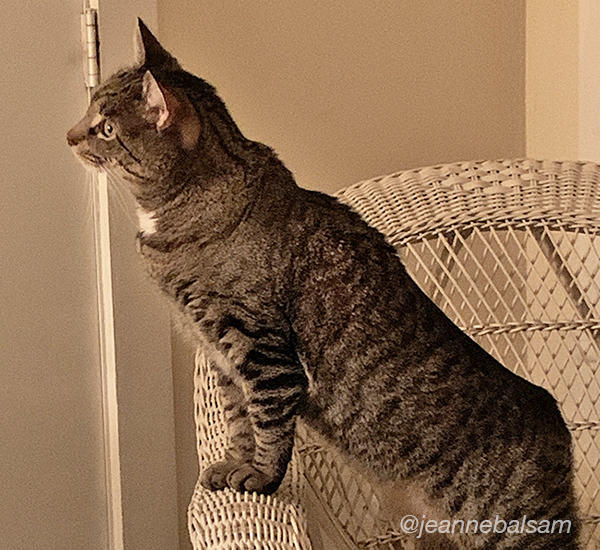
I brought him next to me for a better angle, and he remained fascinated for the rest of the show. With sharp interest, he watched Willow raising her young, feeding them smaller prey, bringing down elk, sharing the kill with other non-familial cougars, and negotiating the changing seasons. He listened intently to all the growls and hisses and other utterances that big cats make. I shared his fascination.
But this wasn’t the first time he has watched animals on television.
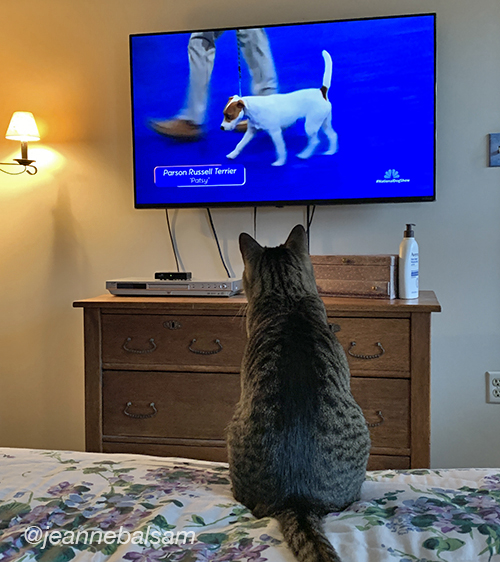
Oddly, the Parsons Jack Russell was the one dog in the show that really kept Charlie’s interest. He only occasionally glanced up at the other dogs in the ring.
I guess he has now positively confirmed his idea of good TV, and it does not include my much-loved K-drama.