Seeing Art – Princeton University Art Museum

What kind of museum do you want to go to? What do you want to see?

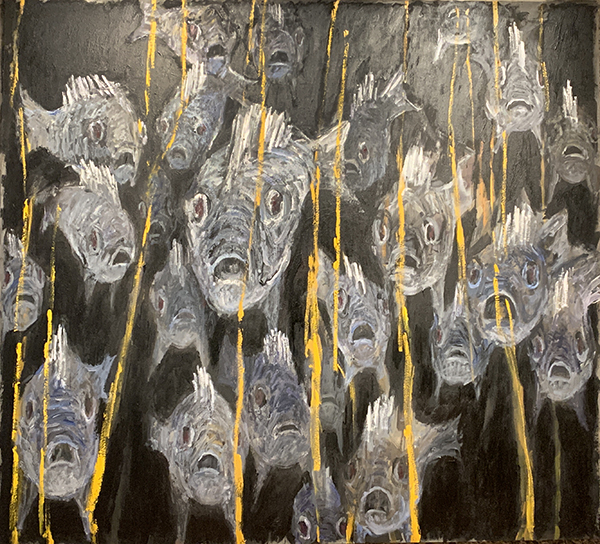
Fish” – Zhang Hongtu, 1985, Acrylic on Canvas

For me, as an artist, photographer, writer, I want to see art. I want to see what will make my eyes open wider.

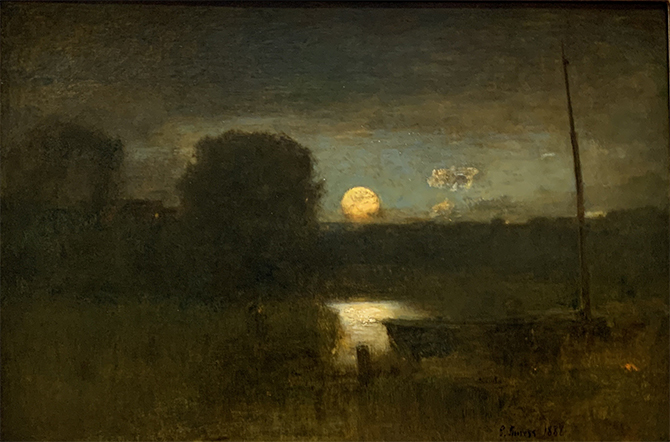
“Moonrise” – George Inness, 1888, Oil on canvas

I want to see what will touch my very being and remind me of who I am. Because in today’s intense, fast-moving world, it can be easy to sometimes forget.

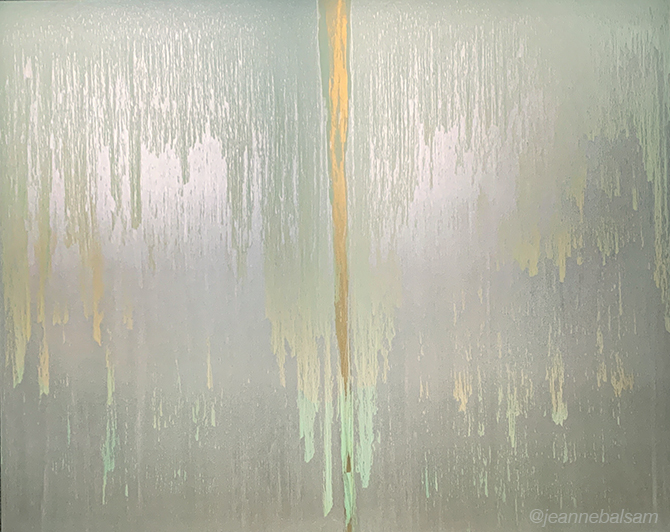
“Moon Beam” – Pat Steir, 2005, Oil on canvas

I want to try and understand another human being who looks at the same thing as me, but sees it in such a vastly different way.

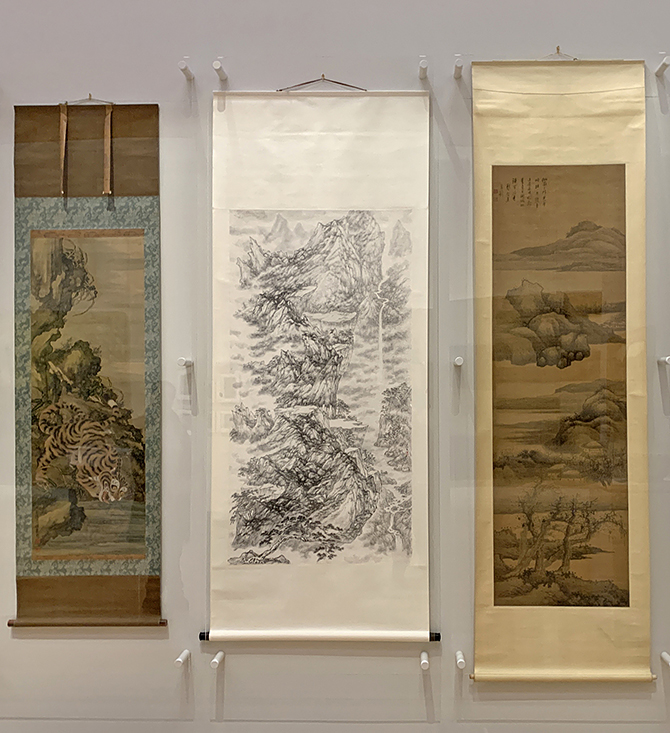
L to R – “Tiger Drinking from A Stream” – Yumashiro Yuhi, October 1761, Ink, color, gold pigment on silk; “Bridge to Heaven 2006.2” – Arnold Chang, 2006, Ink on paper; “An Immortal’s Abode Above the Clouds” – Gong Xian, mid 1680s, ink on silk.

I want to see what someone creates who has a totally different life and totally different experiences than me.

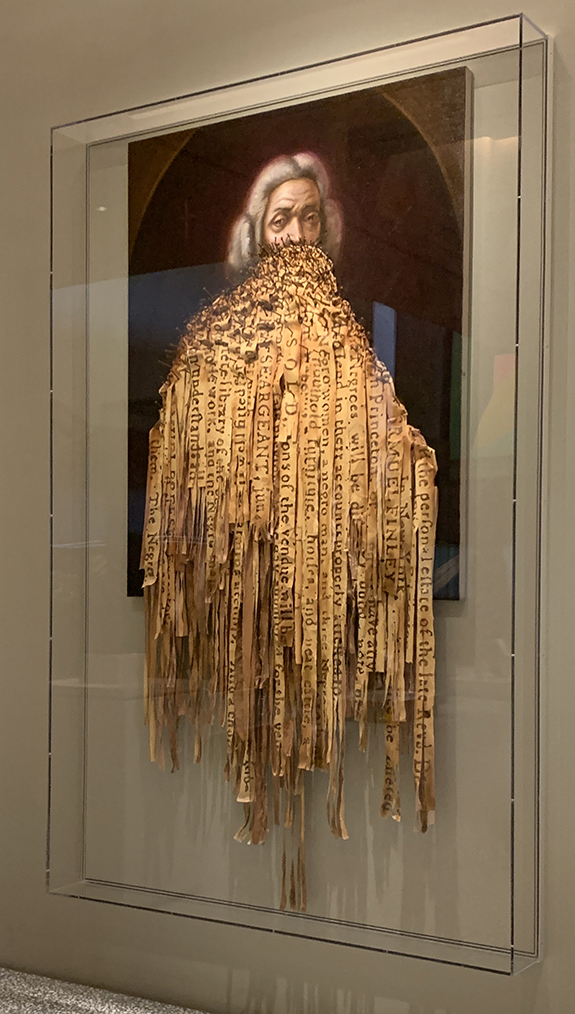
“To Be Sold” – Titus Kaphar, 2018, Oil on canvas with rusted nails. References the sale of 6 enslaved persons belonging to a former president of the university on this site, 1761-1766.

I want to get my heart cracked open a little.

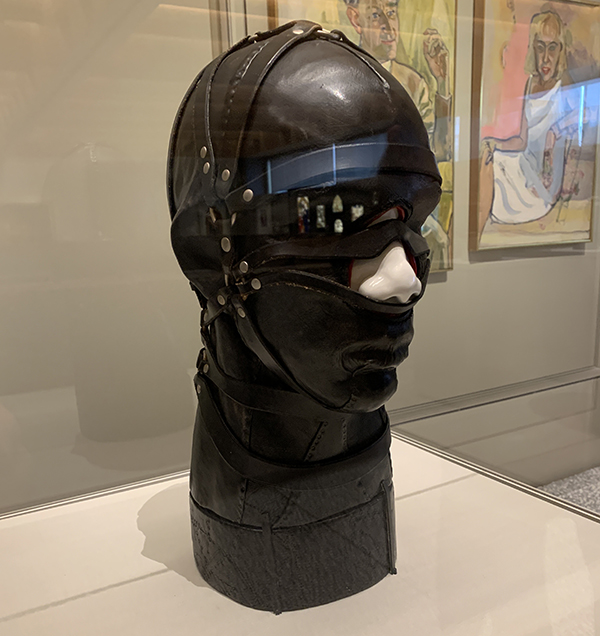
“A.M.X.” – Nancy Grossman, 1969-1970, Wood with nailed and stitched leather.

I want to go home and keep thinking for a while, not just of what I saw, but of what the artist stated their intentions were.

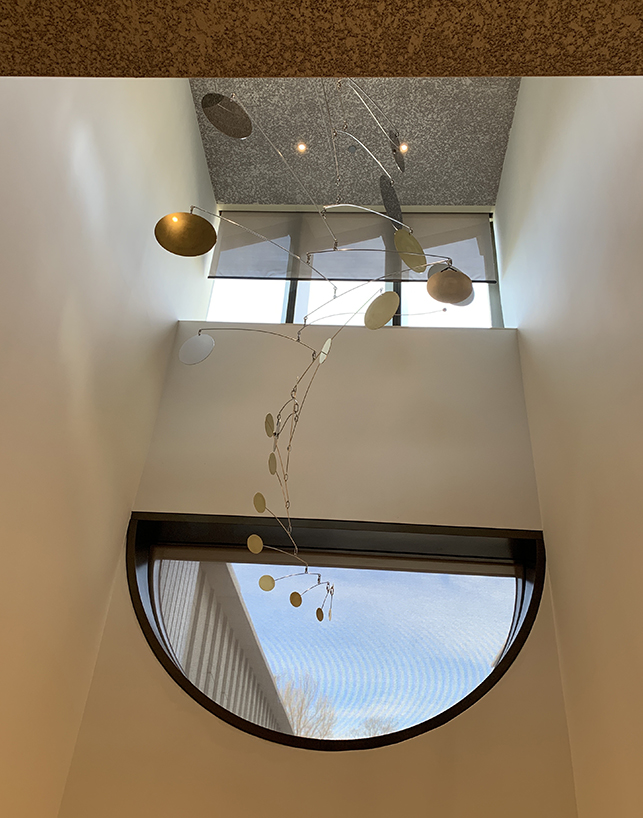
“Naga” – Tuan Andrew Nguyen, 2024, Primarily pounded and polished brass plates made from unexploded bomb metal and artillery shells.

I want to take in these feelings from another’s visions, and I want them to call to me, wash over me, not to drown me, but to pull me … me … to the surface.

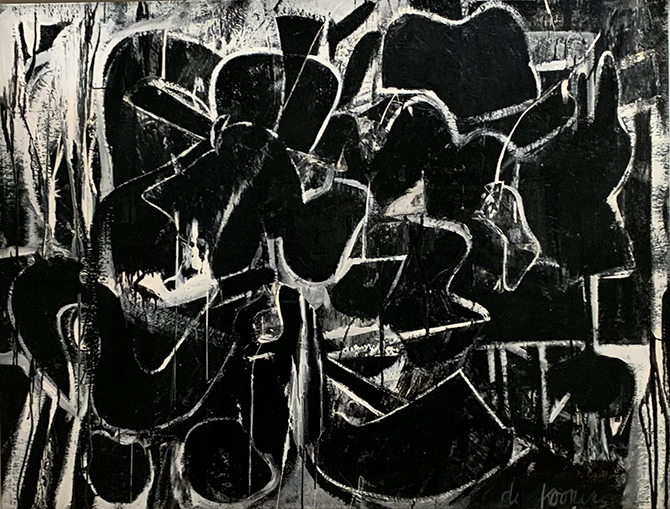
“Painting” – Willem De Kooning, 1948, Enamel and oil on canvas.

This museum visit is the first chance I’ve had to get out and see art in a while. I’d forgotten how intense an experience it can be. How wonderful.

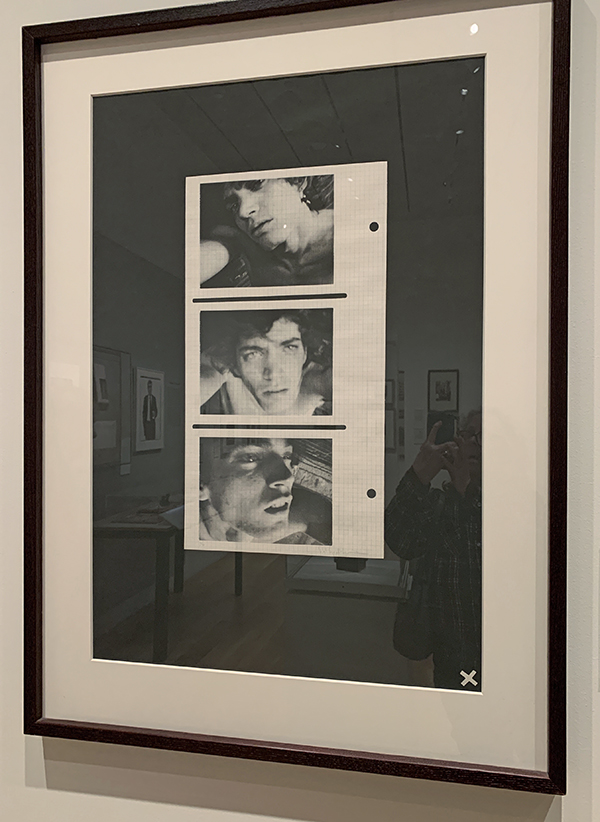
“Self-Portrait” – Robert Mapplethorpe, 1972, Photo silkscreen

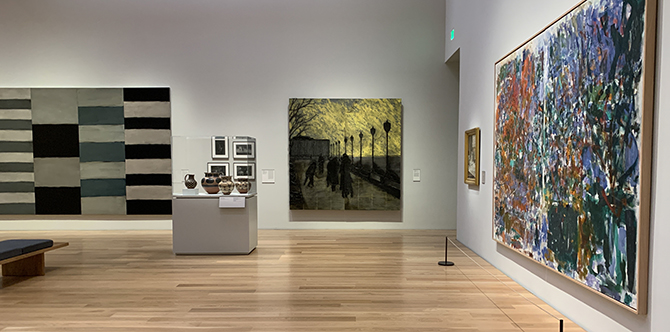
The art pictured here is all from the recently reopened (10/31/2025) Princeton University Art Museum, located on the Princeton, NJ campus. The construction took three years, and was built on the same site where the previous museum had existed and was then razed.

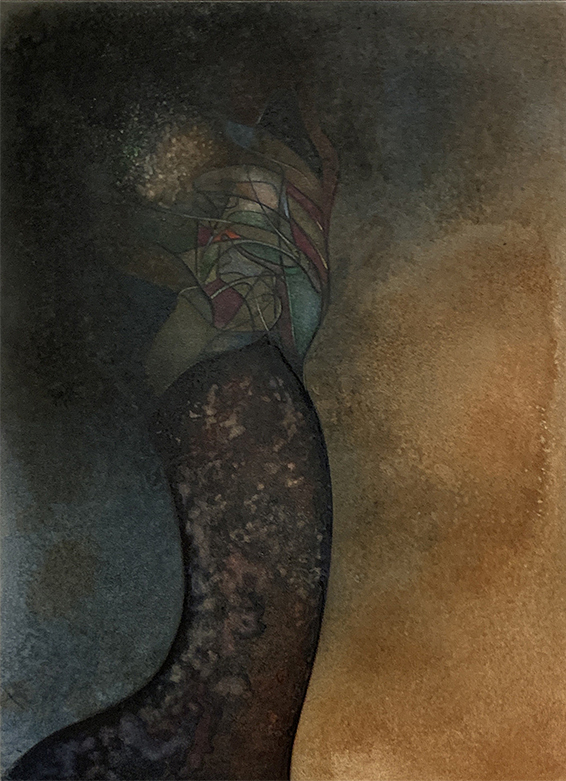
“Dogariya – The Queen’s Guard, from the series Anima Project” – Marcia Kure, 2022, Kola nut, indigo, and watercolor on board.

The PUAM houses both classical and contemporary art from around the world. Art pictured here is only from two small special exhibits, one on photography and another on Willem de Kooning, and a larger exhibit of pieces recently donated or promised upon the reopening. Some of what I photographed was in the hallways connecting exhibits. One could spend days there. I’ll be going back.

Go find some inspiration. See new stuff. Be happy

Find more at the Princeton University Art Museum.

Do What Makes You Happy

Reminder to self: Draw more. It makes you happy.

Reminder to you: Do what makes you happy.

When so many things in the world feel like they’re falling apart at the seams, do what you love, whatever it is.  Every moment of love sent out into the world is a stitch in repairing the fabric so carelessly rent by those whose souls have long ago ceased to care.

The Symbol of the Butterfly

What is the meaning of a butterfly? Often, the butterfly symbolizes change, due to its dramatic transformation from a caterpillar to a magnificent winged creature. In Japanese, Burmese, and many other cultures the butterfly is seen as a symbol for the soul.

Was symbolism intended when I wrote my picture book, Where Do Butterflies Go at Night?

If you had asked me when I first wrote it in 2009, I would have said `no’, but I now question if I didn’t have more in mind than even I knew. I submitted “Butterflies” to agents and traditional publishers for many years. Although I often got positive feedback, it was ultimate;y rejected because it was in rhyme, and rhyme is hard to sell.

A small, independent publisher saw the beauty in my story of the magical imaginings of a child who wondered where the butterflies went at night. It was published with the lovely art of Stella Maris Mongodi, who brought the sweet simplicity of the cabbage white butterfly to life in a whole new and charming way.

When the original publisher closed its doors, I self-published this, my debut picture book, now identifying it as “2nd Edition.” In 2025, it won a first place award in the poetry category from a prestigious reviewer of children’s books. And in my most recent picture book school presentation, I decided to do something a little differently.

In emphasizing the concept of change from caterpillar to butterfly, I talked with 1st and 2nd graders about the importance of embracing change; being brave in the face of change; and understanding that all change is ultimately working in our favor. One might think little ones wouldn’t get that, but they did. Sometimes wiser than we adults, they did.

And so, the butterfly has become a symbol of transformation for me, as well. I’ve gone through many changes with these butterflies and their story. They continue to light my path, and I am still unfolding.

~~~~~~~~~~~~

Where Do Butterflies Go at Night, 2nd Edition is available on Amazon and in also my Etsy shop, if you would like your copy signed.

Photo credits:
BW butterfly: pexels/6th Era Photography; @stories_by_sixthera
Blue butterfly: pexels/aarngiri; @aarn_giri
Cabbage white butterfly: pexels/mali maeder
Butterfly illustration: Stella Maris Mongodi

Nineteen Minutes

Nineteen minutes is how long it took for high school junior Peter Houghton to enter Sterling High and kill ten people and wound another nineteen. However, it took his whole life from when he was first bullied at five years old to that point, having endured years of emotional and physical abuse from his classmates, to now, when he’d finally had enough.

Nineteen Minutes by Jodi Picoult is a complex, challenging, and astonishing read which covers many issues beyond the central focus of the school shooting. Bullying is the thread weaving the entire story together. The novel focuses primarily on one character, Peter, who could never seem to fit in. His non-stop torment began his first day on the bus to kindergarten when bigger kids threw his cherished Superman lunchbox out the window. Peter was five, and had dreamed of his first day of school. Josie, like Peter, and a good friend when they were young, had also always felt out of place until high school, when she became the girlfriend of a popular boy. Being bullied and treated abusively by him was the price Josie paid for her popularity.

Nineteen Minutes is about the many ways a child can be failed, even if unintentionally, by family, friends, and school. It asks what it means to be different in today’s society, and who has the right to judge another. It talks about how easily entire lives can be destroyed; how the truth comes out in the end; and how justice may be served.

Nineteen Minutes is also about individuals and families who are truly doing the best they can in trying to understand the young people in their lives. Ultimately, the book is about love, friendship, judgment, pain, redemption, and death, played out in the lead-up and aftermath of just nineteen minutes of violence.

Ms. Picoult has scrupulously researched every detail and aspect of school shootings and the myriad fields related to them, including forensics, court proceedings, the psychology of school shooters, and more. Her novel is also a consistently banned book, but it might also be the book that teens, their parents, and teachers most need to read.

Nineteen Minutes, published in 2007, is totally relevant today. It is incredibly impressive throughout, and packs an unexpected double punch at the end. It has left me thinking for days, wondering how, as such a supposedly advanced society, we are not doing better. Highly recommended.

This was a long post. If you’re still here, thanks for reading through to the end.

p.s. Last night, I continued to edit this piece, planning to post it today. When I opened my online news this morning, I found that there had been a school shooting in Tumbler Ridge, B.C., Canada. Nine total were killed, including the shooter who took their own life, and twenty-seven wounded. That this was transpiring while I wrote about school shootings confirmed that I needed to post this.

Photo credits: Hallway by Yash Patel/Unsplash; Bullying from WeStockProductions/Shutterstock  

World Read Aloud Day

It’s coming up fast!

I hadn’t been aware until fairly recently that I could participate in this wonderful opportunity to read my picture book to children anywhere in the world via Zoom on World Read Aloud Day!

There is an endless amount of information on the benefits of reading aloud to children. It literally builds neural pathways that contribute to emotional well-being and academic success. Reading celebrates our deep connections to one another and the world. It is never too early to read aloud to a child!

If you would like me to read my book, Where Do Butterflies Go at Night? 2nd Edition, to your class or library group, we can arrange a time. Sessions are 20 minutes long, from 10 am to 2 pm, EST. I will read my book, and have a short Q and A at the end.

Please contact me if interested. I would love to read to your class.