Writing What We Know

This started out to be about three aspects of writing what we know, but I see that it would be a ridiculously long post. So I’ll divvy it up and start with a fairly recent example. I received a lovely personal response from an editor at one of the publishing houses represented at an NJ SCBWI event. I am very appreciative to receive such a thoughtful and detailed reply, although, of course, I wish it were better news. She complimented me on tackling a difficult subject, but found it a bit melancholy and added that quiet stories were not selling much in the picture book market these days. Happily, she was also very encouraging about my writing and my pursuing it.

Simon's Secret Illustration by JeanneBalsamThis is where writing what we know comes in. What I know – one of the things, anyway – is about animals and their ability to affect us profoundly, both personally and through literature and imagery. This particular picture book story has a wonderful magical element to it and healing on several levels. While I don’t see it as melancholy, it still behooves me to pay attention to the perception and opinion of one who lives and breathes children’s books. But what stops me is the “quiet story” part.

I like quiet stories. I like funny stories, too, but I also like something that touches the heart and soul in some way, something that’s real, that’s a reflection of what children go through in their young lives. I get that kids like funny and action-filled, but what about the other aspects of a child? Are we no longer looking to feed that as well? Are our increasingly fast-paced and digital lives crushing the inner lives of picture-book age kids? (OK, maybe that’s extreme, but then again …)

As writers, we certainly need to be aware of the trends in the industry and what the market is looking for, otherwise we can be twirling about in our own stew of ideas that will never get published. At the same time, we need to consider what “writing what we know,” (the advice we are always given by editors and agents), actually means and where it fits in what’s being published.  It’s a challenge to all of us. So I look at the body of work I have to date. Maybe it’s time to let some of my stories go; maybe I haven’t sent them out often enough and/or to the right publisher/agent who will appreciate a particular “quiet story.”

So where does the rubber hit the road? Where do writing what we know and what’s being published intersect?
 

Finding Strength, Holding on to Hope

We can easily be unaware or forget how strong kids have to be sometimes, or to remember how strong even we needed to be at certain points growing up. I don’t know anyone who had a totally blissful childhood, and even those who claim to have had one? It becomes apparent in further conversations or getting to know someone better that that’s the way they prefer to see it or maybe need to see it. We all have had our share of problems and pain growing up – some more, some less.

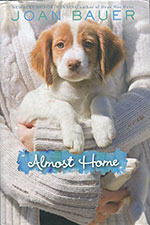
AlmostHome-JBauer2But if we were lucky, we had something or someone to hold onto – a best friend, a pet, a trusted teacher or adult, or a passion that saved us. And that was the saving grace of Sugar Mae Cole.

Reading Almost Home by Joan Bauer, reminded me of how some kids need to be the strong ones, maybe even the parents, when really all they want and need is their parents to take care of them. In this middle grade novel, Sugar and her mother Reba found themselves evicted and homeless. Sugar’s father, who she refers to as Mr. Leeland, failed repeatedly to be responsible to his family, gambling all their money away instead. Sugar, 12 years old, got it. Her mother, in her delusion, still believed he was their knight in shining armor who was always going to come through, but never did.

The story at first reminded me of Jeannette Wall’s The Glass Castle, her autobiography, in which her mother always believed that everything was going to turn out just fine.  She chose to see and never failed to point out the bright side in everything to her children even though they were suffering horribly. In either case, being the adult is a lot to ask of a kid when one or both parents aren’t grounded in reality.

Almost Home was a great story that drew me in the more I read. Sugar accepted a puppy name Shush from another little girl who foisted him upon her because her father was abusing him. Shush became an important constant in Sugar’s life, as pets often do for a child. The unconditional love offered by an animal is a phenomenally powerful form of healing. Sugar had something else – she wrote. She wrote poetry about what was happening in her life, and she wrote thank you letters to people frequently. She believed in the sweetness in life, though she found herself often struggling to find it during this time. She also had a teacher who believed in her and kept in touch even though Sugar and Reba had moved away.

What made this story such a winner is that I could easily relate to Sugar. I’m sure her reading audience does as well. One doesn’t have to be homeless to understand conflict and loss. Holding on to your dreams and hope in the midst of it all is the challenge, and getting to know this young heroine who wasn’t about to give up is what made this read so worthwhile.


Live Eagle Cam

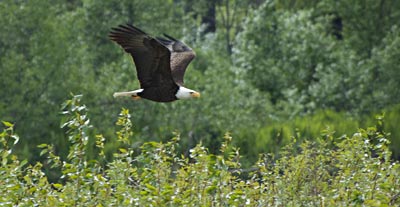
BaldEagle2


My apologies – I have been remiss! As in years previous, there has been a live eagle cam at the Duke Farms in Hillsborough, New Jersey, and I have lost track and not gotten it up in a blog post til now!

This year, the bonded pair hatched 3 eggs and have 3 growing chicks. Please check them out here! The first egg was laid on February 17, and the third egg hatched on April 1 – so they are growing!

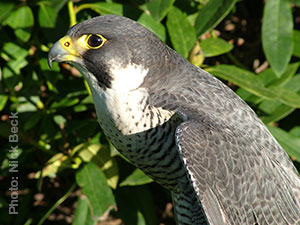
PeregrineFalcon2And to apologize for my negligence, nature lovers, here is a second live stream cam – on the top of a skyscraper in Jersey City, NJ – a nesting box of the endangered species, the peregrine falcon.  The young falcon nestling is 23 days old today, June 3rd. Check out the baby on the Jersey City Falcon Cam.


Your Coffee Changing Your World

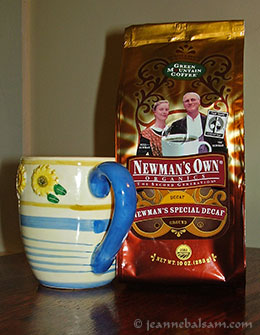
NewmansOwnCoffee2Once vilified as being a troublemaker to your health, coffee has been getting a whole new appraisal as of late. Its health benefits are now being recognized. An article in Prevention magazine wrote up how coffee can help lower your risk for Type-2 diabetes.

Researchers at Harvard University looked at 28 studies with more than a million combined participants and found that people who drank six 8-ounce cups of coffee daily had a 33% lower risk of diabetes. The good news is that each cup lowered your risk by 9%, so you don’t have to go crazy with coffee consumption, but just be aware of the possibilities.

What’s even more exciting is that it’s not the caffeine responsible for the effect, so if you drink decaf, this still applies to you. Researchers suspect that it’s a naturally occurring chemical in coffee called chlorogenic acid that reduces the rate at which the intestines absorb glucose.

So that’s how you can change your personal world, but how about expanding your vision and changing the world at large?

The coffee you drink can make an actual difference to the rainforest and to saving the lives of migratory and resident birds. With the advent of agri-technology, sun-grown coffee became the new big thing, but is not without a goodly number of drawbacks. Here are a few differences between your typical coffees and shade-grown coffees in their benefits to wildlife and the environment.

Poco-Coffee2* Migratory birds and many resident birds, (such as Poco, a rescued macaw, right), find sanctuary in the forest canopy of traditional coffee plantations, while in sun-grown coffee areas, there are 90% fewer bird species.

* Shade trees protect the coffee plants from rain and sun, help maintain soil quality, and aid in natural pest control, thanks to the birds. These traditional coffee plantations also help to conserve watersheds, leading to higher water quality and quantity for local populations. Sun grown coffee requires chemical fertilizers and pesticides and year-round labor, placing financial demands on the growers. It also leads to greater soil erosion and higher amounts of toxic runoff endangering both wildlife and people.

* Shade coffee plants can produce crops of beans for up to 50 years, while sun grown plants produce for only 10 – 15.

* The higher quality beans produced by shade grown methods produce a better tasting coffee!

FairTradeLogoWhere do you find shade-grown coffee? Most coffees marked “Organic Fair Trade” will also be shade-grown. Read the labels and check out the producers’ literature and/or web sites for details. Smaller merchants, health-oriented food stores, and, increasingly, your local supermarket now carry shade grown coffee. There is one more bonus – when you see the “Fair Trade” logo on your bag of coffee, or elsewhere, it assures you that the farmers and their families who grow the coffee are being paid a sustainable living wage for their work.

While it may be a bit more expensive than sun grown coffee, it preserves the biodiversity of our planet, the rainforest, and a multitude of bird species, plus it helps humanity. A pretty good deal all in one cup of coffee.

So you can change your personal world, and spread your wings and change a whole lot more of it.

Coming Home and (Re)Finding My Path

That may sound like a contradiction in terms, but actually, it’s two different subjects.

Coming home? That would be coming home to cooking and trying something new.

VeganPancakes2

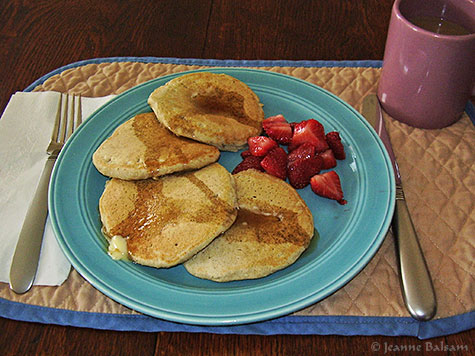
Here you find my first effort at scratch vegan pancakes. They look pretty yummy, but in fact, were only okay. Granted, that is because the ingredients are quite different than what I’m used to. There are no eggs, instead Ener-G Egg Replacer; almond milk instead of real milk, and the least problematic, Earth Balance instead of real butter. We are very used to our fats and dairy, and eggs and butter do make a difference in taste. For a first effort, I’m okay with them, because I know what I have to do is learn how to adjust the recipe, as I always have, to make something taste better. Maybe soy milk instead of almond, maybe a touch of vanilla. I’m not giving up yet. And the texture was perfect.

I only regret I don’t have more time to cook and noodle around with things, but sooner or later, I’ll find it.

(Re)finding my path? That would be getting back on track in children’s books – setting new goals and timelines for illustrating, dummying and re-working specific stories; finding publishing houses and agents who are a good match for my work. It’s a lot of work, but it’s good work. Being on our path is always a good thing.

Jazzy-WorkDesk2

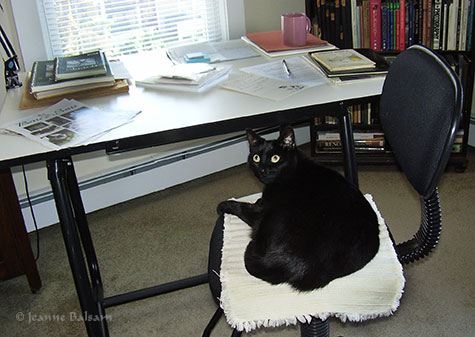
So after a stimulating breakfast with one of my children’s book buddies, I returned home and cleared off and cleaned both my work/art desks, sorted out where I’d left off on my projects, and yup, made a new plan, Stan! I wasn’t the only one who had plans for my studio chair … one kitty named Jazzy wanted in on the action. OK by me. Well, OK until Mama needs the chair and then there’s that lovely patch of sun by the window.