Inspiration

Where do we get our inspiration? How is it affected by our moods?  Though not the case today, once was a time when the sadder and more tragic my life was, the more I wrote. To this day, I’d say some of my best poetry came from a sad place.
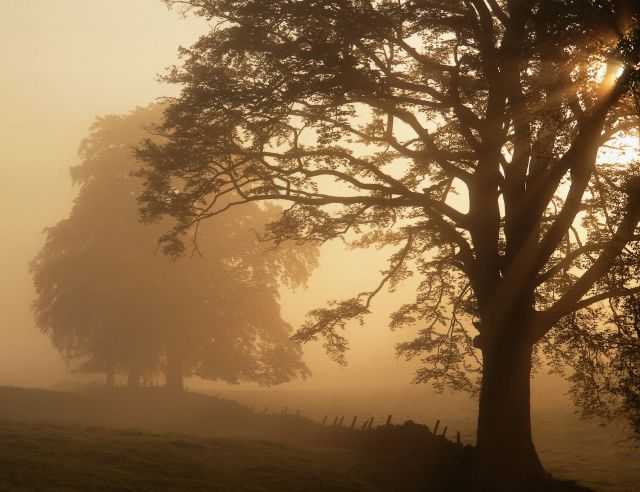
But why not joy? Why not both? Why not the endless mysteries of life? I find my inspiration to write and draw comes from such a myriad of places … searching for a fall image in my clip art or on iStock, I find myself momentarily lost in the soft, misty photos of autumn trees and roads, and I know down that road lies a story. And I can tell you it’s a wistful one.

Looking at a wmv file of dolphins creating their own rings underwater and then playing with and bursting them with their noses, I see a tale of wonder. I know there’s a story of swimming with them, to really be among them, and share moments of our intertwined lives and ancient histories. It might first be a tale of wonder, then of empathy and joy and lightness. In shimmering, watery blues.

While I work at the computer, I listen to the radio through iTunes. I’ve rediscovered one of my very favorite music genres on FolkAlley.com.  I’m once again entranced by the simplicity of folk music, and struck by the endless stories complemented by six and twelve string guitar. The music takes me back to another time when feelings were alternately bright and shiny, rich and deep, overwhelming and frightening – living away from home for the first time and in New York City. I’m at home with folk music. While connecting me to the past, it remains contemporary. The stories it tells bring me images for illustrations and I’m dreaming in rhythm.

Some days I feel myself a portal for infinite possibilities … inspiration everywhere. How about you?
Reading Feeds Writing- Joseph Pullman

As a constant reader, I am aware of how reading enriches me in so many ways. But by reading books in the field for which I’m writing, I am doubly enriched as the story, style, and imagery of another writer fuels my imagination and even helps in problem solving. This may sound like the obvious, but I’ll give a concrete example of how reading feeds writing.

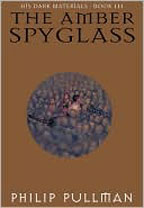
I just finished Joseph Pullman’s “His Dark Materials”. What a fabulous trilogy and a great read for anyone who has a bent for fantasy. Written for young adults, the series is incredibly complex with multiple sub-plots, not to mention layers of meaning. But my point is this.

I’m working on a children’s picture book manuscript which features both children and small forest-dwellers, (fairies, elves, gnomes). It was important that I make a clear differentiation between the children and the fairy folk and make the latter’s names consistent with each other so young readers wouldn’t be confused. While I was pondering this, I reflected on how well Joseph Pullman had done it.

The Gallivespians’ names were always preceded by Lord or Lady; the bears always had two names, such as Iorek Byrnison and had a Nordic feel to them; the witches, all women, also had first and last names, as in Serafina Pekkala; the Gyptians often had names that seemed to go together like Lord Faa or Farder Coram; the mulefas, (and why that was always italicized, I don’t know), had names that just fit with their species, such as Atala.

There was never any question which type of character you were reading about, and it was in thinking about how well Pullman had accomplished this that I resolved my dilemma. Now my children are clearly children, and my little forest-dwellers are clearly little forest-dwellers. Voila – how much better it reads!

Distractions of Life

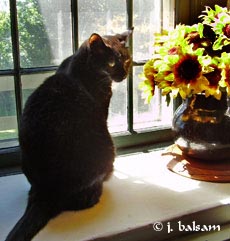
Gypsy Rose in my last home - in the 1742 dining roomOne of the most frustrating things about returning from a writing conference is that it doesn’t seem to take long before the life we knew before we left seeps – or charges – back in. Two days at the Annual NJ SCBWI Conference were exciting, absorbing and brimming with promise for my future as a writer and illustrator. This had been preceded by hours and days of prep – creating a new illustration for my submitted MS, tighter editing, printing out first pages, readying a speed pitch and so on.

I came home exhausted but totally psyched. Unfortunately I was also hit the next day with a blistering sinus/migraine, but still I forged on and edited that story in the evening, cutting out another 90 words. The next day I wrote thank you’ s to the wonderful agent and editors who had critiqued my work and I began sketching for my dummy.  The following day, still in a heat wave of nearly 100 degrees and shifting barometric pressure, I got hit by another crippling sinus/migraine headache. And of course, on Monday, I’d had the usual demanding pile of work, which pays my bills, on my desk to tackle.

Point is, even for a two day conference, the afterglow doesn’t last long before the distractions of life force their way back onto our laps demanding to be fed. How not to lose that momentum? I made a new commitment. I already journal every day and miss with rare exception. However, my new commitment to my future as a children’s book writer and illustrator is to spend a minimum of 10 minutes a day doing something to further my children’s book career.

On weekends, I may spend hours working on a manuscript or sketches, and sometimes in the evening as well when I’m able. However, even on those days when I have almost no energy left, I will do something, even if only for 10 minutes. I don’t want the insights and recommendations of the agent I met and the editors I sat with to fall through the cracks. To keep them alive, I need to touch their encouragement every day, even if only briefly, until I make the next block of time. A few sketches, jotting down ideas, a bit more editing of a manuscript … whatever.

The distractions of life are never going away – that IS life. But only we, as writers and illustrators, can put them off our laps and tell them to amuse themselves for a little while – we have something very important to tend to – our futures.

Hopes and Dreams

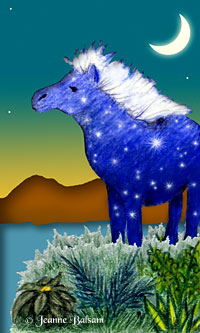
Hopes and dreams in the SkyStargazing has become common of late. If not a longing look to the moonless sky, then a reflective gazing within. This weekend marks the convergence of aspiring authors and illustrators, publishing’s best editors and agents, plus established authors and illustrators in children’s books at the June NJ SCBWI Conference.

Each aspirant has carefully packed up his or her hopes and dreams in the form of manuscripts and portfolios, and brings them, whether boldly or tentatively, to lay at the feet of the people we hope will cherish them as we do. A fragile thing, this creativity. Like children who hope our latest scrawl is good enough to merit an honored spot on the fridge, we will search the eyes of our mentors, hoping we did good, too.

Dare we hope? A contract, another look-see, a request for a revision … some nod of approval for all it has taken to bring this seedling of an idea to its present state. Humbly, hopefully, we toss our shimmering hopes and dreams skyward.

I believe there’ll be quite the reason to stargaze over Princeton this weekend.

Best of luck, everyone!

Just Do It! (for you creatives out there)

As creatives, we often find ourselves stuck – like there’s something in front of us that we know we can only trip over. We don’t want to risk hurting ourselves so we don’t go forward. While staying in place is the seemingly safer path, in the long run it is far more painful. When we don’t try, we don’t grow. Not pushing through ultimately makes us frustrated, depressed, anxious – all the emotions that we don’t want to feel. Ironically, these are good things in the sense that they are signposts showing us the way …when we look at our writing pads, computers, sketchbooks, cameras, canvases, etc and feel those emotions, we see right where our issues are. Thank them and let them go.

As both an artist and a writer, I need to make time for my craft one way or another every day. Because I journal every morning, my writing skills are always kept well-oiled and in gear. While I do need to get new things down, edit and refine, it is much less effort because the fluidity is there. Or I blog, all so I can focus on my real craft, writing for children.

As for my drawing, that takes more effort. Many years ago, when I was in Pratt, our instructors had specific requirements of us students. From when we first took 2-D (drawing) in freshman year, we were required to have our sketchbook with us 24/7. And so we did. When I began to become more involved with photography in my junior year, we were required to carry our camera with us 24/7. Both these exercises had the same result – if you had it with you, you used it.

We began to draw and photograph each other, the cat, the campus, the subway – didn’t matter – it became a routine because that sketchbook or camera was attached at the hip. Admittedly, one felt like a fool after awhile having it there and ignoring it even when going through a dry patch. The bottom line is, make it easy for yourself, be kind, and without criticism, just do it.

All the moaning and excuses in the world won’t get any project advanced, but tinkering about with our craft will. What I’ve found is that even while we’re busily avoiding exactly what it is we truly need to get done, we can trick ourselves by doing something else. For example, I have a heap of work I want to do to strengthen my portfolio. It’s a big task and a lot to do. I really am psyched. But the enormity of it sets me back a bit. Should I do nothing? No – I decided to just draw other things – a little oil in the gears, and then I’m going.

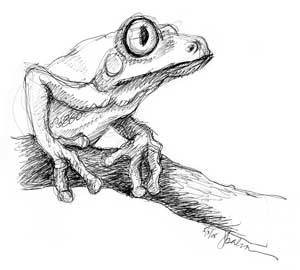
This tree frog I drew has nothing to do with portfolio requirements. It had everything to do with actively kicking aside whatever might be there to trip me. So for all of us – take the back door approach if you will – draw, write, paint, doodle something … anything … just do it!