My last few posts have featured different aspects of my businesses because, truly, that is where my energies have been flowing. However, I have been reading books constantly all the same (you just haven’t heard about them yet.) I started this post Thursday in the afternoon and it had been snowing (!) for nearly 3 hours, the white sky starting to turn that dusky cloud grey. It was a great time to divert myself from the work on my desk and dwell on words … beautifully written, elegantly connected, come-hither words.
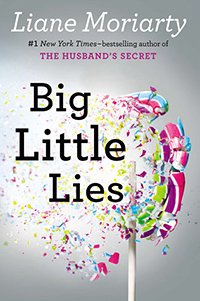 Where to start? Books and movies, or in this case, books and television. It seems fairly well-established among anyone I speak to that movies/television rarely live up to the quality of the books they’re based on, and are often disappointing. Two programs I have watched recently – one series on DVD and another of three episodes on Masterpiece Theater/PBS – were outstanding, easily the best things I’ve watched on TV all year and I highly recommend them – Big Little Lies and The Miniaturist. Each inspired me to read the books.
I must say, I was not as drawn in by Big Little Lies by Liane Moriarty as I’d hoped to be. Reese Witherspoon and Nicole Kidman optioned the series and made it into something riveting, but as to the book? For me, not so much. I decided to try another of Moriarity’s books, The Husband’s Secret, and it was significantly better.
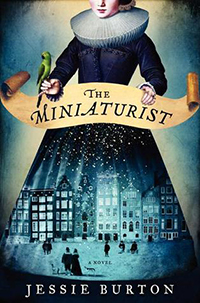 But ah, The Miniaturist … absolutely fantastic. The story by Jessie Burton is written in the present tense from Petronella Oortman’s POV and takes place in Amsterdam in the late 1700’s. She is a young bride from another part of Holland. She has a respected family name but no money, and is married by a wealthy merchant, Johannes Brandt. While often absent, he buys her a cabinet as a wedding gift to help keep her occupied, a large and expensive dollhouse built and designed to look exactly like the house Petronella is now living in. The Miniaturist is a story about relationships, secrets, about the forbidden, prejudice, and very much, mystery. Although Nella orders miniatures to be made for her dollhouse, the miniaturist sends more, unrequested, that start to reveal a life unexpected in which the young bride finds herself inexorably tangled. Seeing the series on TV first was actually a great advantage – the settings, dress, morals, and attitudes of the Dutch at that time in history added much to the reading. Take a peek at Petronella’s world; it will not give away the story. And then get the book. You won’t be disappointed.
 Another book that I could not put down is Before We Were Yours by Lisa Wingate. This novel is also historical fiction; one part of the story takes place in Memphis, TN in 1939, the other in present day South Carolina where a young lawyer begins to research her grandmother’s buried and seemingly disturbing past. We are taken to a shantyboat on the river where the oldest child, Rill, and her four younger siblings are kidnapped and brought to the Tennessee Children’s Home Society orphanage. They soon discover they will not be reunited with their parents as promised, but will be adopted to wealthy people willing to pay handsomely for children to adopt. The stolen youngsters at the orphanage are often starved, abused, and neglected at the hands of the cruel director and her lecherous brother; a large number of children disappeared entirely. In part what makes this book so riveting is that it is based on the very real adoption operations of Georgia Tann, a notorious felon who kidnapped and sold children for decades. Excellent in every way.
 While on the topic of books not to be missed, I read Snow in August by Pete Hamill. Hamill is famously known for being the publisher of major newspapers in NYC, plus a journalist and novelist. The story takes place in Brooklyn in 1947, a tale about friendship, faith, and trust, about an 11 year-old Irish Catholic boy, Michael Devlin, and a refugee from Prague, Rabbi Hirsch. Struggling through a snowstorm to serve mass a few blocks away, Michael, though fearful, gives in to the Rabbi’s repeated calls for help and enters the synagogue. It is the sabbath, and the rabbi needs the lights turned on. It is the beginning of a remarkable friendship, set against a backdrop of ignorance of and prejudice against the Jewish people in a community of Irish, Italian and Polish Catholics. A violent act is committed against a Jewish candy store owner by the leader of a local group of thugs; Michael was in the shop as a witness, and so the story unfolds. The prose is exquisite and the story moves along quickly. Snow in August is immensely compelling.
 In my journey with excellent mystery writer Louise Penny, I read the seventh book in her Chief Inspector Gamache series – A Trick of the Light. While of course there is a murder to be solved, Penny writes each novel with a new frame of reference, this time the highly competitive art scene in Montreal. The cast of characters, always perfectly drawn, and the home of the story’s activities, Three Pines, are the setting for this novel. Louise Penny has made me a fan of her superb writing and for engaging me in reading a mystery series, something I never thought I would do.
I just finished another murder mystery I spotted on the shelf in my local library, The Day of the Dead by Nicci French, actually a collaboration between a husband and wife team. The book seemed interesting and a good read while I waited for another book through inter-library loan. I was surprised to find how really good it was. Fast moving, tight writing, great plot – I could not believe how quickly I devoured this book! It may not be my usual fare, but I enjoyed every moment of this story about a renowned psychologist, Frieda Klein, whose life had been entangled with a serial  killer, Dean Reeves, for a decade. She has suddenly dropped off the map and at the same time, seemingly unrelated murders are appearing at various locations around London. These are later revealed to be at pre-determined intervals and at locations which would have meaning for Freida, clearly to draw her in and be his final victim. In the mix, and another main character, is Lola, a college student to whom it was suggested that she study Frieda Klein for her major college paper. This is apparently the last/latest in a series about Freida Klein, but worked effortlessly as a standalone.
I am now beginning to read Raven Stole the Moon by Garth Stein. I already read The Art of the Racing in the Rain, now one of my top 5 favorite books of all time, and another excellent novel of his, Sudden Light. I would probably read anything this man writes. Quite simply, he is a brilliant and gifted writer.
Hope I’ve inspired you if you’re looking for a good read. The weather is becoming that kind of chilly that has us curling up with a good book, and if you’re lucky, in front of a warm fire.
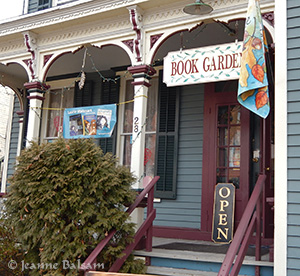 Ahhhh …. two of my favorite subjects. Something delicious to eat and something delicious to read. First, the cookies. As mentioned in an earlier post, my friend Laurie had her book launch at our little local Indie bookstore, The Book Garden. What I had not mentioned, was that Laurie and I had a cookie baking marathon the weekend before, whipping up sugar cookies for both this launch and her launch in NYC a few days earlier.


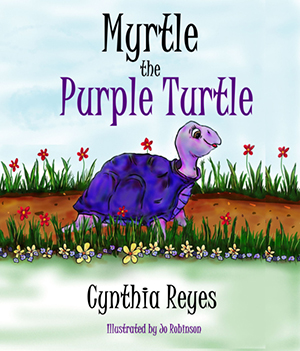 It’s why it’s so very important that we provide the positivity of books and reading to our children to help them find their way and to tune out the noise. There is so much beauty and love in the world, and what better way to “grow” a child than with the wonder that is found in books, and starting early, in picture books?
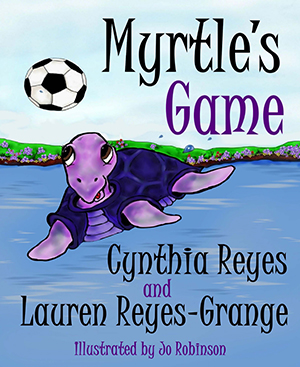 What a great message for kids. You cannot help but love Myrtle and her sweet personality, and admire the confidence that she really does have inside as she feels safe enough in the world to fall asleep when she gets stuck upside down.
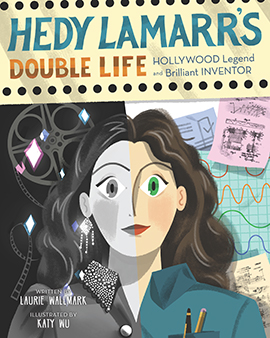 blogging at all. Now I know that each of these people will assure me that whenever – and IF ever – I get to writing about their book, they are fine with it. But I really do want to bring some good books to your attention.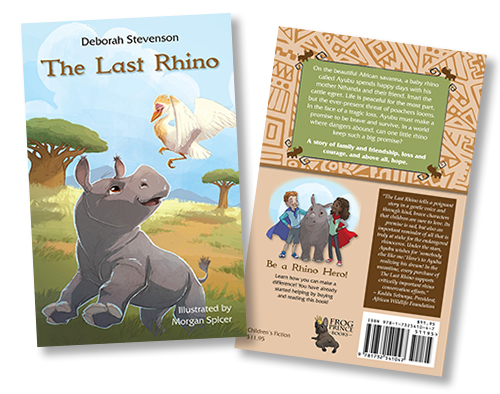
 Still A Dreamer