Or perhaps I should say what I’ve been reading, but haven’t been blogging about. It seems there are just times when blogging about books isn’t as compelling as reading them and moving on to the next one. Here’s my book list over the last few months from the most recent back …
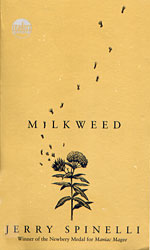 Milkweed by Jerry Spinelli – what a wonderful, extraordinarily well-written YA novel. Truly this book deserves to be written about at great length, (and I’m sure has been elsewhere on the web), but as this being only the second of Jerry Spinelli’s books I’ve read, I must say how impressed I am. Told in the first person by a child who only knows his name to be stop thief, the tale takes place in 1939 during the Nazi occupation of Warsaw. How the lives of everyone changed as the Jackboots settled in the city, as Jews and others were herded into the newly-created ghetto and later forced onto trains, as people slowly starved, as smugglers were hung, and friends made and lost is what the author describes. Stop thief goes through many transformations during this time, including being given a history as a gypsy to try and protect him, and observes the horrors of the Nazi occupation. Yet somehow, these horrors became an integral part of everyday life in ways I cannot imagine, and the story is seamlessly told through the eyes of this child. Milkweed is so different from The Book Thief, and seemed so much more accessible to me, for lack of a better word. I highly recommend it.
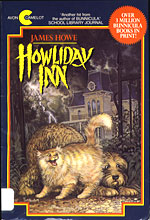 Bunnicula, The Howliday Inn and The Celery Stalks at Midnight by James Howe (and Deborah Howe in Bunnicula only) – I had expected more of Bunnicula, the vampire bunny, but in these three consecutive middle grade mysteries, each becomes better than the previous with funny dog and cat characters trying to solve them. The best of the three for me was The Howliday Inn, as it was the most complex and the humor was getting better, too.
Great Joy – Kate DiCamillo and illustrated by Bagram Ibatoulline – I picked this picture book up for the magnificent illustrations, but was disappointed in the story. And I really do enjoy DiCamillo’s writing. Something was missing for me, but the illos were fabulous.
Criss Cross by Lynne Rae Perkins – this YA novel is a Newbery winner. For me, it wasn’t as absorbing as many of the other YA novels I’ve been reading, but it was a very true-to-life depiction of that awkward time when kids grow into adolescents. It takes place in the 60’s, and shows the growth of several young boys and girls and their relationships. Not heavy on plot, but nice – and nicely drawn – characters.
Wolves in the Walls by Neil Gaiman – this was unexpected as I hadn’t realized it would be a graphic novel/picture book! For some reason I had expected a YA novel like The Graveyard Book (yet to be read). However, I loved the story and the fabulous illustrations by Dave McKean, who also did Coraline, and which really make this book come alive.
Black and Blue by Anna Quindlen – a story of an abused woman, who finally reaches out to get help to save her life, taking her son with her as well. This help takes place in being given another identity and being relocated in another part of the country by a little publicized agency who specializes in helping abused women. However, Fran Benedetto cannot escape her police officer husband forever as he wants his 10 year old son back, and somewhere, in an untold story behind hers, is searching for both of them. This book is hard to put down, and recounts, through her eyes, the “accidents” that she can no longer bear nor justify to others, and her new life which almost seems normal. The abuse is harrowing and painful to read at times, and her new life is always overshadowed for the reader with the anxiety of Bobby finding her. A good read.
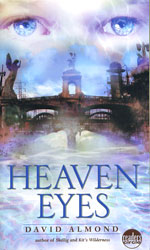 Heaven Eyes by David Almond – a YA novel by one of my favorite authors. Almond’s characters and plots are so uniquely his own. There is a magic threading through all of his stories which happens to resonate with something in me every time without fail. Heaven Eyes is a child who is living with an elderly man who saved her from the muck outside a deserted industrial site. Three runaways from an orphanage up the river land on the edge of the brackish mud adjacent to where she lives, and their intertwining stories unfold slowly to reveal a deeply disturbed man and a child who’s been given a history not based in reality. The three orphans are well-drawn characters in their own right with their own history, and find drama and revelation in their encounter with Heaven Eyes and Grandpa. Ultimately, they must decide to stay in an unreal environment or hope to return to the world from which they came, bringing Heaven Eyes and her spirituality with them. A Fantastic read, (and I’m truly not doing it justice here.)
No Small Thing by Natalie Ghent – a middle-grade novel about 3 children who acquire an unwanted pony during very rough times for their family. Their mother tries to keep it together after their father walked out on them, profoundly affecting them all. 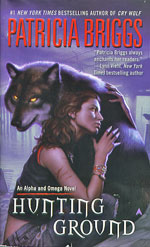 It is a story in part about the responsibilities of owning a pet, but also of the children’s relationships, caring for one another and managing their lives together. Some good spots, but for me, was just OK.
The Lost Symbol by Dan Brown
Hunting Ground by Patricia Briggs – from the Alpha and Omega Series. Fabulous. The first Briggs novel I read was Moon Called, and this is a storyteller whose books I cannot put down!
During this time I am reading one or more metaphysical books on an ongoing basis, but that, for another time …
 Did you know that the American Library Association (ALA) – who bestows the John Newbury Medal and Randolph Caldecott Medal (among others) – holds an Annual Banned Book Week? I was very interested in this and went to their web site which has extensive sections on not just their greatest concern – the 1st Amendment – but also lists of the books in question sorted by different criteria.

 Still A Dreamer