It’s been a very long time since I wept so at the end of a book. And I mean wept. Even I didn’t see that coming. The Art of Racing in the Rain by Garth Stein is an outstanding novel, told in the first person by Enzo, a dog. But don’t think that this is just some dog story – it’s not; it is skillfully told through the keen observation, devotion, and insightful outlook of a narrator who just happens to walk on four legs.
 The main character, Denny, to whom Enzo has been deeply bonded since a small pup, is a race car driver, so periodically, there is background and information about racing. But don’t think this is a story about racing either – it’s not. Racing is a metaphor for life and how to live it, particularly racing in the rain, of which Denny is a master.
The first chapter begins at the end of Enzo’s life, where he wishes to be released with dignity. From watching “too much television” (according to Denny), Enzo has learned of a Mongolian belief whereby a dog who’s lived a good life will become human in his next incarnation. This is what Enzo aspires to, and despite his periodic dismay at not having speech and being unable to communicate what he knows, or to have been denied opposable thumbs, Enzo does his best to live a model life.
The second chapter begins the story of Denny, his love, Eve, their child Zoë, and the journey of their lives together. From Denny and Enzo watching race tapes on the TV, with Denny explaining all the details to Enzo, to Eve’s illness, to the in-laws overbearing attitude and ultimately cruel shattering of Denny’s life, we are drawn into a story – sometimes funny, sometimes tragic – of a life that could be anybody’s. It’s always set against the backdrop of Denny’s aspirations to be an accomplished driver, and his teaching Enzo the subtleties of mastering the track. Enzo gets it. “Your car goes where your eyes go. Simply another way of saying that which you manifest is before you.”
You do not need to have ever had a dog to appreciate Enzo or his telling of Denny’s story. But if you have ever loved a dog at any time in your life, you will be greatly enriched – and moved – by Enzo, and all that he is. Likewise, those familiar with racing will have the extra bonus of understanding the racing world references. But you don’t have to know anything about racing – as I do not – to understand the story, for again, in the end it’s not about racing, but life.
While we knew from Chapter One where this book would end, the impact is unexpectedly profound; the epilogue, deeply touching. If nothing else, Enzo is a remarkably skilled writer. I had not realized how invested I was in this story … and in Enzo … until the end. The Art of Racing in the Rain is a keeper.
 our own artwork, photography, videos, or images of our various accomplishments, is one way we do that. Even so, many of us only shyly take credit for the beauty, wisdom, intelligence, and creativity we put out into the world through our blogs. We all deserve a pat on the back, so please – give yourself one!
 This is an amazing historical novel, written in first person by a young woman, who, at the opening of the book, is making her entrance at the Sénat Bal in Paris, autumn of 1882. She is “La Genérale”, Lilliet Berne, famed opera singer and a falcon soprano. She is approached by a novelist who dares to get her attention, and asks her to listen to his proposition – a story he has in his possession, to which a score will be written by a promising composer, an original role created just for her. Such a thing is the apex of an opera’s singer career. And then Lilliet hears how much of the story is her own past life, which, if it came to light, would destroy her career. So few know her past; who would want to see her fall? And so begins our story.
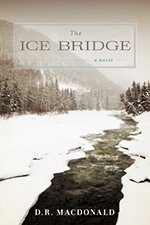 One of the very compelling features in a good novel can be place, where an author writes with such depth and attention to the environment inhabited by his characters that the location becomes a character all its own. I just finished The Ice Bridge by D.R.Macdonald, and was amazed at how quickly he had me immersed in the landscape of Cape Breton in Nova Scotia. This is an outstanding book in so many ways, not least of which was my having moved to the harsh, wintry landscape of Cape Seal Road right along with one of the main characters, Anna.
 Still A Dreamer