Living Without Judgment

Wisdom from the master himself …

WinnieThePooh

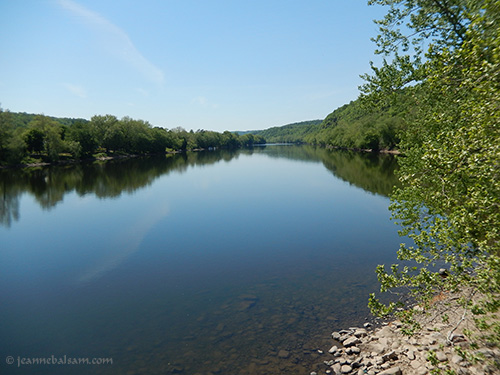
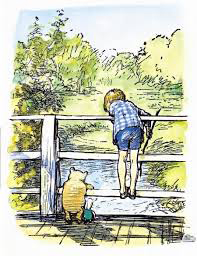
For a long time they looked at the river beneath them, saying nothing, and the river said nothing too, for it felt very quiet and peaceful on this summer afternoon.

“Tigger is all right really,” said Piglet lazily.

“Of course he is,” said Christopher Robin.

“Everybody is really,” said Pooh. “That’s what I think,” said Pooh. “But I don’t suppose I’m right,” he said.

“Of course you are,” said Christopher Robin.

~ A.A. Milne, Illustration E. H. Shepard


For You Readers and Writers … exciting events!

This may be for the reader or the writer in you, but if you’re in driving distance of either of these events, I suspect you may be interested in both!

BooksToBeRead-2First, what’s happening the weekend of May 2nd and 3rd? The event that I have no business going to but will be heading to anyway – the Hunterdon County Library’s Annual Book Sale! It will be held again at the South County Park Fairgrounds in Lambertville, just off Rt. 179, (for you locals), and as always, Saturday features hardbound books at $2, paperback, $1 and Sunday, they’re half that. Something new – Monday, May 4th from 9 to 12, they’re having a $5 bag sale! Last year I believe they had something like 60,000 books, so collect your totes and mark your calendars. For complete information, go to the Library Sale website.

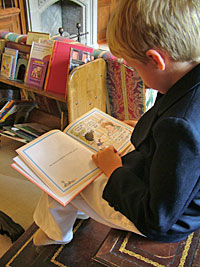
BoyReadingIf you’re a children’s book writer and/or illustrator, published or aspiring, think about attending the New Jersey SCBWI big June Conference Saturday and Sunday, June 13th and 14th, in Princeton, NJ. The conference is two days packed with workshops taught by great names in the children’s book field, critiques from editors, agents, authors, illustrators or your peers, special intensives, socializing with agents and editors over meals, great camaraderie among all those who love children’s books, and more. This, however, requires registration and a conference fee, plus there’s a deadline to register – early bird by April 19th, otherwise by May 15th. You also receive a discount as an SCBWI member. Find more details here, and click on the link to register for more in-depth information. (You are not automatically committed to registering by going to the registration site.) You’ll enjoy wonderful food all weekend long, (I’m looking forward to it already), and you can stay overnight at the Crowne Plaza/Holiday Inn Express Conference Center.

I’ll be going to both events – hope to see you there – I’ll be the one with that book-ish glow!

Precepts, Quotes and Words to Live By

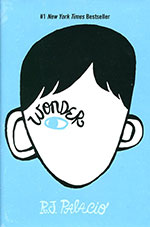
Wonder-RJPalacio2I am always a big fan of these, which, to me, are more or less the same thing. I tend to think of them as quotes, but in the book I just finished, Wonder, by R.J. Palacio, these are referred to as precepts by Mr. Browne, a character in the book and a middle grade English teacher at Beecher Prep. (I will write more on Wonder soon – this is what lit my spark today.)

Mr. Browne found that his students were more inspired by a quote he had once discovered than by how it had greatly influenced his life, so at the beginning of each month, he wrote a precept on the board. The class discussed it during the month, and at the end of the month, the students wrote an essay about it. Over the summer, his students were encouraged to write their own, or some other inspiring precept and send it to Mr. Browne. What a great teaching idea for real life, eh?

The copy of Wonder lent to me by a friend was part of a boxed set which also included a second volume called 365 Days of Wonder, Mr. Browne’s published selection of a year’s worth of quotes on the issues written about in Wonder, which, in a nutshell, is about kindness as well as overcoming adversity and bullying.

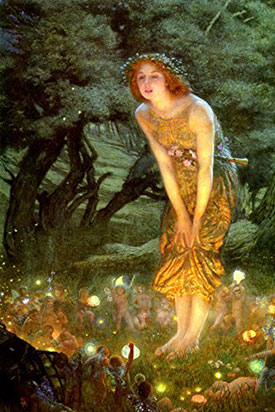
Midsummer Eve painted by Robert Hughes, 1908

Midsummer Eve by Robert Hughes, 1908

He also includes some precepts submitted by his fictional students. This is a really great accompaniment to a book that addresses these issues so well and would hopefully be an inspiration to Wonder‘s middle grade readers, (not to mention a brilliant marketing idea.)

So I started to read the precepts/quotes.

I was entranced by the quote on January 2nd written by Roald Dahl, (of Willy Wonka and the Chocolate Factory and James and the Giant Peach fame, if you’re not familiar).

“And above all, watch with glittering eyes the whole world around you because the greatest secrets are always hidden in the most unlikely places. Those who don’t believe in magic will never find it.”

It just brought a rush of imagery and creativity to me – “glittering eyes”, indeed, and sparkling thoughts. I am always amazed how such seemingly small tidbits drop right into our laps when we least expect and need them most. Or I am just paraphrasing Roald Dahl?

Have an inspiring day!

November Is PiBoIdMo! (Picture Book Idea Month)

PiBoIdMoJournal2Are you a picture book writer? Aspiring or published, you will enjoy this challenge!

The idea was developed a few years ago by children’s book author, Tara Lazar, in response to the popularity of NaNoWriMo, National Novel Writers’ Month. Participating in NaNoWriMo meant that you committed to writing 50,000 words in the month of November. That was great for those who write novels, but what about those of us who were writing for the youngest readers … picture books?

Tara developed the idea of PiBoIdMo, Picture Book Idea Month, (which has developed quite a bit since it’s introduction, and now includes visiting bloggers on children’s writing and more), where your challenge is to write down one idea for a picture book each day in the month of November. Needless to say, you can jot down more if your creativity is jumping, but one is the challenge. At the end of November, you’ll have 30 ideas to pick and choose from and can develop your best into stories.

Whether you do this alone or participate in the event online, or with your writing buddies or friends, it’s a fun challenge and gets your juices flowing. I have my own little PiBoIdMo notebook, and will be starting my challenge this Saturday. Join me?


Diversity: Writing What We Know – II

parttimeindianOne of the big topics in children’s books today is diversity, and although there are far more accomplished people addressing this subject than I, children’s publishing is where my energy is focused. For me, it also ties in to writing what we know. (See my first post on this topic.) So while there are many ways of supporting diversity in children’s books, from book purchasing to publishers themselves, I am just looking at writing.

What does diversity in this context mean? As I understand it, it’s a need for the stories we write and publish to include or be from the perspective of people of diverse races, cultures and backgrounds. When I was growing up, the subjects of all the children’s books I read were white, (unless we went into fairytales where Aladdin was darker skinned and exotic, but that was different.) The kids who were the main characters — think Dick and Jane — were only white. Those few stories where black people were featured were of a derogatory nature and a sad comment of the times. Hispanic or Asian individuals were non-existent. Indians were part of Thanksgiving stories, but otherwise, also absent.

Holes-LSacher2How much has changed in the world of children’s books? Again, I am hardly an expert, but our books have not changed nearly as much as the changes in population of the people around us. What is true is that we as authors do need to be aware that the world is way bigger than the little enclaves where we live or where we grew up.

In my humble experience, I have found that Americans, on the whole, tend to be a rather insular people,with a focus that is primarily on our own culture. While exceptions are found in sports and music and a few select other fields, a lot of people don’t seem in touch with the breadth and diversity of the world beyond their own boundaries. A broader experience of the world would bring a lot more to a writer’s plate than what we see just at home. Representation of other races and cultures in children’s books is dragging way behind the actual reality of diversity in everyday life.

ManiacMagee-JSpinelli2How does this affect how we personally write? And how do we write what we know in this context? There’s a lot of opinion on that. Needless to say, I can most comfortably write about my own experience in the world, and this comes from a Western European background of diverse nationalities. If I write what I know, it will be primarily from this perspective, but it doesn’t mean that I can’t include, in both my writing and illustrating, characters of the many races and cultures I have come to know along the way in my life and/or others that exist. But does that also mean that I can’t write from the perspective of a race or culture for whom I feel a deep kinship? That I don’t, or can’t, know enough?

Dogsong-GPaulsen2I was fortunate to have been raised in an area with easy access to New York City so that many of our family outings were in the city where we were surrounded by diversity. When I went to college in NYC, my exposure was expanded as my school was known for drawing talent from all over the world. For this amazing experience I am very grateful. I know that I can bring this, my ongoing living and working experiences, as well as my travels to my writing, but when it comes down to writing what I know? I will still always know my own culture the best. My question continues to be, where is the line drawn? Could I pull off, for example, the true voice of a black girl? Raised in the South? For that matter, as another example, could I even pull off the voice of a rich or entitled girl regardless of race? I don’t believe those are my stories to write, but to the degree that such individuals may be in my stories, in our stories,  it becomes our challenge to do research — among our fellow humans as well as in books – to make sure we are authentic in creating our characters.

Ultimately, I think we, whoever we are and whatever background we come from, do need to include characters of diverse backgrounds in our work when we have the opportunity for this very important reason. Children, from their earliest reading, need to see that the books they read aren’t simply their own reflection. Children of color, different cultural backgrounds, different socio-economic backgrounds, sexual orientation, etc. need to see themselves on the page as well, to have their existence validated and honored. We all may AskThePassengers-A.S.King2be called on to stretch a bit beyond writing what we know, but what loss could there possibly be?

We have the opportunity of expanding writing what we know to become richer as artists and human beings and to raise the consciousness and world view of eager young readers, and … to share a little reality.

Pictured on this page are a few MG and YA books I have read in the recent past which are either written by someone of a different culture/race or are inclusive of characters of diverse backgrounds/orientations. Finding picture books of the same is, unfortunately, a much greater challenge.

Here are a few interesting articles on this subject:

Lynn Joseph on Diversity in Writing
the Children’s Book Council on Diversity
Diversity in Children’s Books – Huffington Post
Where are the People of Color in Children’s Books? NY Times
Diversity Book Lists by GoodReads.
Diversity in Canadian Children’s Book Publishing -Publishers Weekly