How many sub-plots are too many? When are there too many POV’s? Too many characters?
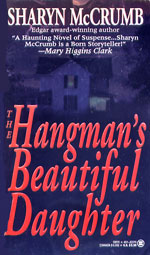 Example – A suspense/mystery novel I just finished by an author new to me, The Hangman’s Beautiful Daughter by Sharyn McCrumb, brought these questions up – and had me thinking about their relevance in children’s books. Particularly as we write stories of greater length, they are important points to consider, but they can be equally important in picture books.
In novels, I enjoy those which utilize more than one POV. What comes to mind is The Poisonwood Bible by Barbara Kingsolver, an excellent book. Each chapter is written, on an unevenly rotating basis, from one of the family member’s POV as they all try and come to grips with the harrowing situation to which their husband and father has brought them. Each writer’s POV is unique, yet always moves the overall story forward, while masterfully intertwining the relationships of each family member.
In contrast, while it is a good read in many ways, The Hangman’s Beautiful Daughter has too many characters to keep track of and too many sub-plots going on, one of which seems irrelevant to the overall story. The POV remained omniscient throughout and was clear, but I found myself wondering why certain characters and their seemingly separate story were included.
These same points need to be considered when writing children’s books. I notice in my own writing, I tend towards more than one POV. This is fine if a) done well and b) if it’s suitable for the reader of that particular story. I’ve been reworking one of my picture books, in which, while I find two POV’s working for me, they will not work for the age child who reads a picture book. 4-7 year olds are not yet that sophisticated in their comprehension skills and will be confused.
Keeping our chosen genre(s) and their audiences in mind is critical to a story’s success. We can observe in anything we read what is working and what is not, especially the books we absolutely love, and how that applies in our own writing. Does the story have more than one POV? Should it? Are there too many characters for our intended audience to remember? If there is a sub-plot, is it so relevant that the reader will find it totally compelling? Or might it become confusing?
I think what we all strive for is writing the book that our reader cannot put down. And to that end, everything we read can enlighten our own writing.
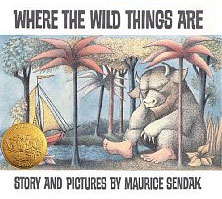 I’m assuming everyone has read this classic children’s book by Maurice Sendak, but if you haven’t seen the trailer for Where the Wild Things Are, check it out here on YouTube. The trailer alone is fabulous. The adaptation from book to movie is by Spike Jonze and from what I read, Sendak is very happy with it and feels Jonze’s interpretation enriches his story. Can’t beat Maurice Sendak’s blessing! The great song in the trailer is “Wake Up” by Arcade Fire and is perfect for the visuals. The movie is due out in October and will appear in iMax theaters as well.
 What happens when one of the picture books you’ve been working on evolves into a chapter book due to too much back-story? Then it’s recommended to be a middle grade novel because it’s getting too scary for a chapter book reader? One of the first things is to start reading more in that genre, so for me, it’s Welcome to Middle Grade!
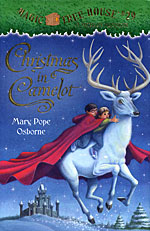 Chapter books are the next step as a child grows beyond picture books. Whereas picture books are largely illustration, chapter books are largely prose, but which still include illustration, generally in black and white. Written for the age 7-10 crowd, they feature short chapters so the book can easily be put down and picked up again by the young reader. Chapter books include a fairly good amount of dialogue, short sentences, and vocabulary that is targeted for the reader who is growing in his reading skills.
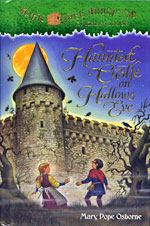 I’ve currently been reading a series within The Magic Tree House Series subtitled A Merlin Mission. These books are excellent examples for writers of what is being sought in a good chapter book, but Mary Pope Osborne has added in this selection a special richness by introducing a famous myth. In The Magic Tree House Series, our main characters are brother and sister Jack and Annie of Frog Creek, Pennsylvania. They find a tree house in the woods filled with books, and that by pointing to a picture in a book, they can go there. In time they find the tree house belongs to Morgan Le Fay of Camelot, home to King Arthur.
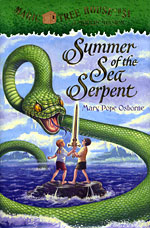 Arthur and the Round Table for children ages 7-10, filled with the symbolism of cloaks, cauldrons, magical beings and more. She has provided detailed references in the back of the book for the elements she’s introduced.
 They heard him singing. 70 miles off the coast of Long Island and New York City, he sang …. a blue whale. This magnificent creature, nearly hunted to extinction in the mid-20th century, when nations created an accord to protect them, once swam these waters and sang.
 Still A Dreamer