Writing A Synopsis

backporchIf you think I am going to be personally giving you tips here on writing  a synopsis, well, hate to disappoint. But I am going to provide a couple links to a site with a particular article that I found quite enlightening.

To date, the stories I have submitted to editors and agents at the NJ SCBWI conferences and workshops have been picture books, as I wish to, (ideally anyway), both write and illustrate. However, one of my PB stories was looked at by an editor awhile back and her comment was that there was too much backstory for a PB, and she felt I would do much better with it as a chapter book. This, of course, sent me into researching what chapter books were all about, reading a bunch, and re-working this particular story. Chapter books also have lots of illustration opportunity, so this is still a good thing.

I am submitting this for the June Conference at NJ SCBWI. If you’re anywhere in the area and able to attend, do go and learn more about this wonderful opportunity to meet editors and agents, and learn a bundle about this field. I am very pleased to be meeting with an editor that had critiqued this story at a first-page session last year, and had some good things to say. Now I shall find out if I’ve gotten 15 pages of it right. 

What needs to accompany these 15 pages is a synopsis, something I’ve not had to be concerned about with a picture book. So after asking fellow writers, reading up on the subject and searching the web for the best way to write a synopsis, I came across a two part article on the blog of Rachelle Gardner, a literary agent for Wordserve Literary. The article is written by one of her clients, Gordon Carroll, who does something no one else has done — he shows us how to write a synopsis on a story we all know, Bambi. Excellent idea.

Carroll’s using a well-known tale in developing the stages of the synopsis has made it so much easier to approach this new challenge. I’m actually now looking forward to it!  Here are Writing A Synopsis, Part 1 and Writing A Synopsis, Part 2.  Hope it may be of help to you.

As for that photo? Where I hope I’ll be doing some of my writing tomorrow … on my back porch!
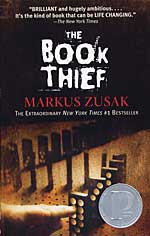
The Book Thief

thebookthiefHere are two things that are connected – I couldn’t fall asleep last night. I finished reading The Book Thief.  A book that keeps me up at night after I’m done reading, can often be said to be a good book. Or maybe a disturbing book. Or maybe a haunting book. I think it’s safe to say that The Book Thief is easily all three.

I bought this book in a local bookshop in Clinton in December while shopping for Christmas gifts. I’d wandered over to the YA section and was looking for something interesting. I’d already found a few things for others, a couple for me, and was talking with one of their very knowledgeable staff. He recommended The Book Thief to me, saying it was one of the most incredible books he’d read in a long time, and gave me some background. I bought it.

And there it sat. And sat. And sat. I wasn’t sure if I was ready to read a book set in Germany at the time of the rise of Hitler, no matter how well recommended. I started the book in March, just finished last night.

This is a difficult book to read. Zusak is a phenomenal writer; he has a brilliant way with words that you practically have to read to believe. His idea to have Death be the narrator, sometimes writing in first person and sometimes in third was an extraordinary, if not startling, concept. But it was slow reading. I wondered if it was because I was usually reading it at night; were the realities of the economy weighing on my mind, and so on. But in the end, I believe it is simply the subject matter. This was a horrific and shameful chapter in the history of humankind, and you cannot read The Book Thief without your heart being broken a hundred times. Or at least I couldn’t.

The story really does pick up in the last third of the book where the characters’ lives are all moving into more intense situations seeking some hopeful, but never hoped for, resolution. Each character, including Death, is extremely well drawn. Liesel, Rudy, Rosa, Hans, Max, Ilsa Hermann … are, if nothing else, real people in real relationships. But it seemed for me that it took a long time reading before they had become characters that I truly cared about, and I’m not sure why. It may be that the weight of Hitler’s Germany, woven well into the story line, drew me away from feeling more. Or perhaps I was afraid to feel more for them, knowing that Death was always nearby, ready to reach in and carry their souls away. And as he says, it was a very busy time for him.

So while a story dealing with pain and persecution, it is, however, still a story about love, friendship, loyalty, forgiveness, triumph over adversity, hope, and compassion. Markus Zusak is an amazing writer, and he has woven his story and characters together well, even if there is tremendous loss throughout the book. I do recommend The Book Thief … but to whoever reads it, be prepared for being drawn in to the tragic misfortunes of others in a frightening period of history, even while it is oftentimes no more than a backdrop to everyday lives and commonplace circumstances.

What I’m wondering as I write … not even 12 hours from finishing this book … is do I want to pick it up and read it again. And I’m not sure what to make of that.

Liquid Fire on A Busy Day

applejuiceHaving a children’s book Mentoring Workshop on the horizon is both exciting and a bit stressful. There’s lots to do and prepare for — in this case a NJ SCBWI Mentoring Workshop — prepping my portfolio to the best I have it so far, getting ready my first pages, critiquing my group’s MS’s, and seeing if I can complete one more illustration for my portfolio before the big day. Of course, the daily demands of my clients do not lessen any.

With a mind charging about like a runaway train, I suddenly was stopped in my tracks and noticed something – beautiful, simple and wonderfully distracting. My glass of apple juice on the dining room oak table had become a crystal of liquid amber filled with fire.

Note to self – never get so crazed that you don’t see these amazing visual moments.

The Absolutely True Diary of A Part-Time Indian

parttimeindianHere’s where I’ve hitched my star – writing and illustrating children’s books – picture books,  chapter books. Yet belonging to a writer’s group and SCBWI, in the company of readers and writers of other children’s genres, I find myself being drawn to those I don’t write… MG and YA fiction. And what a draw it is. My local librarian and I were discussing some of our mutual interests, and she recommended the YA novel The Absolutely True Diary of a Part-Time Indian by Sherman Alexie. I was just blown away by this book and can’t wait to read more by its author.  
Although I have a fair amount of factual information about what life is like on an Indian  reservation, I, as a white person in a predominantly white culture, cannot possibly know the daily challenges and ongoing pain of rez life.  Sherman Alexie, a Spokane Indian, brings this to light in a way that is both tragically sad and wryly funny.  I actually found this to be, on the one hand, one of the saddest books I have read in a long, long time, as the main character, Arnold – known as Junior on the rez – loses family member after family member to the direct or indirect results of the alcoholism that is epidemic there. Yet the comic style in which Alexie writes can at times make one not quite realize fully the tragedies he’s describing. Quite a feat.  I was quickly drawn in to Junior’s first person narrative beginning with his severe health problems up to age 7 and his continuous struggle to survive and ultimately make something of himself. Along with my feeling his pain, I could not help but cheer him on and/or comfort him, through everything he experiences.

When Junior receives his 7th grade math book to find his mother’s maiden name written inside, he knows he has no choice but to leave, to go off-rez to an all white school 22 miles away.  Here he truly starts a new chapter of his own life. Although deeply resented by his entire tribe for it, Junior leaves the reservation to make a future for himself, and in this move, becomes a phenomenally brave main character. 

Junior’s character is  insightful, honest, humble, (if not self-effacing like any typical teenager), and in spite of a life infused with hardship, incredibly funny. While he describes the problems and pain that are simply life on the reservation, he never fails to also describe the love and devotion of his family, his best friend Rowdy, and his tribe.  I found Alexie’s style of relating such profound hurt mitigated with clever wit to be amazing, and I truly could not put this book down. 

Last night, I looked further into the author, Sherman Alexie, finding some very interesting videos, among them, one of his receiving the 2007 National Book Award. I watched another of his being interviewed on a PBS station, where he revealed how autobiographical The Absolutely True Diary of A Part-Time Indian really is – almost entirely.  To watch Alexie was to better understand his character and his book. He began as a poet and wrote short stories and a few screenplays as well. (He wrote the screenplay for Smoke Signals, a movie based on one of his short stories.) This is Alexie’s first YA novel. He discussed in the interview how thrilled he was that so many teens resonated with Arnold/Junior. Not just teens, I’m sure. He already added this fan to his base in just one book, and I look forward to reading more from this terrific author.

In Between Books…Green Angel-Alice Hoffman

greenangelThere’s always something a bit sad about finishing a book. Maybe the word is empty. For so many pages we’ve been engrossed in others’ lives, an adventure, an intimate voyage through the eyes of another … the story reaches its peak then twists, turns, slips into its resolution. The last page. And it’s done.  Sigh. Can’t there be more? (At least for the really good books.)
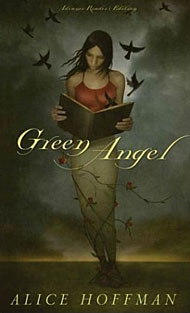
I recently finished Green Angel by Alice Hoffman, a MG novel that I came across while buying Christmas gifts in a local town’s bookstore. I like Alice Hoffman’s writing, and this was about Green, a 15 year old girl, a tragedy, guilt, isolation, survival, and ultimately redemption through love. How could it go wrong? It didn’t disappoint. Both magical and moody, Green Angel drew me in. But all too soon it was over.

In between books, I mentally, if not physically, pace. It’s a restless time. I survey the books I currently have on hand, waiting to be read. Plenty to choose from, including the other book I’d purchased at the same time in the Clinton Bookstore. But I’m not quite ready for that one. I roam from bookcase to bookcase, perusing those waiting to be opened, considering some rereads, then returning to books already begun and put aside for one reason or another. Where is the inner gauge pointing? Fiction? Non-fiction? Indecision.

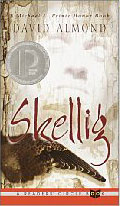
skelligFast forward to a stop at my local library to try and find some reference material for an illustration I’ll need to start. There, among some book jackets featured in a display, a word jumps out – Skellig. I know Skellig. It’s a song from a favorite Loreena McKennitt CD, The Book of Secrets. I ask the librarian about this, and she assures me they are not related. Skellig the book is an MG novel by David Almond – hawk or owl feathers are in the cover illustration, and the back cover asks “Man, bird or angel? Who or what is Skellig?”

The time in between books is over.