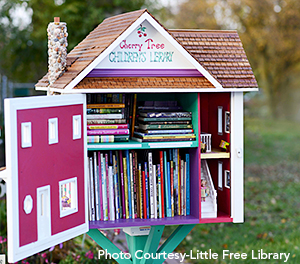
 Are you familiar with Little Free Library? I learned about them about 5 years or so ago, and thought it was just the most amazing idea. The concept is to have a little “house” or box of some sort which provides for the free exchange of books of any kind – sometimes these are located in areas where it’s hard for readers to get to a library; sometimes it’s a convenience for neighbors. It always promotes social exchange wherever they appear. (Pictured here, a LFL in Traverse City, Michigan.)
LFL (Little Free Library) is a non-profit organization founded in 2009 byTodd Bol of Hudson, Wisconsin whose aim was to inspire a love of reading, build community, and spark creativity by fostering neighborhood book exchanges around the world. And that he did! Since it’s beginnings, the LFL 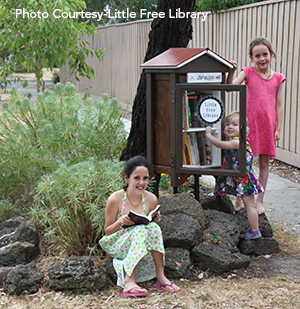 has grown to 80,000 little libraries around the world in a total of 90 countries, (as of 2019), all providing access to our most treasured possessions, books. (Second photo in Mount Martha, Victoria, Australia.)
Bol started out with a simple idea – and built a model of a one room schoolhouse, filled it with books, and put it on a post in his front yard. The idea really caught on, so he built some more and gave them away to neighbors and friends for free. While discussing potential social enterprises with UW-Madison’s Rick Brooks, who had seen Bol’s DIY project, the pair saw potential to expand and advance the common good. They were inspired by a number of things, among them the homegrown “take a book, leave a book” concept found in coffee shops and other public places. They were also inspired by the philanthropist Andrew Carnegie, who had set a goal around the turn of the century to fund the creation of 2,508 free public libraries across the English-speaking world.
With Carnegie in mind, Brooks and Bol set their own goal of surpassing 2,508 Little Free Libraries by the end of 2013, and exceeded it a year and a half before their target date.

The above LFL is located in Sandy Springs, Georgia.
What’s even more exciting is that this concept inspired people everywhere to apply to be stewards of a LFL where they lived, and who then designed and built this vastly creative array of structures to house the neighborhood book exchanges. (There’s a whole gallery of LFLs on their website to check out.) Perhaps one of the most truly amazing is a jaw-dropping LFL that was built by a librarian inside a dead cottonwood tree in Coeur d’Alene, Idaho – you must take a look at this!
Please visit the Little Free Library website – it’s exhaustive and illuminating and inspiring, and hey … maybe you’ll start thinking about creating and hosting a LFL in your neighborhood! One of the best concepts ever … free access to books.
 On to the books … Atonement by Ian McEwan. I wasn’t sure exactly what to expect from this, but knew it was a story whose initial chapters take place in London at the beginning of World War II and carries through the war, and then to the end of the century. It’s of a romance between the older sister in a very wealthy family, Cecilia, and the son of their housemaid, Robbie, their gardener. He’s a very bright young man, for whose education Cecelia’s father has been paying, with plans for Robbie going to medical school. But the story begins with the youngest sibling and third major character, Briony, a thirteen year old, who spends a great deal of her time writing. She is a very intellectual child, sheltered, and rather controlling. Early on in the story, she sees a flirtation between Cecilia and Robbie which she does not understand. When she witnesses another interaction in the library, she makes an assumption that will change the lives of these three characters forever. Her misinterpretation of what she saw and an incorrect confirmation of Robbie’s involvement in a separate incident results in his being sent to prison, and later, war. The story follows how the lives of these three were affected by Briony’s decision. It is a story about war, of love, and innocence. I did like the book – Robbie’s time in the war in northern France was remarkably and painfully well told – but the beginning was a bit difficult to get through, especially as Briony is not your most likable character. The writing was not in a style I usually read; the author was likened on the book jacket to Jane Austen. I did still enjoy it, and there is a wonderful twist at the very end.
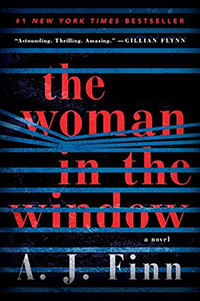 Going from soup to nuts, I then turned to something completely different – a fast-paced psychological thriller, The Woman in the Window by A.J. Finn. I read this in three days – it was hard to put down, as in you look at the clock and it’s 2 in the morning. It has been compared to two other books, Gone Girl and The Girl on the Train. The comparison is made in that the main characters are all unreliable narrators, but this book soon differentiates itself in many ways. Anna Fox, our MC, lives a secluded life; you soon find she’s an agoraphobic as a result of an unknown, horrible tragedy that occurred in her life. She’s on multiple medications, and against doctor’s orders, also drinks. She also spends a great deal of time watching her neighbors. Early on in the story, she witnesses a murder, she’s sure of it. But did she? Let me say this – The Woman in the Window reads like a house on fire, and Finn is an outstanding writer in more than one way. He (yes, it’s a `he’) spoon feeds you pieces of information, layering the suspense and all but turns the pages for you. Just when you think you know what’s going on, he throws in a major twist. Moreover, he has an exquisite use of language, not something you might expect in a thriller. I highly recommend this book. You’ll be at the (very satisfying) end in no time. Promise.
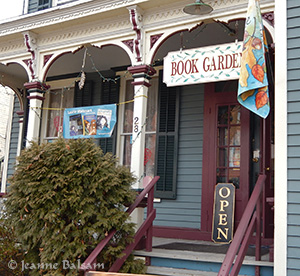 Ahhhh …. two of my favorite subjects. Something delicious to eat and something delicious to read. First, the cookies. As mentioned in an earlier post, my friend Laurie had her book launch at our little local Indie bookstore, The Book Garden. What I had not mentioned, was that Laurie and I had a cookie baking marathon the weekend before, whipping up sugar cookies for both this launch and her launch in NYC a few days earlier.


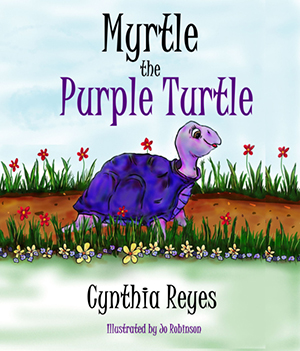 It’s why it’s so very important that we provide the positivity of books and reading to our children to help them find their way and to tune out the noise. There is so much beauty and love in the world, and what better way to “grow” a child than with the wonder that is found in books, and starting early, in picture books?
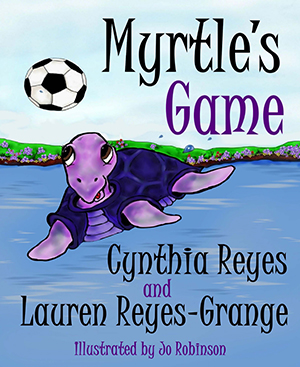 What a great message for kids. You cannot help but love Myrtle and her sweet personality, and admire the confidence that she really does have inside as she feels safe enough in the world to fall asleep when she gets stuck upside down.
 Still A Dreamer