 One of the big topics in children’s books today is diversity, and although there are far more accomplished people addressing this subject than I, children’s publishing is where my energy is focused. For me, it also ties in to writing what we know. (See my first post on this topic.) So while there are many ways of supporting diversity in children’s books, from book purchasing to publishers themselves, I am just looking at writing.
What does diversity in this context mean? As I understand it, it’s a need for the stories we write and publish to include or be from the perspective of people of diverse races, cultures and backgrounds. When I was growing up, the subjects of all the children’s books I read were white, (unless we went into fairytales where Aladdin was darker skinned and exotic, but that was different.) The kids who were the main characters — think Dick and Jane — were only white. Those few stories where black people were featured were of a derogatory nature and a sad comment of the times. Hispanic or Asian individuals were non-existent. Indians were part of Thanksgiving stories, but otherwise, also absent.
 How much has changed in the world of children’s books? Again, I am hardly an expert, but our books have not changed nearly as much as the changes in population of the people around us. What is true is that we as authors do need to be aware that the world is way bigger than the little enclaves where we live or where we grew up.
In my humble experience, I have found that Americans, on the whole, tend to be a rather insular people,with a focus that is primarily on our own culture. While exceptions are found in sports and music and a few select other fields, a lot of people don’t seem in touch with the breadth and diversity of the world beyond their own boundaries. A broader experience of the world would bring a lot more to a writer’s plate than what we see just at home. Representation of other races and cultures in children’s books is dragging way behind the actual reality of diversity in everyday life.
 How does this affect how we personally write? And how do we write what we know in this context? There’s a lot of opinion on that. Needless to say, I can most comfortably write about my own experience in the world, and this comes from a Western European background of diverse nationalities. If I write what I know, it will be primarily from this perspective, but it doesn’t mean that I can’t include, in both my writing and illustrating, characters of the many races and cultures I have come to know along the way in my life and/or others that exist. But does that also mean that I can’t write from the perspective of a race or culture for whom I feel a deep kinship? That I don’t, or can’t, know enough?
 I was fortunate to have been raised in an area with easy access to New York City so that many of our family outings were in the city where we were surrounded by diversity. When I went to college in NYC, my exposure was expanded as my school was known for drawing talent from all over the world. For this amazing experience I am very grateful. I know that I can bring this, my ongoing living and working experiences, as well as my travels to my writing, but when it comes down to writing what I know? I will still always know my own culture the best. My question continues to be, where is the line drawn? Could I pull off, for example, the true voice of a black girl? Raised in the South? For that matter, as another example, could I even pull off the voice of a rich or entitled girl regardless of race? I don’t believe those are my stories to write, but to the degree that such individuals may be in my stories, in our stories, it becomes our challenge to do research — among our fellow humans as well as in books – to make sure we are authentic in creating our characters.
Ultimately, I think we, whoever we are and whatever background we come from, do need to include characters of diverse backgrounds in our work when we have the opportunity for this very important reason. Children, from their earliest reading, need to see that the books they read aren’t simply their own reflection. Children of color, different cultural backgrounds, different socio-economic backgrounds, sexual orientation, etc. need to see themselves on the page as well, to have their existence validated and honored. We all may  be called on to stretch a bit beyond writing what we know, but what loss could there possibly be?
We have the opportunity of expanding writing what we know to become richer as artists and human beings and to raise the consciousness and world view of eager young readers, and … to share a little reality.
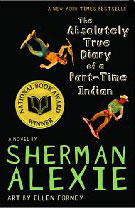
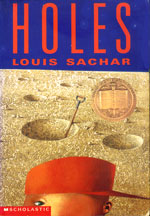
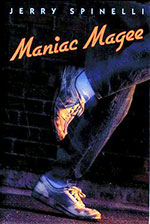
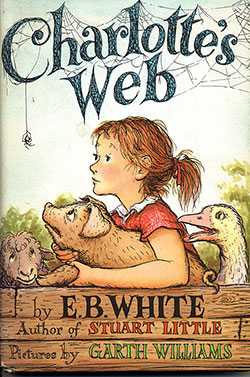
Pictured on this page are a few MG and YA books I have read in the recent past which are either written by someone of a different culture/race or are inclusive of characters of diverse backgrounds/orientations. Finding picture books of the same is, unfortunately, a much greater challenge.
Here are a few interesting articles on this subject:
Lynn Joseph on Diversity in Writing
the Children’s Book Council on Diversity
Diversity in Children’s Books – Huffington Post
Where are the People of Color in Children’s Books? NY Times
Diversity Book Lists by GoodReads.
Diversity in Canadian Children’s Book Publishing -Publishers Weekly







 Still A Dreamer