This little phrase is bandied about all over the place nowadays; it’s on mugs, tee shirts, posters and more. And like so many sayings that become pop sensations, there is an undeniable element of truth in it.
I was reading, (kind of re-reading and reflecting on, actually), Deepak Chopra’s small volume titled The Seven Spiritual Laws of Success, which are, according to Chopra, really the same as the Seven Spiritual Laws of Life. In the chapter about the fourth spiritual law, the Law of Least Effort, he writes about how easily we can fulfill our desires by learning, as nature can exemplify, how to do less and accomplish more. There are three little lessons within this law, and the one that reflects this post’s title is the one I am currently pondering.
The idea is to accept people, events, and situations exactly as they are in this very moment, versus what we would like them to be. Sounds so easy, but it’s not always the case. So much of our unhappiness comes from our disappointment and frustration that people and situations are not what we’d hoped, expected and/or planned. Think about it. We did something nice and so-and-so didn’t even have the courtesy to thank us, or didn’t thank us enough, soon enough, or whatever. We planned so carefully for a party and it rained. In addition to that, some people didn’t show up, and they never called or texted, etc. And we become miserable. The variations are endless, and of course, run the gamut from day-to-day occurrences to life-changing events.
 Life is filled with all kinds of disappointments and we have a choice to accept them and let them go … or not. When we don’t, and we grab on like the proverbial dog on a bone? we become yet more miserable. We can make ourselves crazy. This accepting of “It is what is is” seems to me to be a lifelong lesson, to be learned again and again in different circumstances and at different levels of awareness. While expending less energy on what isn’t or what might have been, we gain so much more for other things.
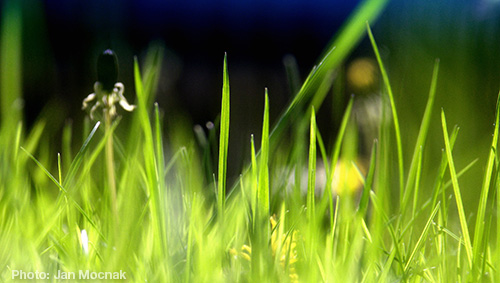
Chopra makes analogies with nature, such as fish – they just swim, or grass – it just grows. Imagine if grass worried if it would be mowed or chewed on by cows or destroyed by weed killer. It doesn’t — it just grows. We can do that, too. Accept this exact moment as it is. It’s not to say we can’t intend for things to be different in the future, but right now? It is what it is.
It can be easy. Or a worthwhile challenge. Or the ruin of our day. Our pick.

 Not to mention, I am still living in the world of Anthony Doerr, Pulitzer Prize winning author of All the Light We Cannot See. Yesterday, before I closed-up shop for the day on my work, I read a bit online about him and his other books, and watched a video of how he came to write this phenomenal book. I also looked at photographs of Saint Malo, the walled city on the coast of Brittany, bombed practically beyond recognition at the end of World War II, and an important location for much of the story. Doerr wanted to write a different tale about the war, and much like the outstanding author of The Book Thief, Markus Zusak, he certainly has done that. I am at times brought to tears at the beauty of Doerr’s use of words, and am moved by the story he tells.
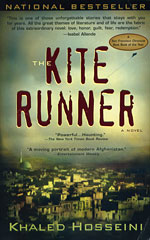 It wasn’t until college when I had an exceptional professor who taught Contemporary Civilization in the context of art, (I was at an art school), and for the first time someone teaching history had neurons in my brain firing rapidly. History suddenly came alive! Unfortunately, at that point, I had very little mental framework in my brain to hang it on. But I started to take an interest in the subject.
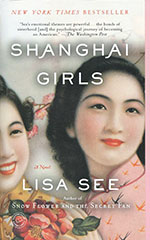 The two novels that recently afforded me that desire to delve into history were those by author Lisa See, Shanghai Girls and Dreams of Joy.The first novel begins when Shanghai was known as the Paris of Asia, and sisters May and Pearl were “beautiful girls”, models. With their father having lost all their money, the sisters, with their mother, must flee Shanghai as the Japanese invade China. The sisters were forced to emigrate to the United States in arranged marriages. From their interment on Angel’s Island to creating lives for themselves and their families in Los Angeles’ Chinatown, we follow the complex relationship of Pearl and May and Pearl’s daughter, Joy.
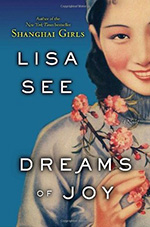 she is soon to be profoundly discouraged and isolated. Pearl leaves the states to search for her daughter, encountering endless roadblocks along the way. The backdrop of much of the novel is the time under Chairman Mao and The Great Leap Forward, a time of alleged progress in which a famine took the lives of millions of Chinese people. (

 Still A Dreamer