A Thousand Splendid Suns

You think your pain and your heartbreak
are unprecedented in the history of the world,

and then you read.
~ James Baldwin
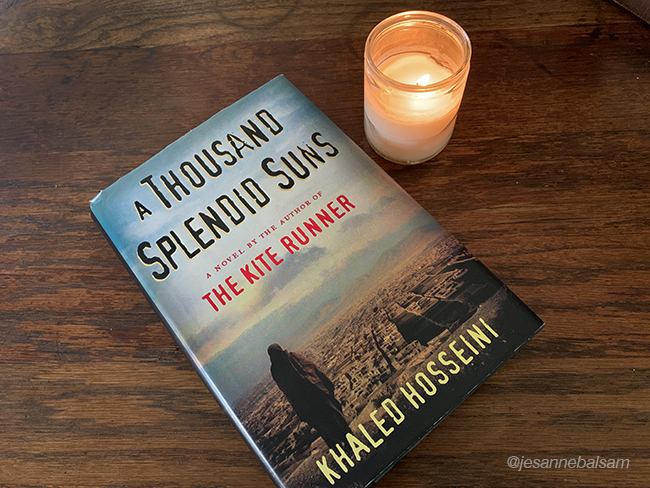
A Thousand Splendid Suns, historical fiction, by Khaled Hosseini was a very difficult read for me. For many reasons.

Most disturbing to me was the horrific brutality to women, to our two main characters, Mariam and Laila, but also to women in general under the shifting periods of leadership in Afghanistan. Under the Taliban, women were severely beaten or possibly executed for being on the street unaccompanied by a close male family member.

The abuse perpetrated on Mariam and Laila in their home by their husband was heinous. Rather than being happy for the two women, I was sometimes simply relieved that they somehow managed to survive. There were happy moments, but very few with him.

While the story begins in Herat, most takes place in Kabul over a period of decades when there is non-stop destruction between warring parties from within and from outside of the country. This would have been hard enough to read, but in the face of the horror going on currently in Gaza, the seemingly endless war in Ukraine, and an unfounded war in Iran, more war was painful to read about.

The fact that I am not a history buff by any means also made this novel a challenge, plus this is a culture I have little familiarity with. I had a lot to learn.

The story itself is essentially about two incredibly brave women who were not raised to be brave. In their fight to survive, Mariam and Laila became bonded like mother and daughter, repeatedly risking so much to protect their children and others they loved. How they endured and overcame so much loss and found strength through one another is at the inspiring core of this story.

As I write this, I find tears in my eyes as I think of Mariam and Laila, of Tariq, of Aziza and Kalmai, of Babi and Mammy, of Nana, and of Mullah Faizullah. Even for Jalil who, too late, came to understand what he had done. For Zaman, who ran the orphanage.

It is, in the end, a story of love, of heroism, of hope, and survival against all odds, but I now know why it sat on my TBR shelf so long after my having read The Kite Runner. Some books just ask a lot of you. This, for me, was one of them. It was worth it.
The Great Boatlift of 9/11

On the 25th Anniversary of one of the greatest tragedies to befall the United States, there are many beautiful tributes. One of the most deeply touching is the Great Boatlift of 9/11, the largest boatlift in human history, evacuating 500,000 people by boat to safety. Everyday people who became heroes at a moment’s notice.

With the towers in flames and everyone running for their lives, it soon became clear that Manhattan was an island and that there weren’t many places to run. But that it’s an island also meant something else. There were boats. This is such an amazing film, made 10 years after 9/11 by Eddie Rosenstein and narrated by Tom Hanks. When the call went out for help, hundreds of tugboats, ferries, fishing boats, coast guard cutters, party boats and others sped to Manhattan to take as many people as they could for as many trips as they could make. People who could not refuse the call to help – who were honored to assist the thousands of people, standing desperate on the edge of Manhattan – became largely unsung heroes. This video tells their story..

In memory of all those who lost their lives on 9/11 or died trying to save them, and in honor of those still alive whose efforts will always be remembered. Thank you.

It’s Gonna Be Okay

There’s a whole lot of comfort in those words when they’re sung by Dolly Parton. Especially when she’s surrounded by some of the most impressive voices in the music industry.

Dolly lit up the world with her humanity, generosity, her Imagination Library, and, of course, her endless contributions to music.

It is this song of hers, where she’s joined by Lainey Wilson, Miley Cyrus, Queen Latifah, and Reba that just moved me so much. If that’s not enough, throw in a small gospel choir.

There is something so pure and touching and powerful about women’s voices together. We don’t hear them coming together nearly often enough, especially from different musical genres. I’ll admit, I had tears rolling down my face as I listened to this – the first time, and the next few times after.

There’s so much going on these days – in the world, in our own lives – that a few words of comfort, a reminder that things are gonna be okay, seem pretty welcome. Thanks, Dolly, for all the grace and goodness you brought the world.

Thanks to my friend Barb over InBarbsWorld for sharing this. It was just another sign that everything’s gonna be okay.

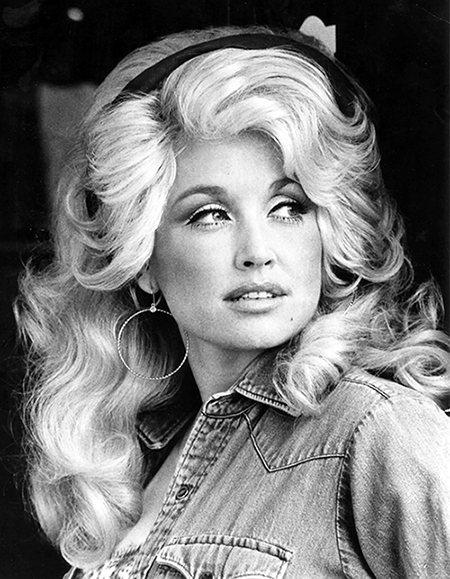
Dolly photo courtesy of Wikipedia (Common Domain)

Are You Everyone’s Cup of Tea?

No, you’re not. Neither am I. Quite honestly, it’s a good thing.

One way to not be everyone’s cup of tea, I am reminded from time to time, is to say what you actually think or feel. Respectfully, but honest. Not everyone wants to hear it. Not everyone is able to hear it.

Many people live in environments where they rarely say what’s truly on their minds and are used to avoiding conflict. Having straightforward, honest conversation can be unfamiliar, frustrating, confusing, or just unwanted.

A fair amount of us were/are raised with the belief that ‘children should be seen and not heard.’ That crosses time frames, geographical, cultural, and religious beliefs, and may be subtle and integrated within one’s belief system.

Children expressing unhappiness, frustration, and especially anger may not be welcomed or tolerated. Kids grow into adults who’ve been taught to just be “good”. Don’t rock the boat.

Couple this with a world drowning in sound bites, overwhelmed by video clips and emotionless texts as the norm, meaningful conversation can take a far back seat.

And yet, you have a lot to say, and plenty to share. Do it anyway.

Be your own cup of tea. 

Thank you to:
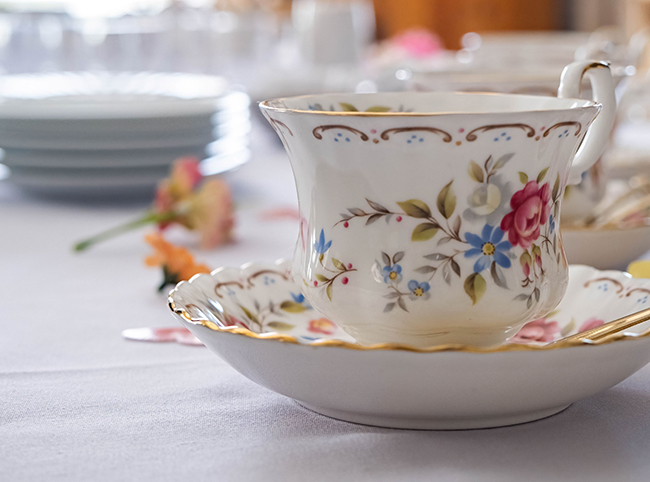
Cameron B/pexels – IG: @cameronsinb, top photo and
dilara/pexels – IG: @dilara.stillife, lower photo