Thriller

No, not that kind of thriller. Well, maybe a little.

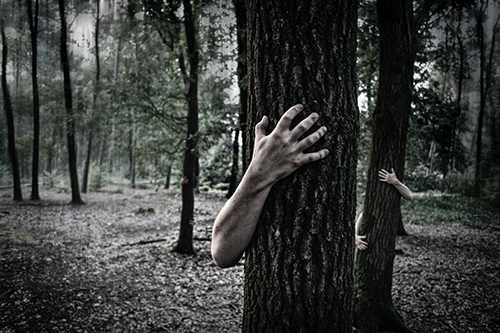
From time to time, I’m restless and can’t seem to find the right book to read. I recently picked up four books, read a few pages, and put them down. Know what that means? It means it’s time for a thriller. A good mystery. Suspense. Twists and turns.

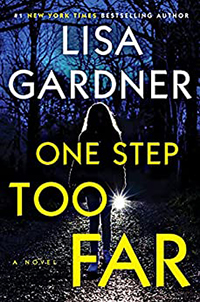
I went to the library and picked up one of the many titles that got great reviews on Instagram from a fellow children’s book author. Nancy periodically reviews the latest thrillers, and having followed several of her past recommendations, I felt pretty confident in choosing this one. Just a few pages in, and I was committed. I’ve never read Lisa Gardiner, but she knows how to write a great hook.

Moral of the story? Can’t settle on a book to read? Get scared!

Photo thanks to Simon Wijers at Unsplash

Self-Publishing Children’s Books 101 – Oct.2023

Self-publishing one’s own children’s book has great appeal, but it’s not quite as simple as it seems. A most important question — what is your purpose in self-publishing?

If you wish to have a lovely book to read to the kids, grandkids, or your students, the journey may be fairly simple, and not terribly expensive. But if your goal is to compete with traditionally published books, and you truly want your book to sell, then your investment in both time and money may be more than you suspect.

I cover all this in my upcoming in-person workshop – Self-Publishing Children’s Books 101 – at the Stewartsville Public Library on Wednesday, October 18, 6-7:30 pm. Registration opens October 4.

I’ll be covering:

* Why publish?

* Your idea – coming up with what will sell

* Your story

* Dummy

* Illustration

* Book design

* Traditional vs. Self-Publishing

* Q and A

If you’re in the neighborhood, please come and learn about self-publishing! For more information about how I help people self-publish, please visit me at Jeanne Balsam Graphics.

Stories Change Us

And stories make us grow. They add colors and textures and emotions and new perceptions to our personal library called `self’. Stories add depth and dimension to our being, and give us perspectives on things that we may never have considered, whether fiction or non-fiction.

That is, of course, if we choose good books.

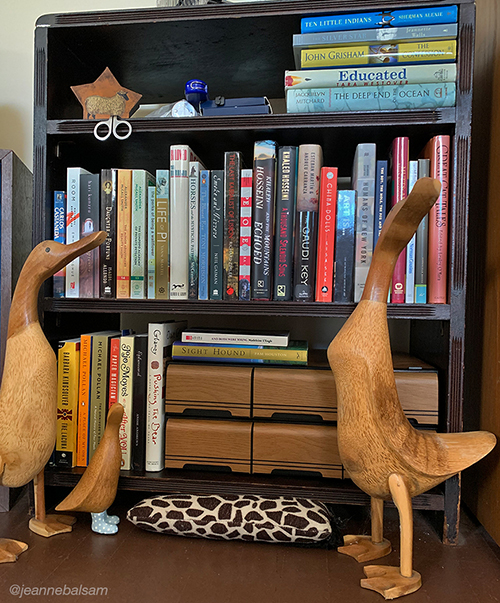
Up until a couple days ago, I had several spots around the house with books that I had picked up here and there, books I’ve been waiting to read. Now they’re all in one place. And as I am just finishing the fabulous book I’ve been reading, I also find myself wondering … who do I want to meet next? Where do I want to go? What time period feels inviting right now? What do I want to know?

And which book, which story, will take me there? Is it here on my shelves, or will I take a trip to the library? Reading is just such an incredible gift.

An Inspiring Guide for All Who Create

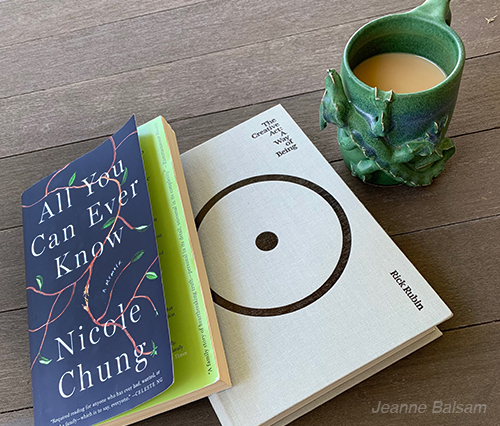
Above are the two books I’m reading now, one, the memoir of a transracial adoptee, the other, a kind of guide to the act and nature of creativity. Both are excellent, but here I am going to focus on the second book, The Creative Act: A Way of Being by Rick Rubin.

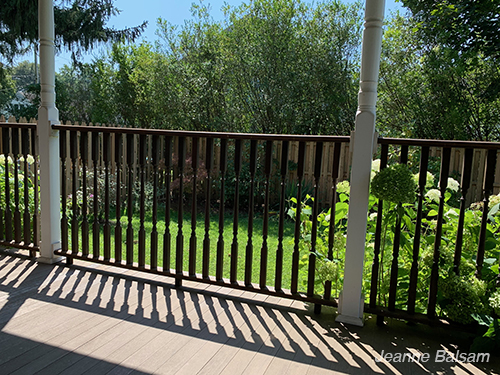
Here we are in a familiar spot on my back porch. I’m sitting with my coffee, ceiling fan going, hoping to enjoy the fresh air until the heat gets too much. And reading The Creative Act. Rubin has been a well-known and highly successful music producer and record executive most of his life. He wanted to take his experiences and write a book to help artists. He said, “I set out to write a book about what to do to make a great work of art. Instead, it revealed itself to be a book on how to be.”

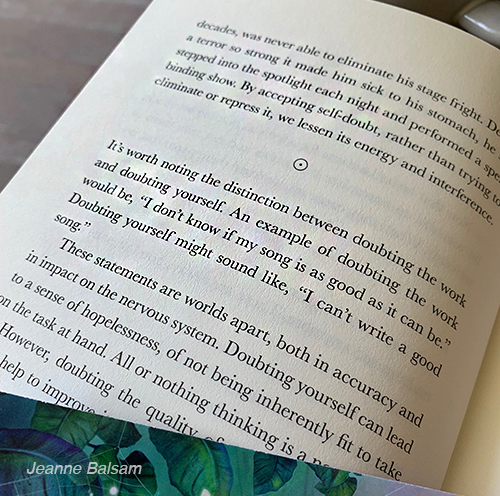
And he wrote a phenomenal book, taking complex philosophical principles of how the artist exists and creates in this world , and makes them accessible and digestible to the reader. No easy feat. His thoughts on the various aspects of creativity are broken down into 1-1/2 to 2’1/2 page chapters, making it very easy to read in small bites and reflect on.

He addresses the artist in us all, looking at ultimately, how we live in the world being so critical to our creativity, and thoughts about how we can all be on our own road to bringing what is within us to light.

I feel I cannot truly do this book justice in the space of a blog, so I encourage you to read the in-depth description of this book on goodreads or the extensive reviews on Amazon. This is not a self-help book, but more of an illumination of the creative process that we artists engage in with insights guiding us to deeper exploration and understanding.

Thanks to a blogging friend, Kitty, at The Daily Round who suggested this to me; she knows my creative heart and soul. If you’d like to explore the deeper and very real issues of what it means to be a creative of any kind brought to you in a new and inspiring way, The Creative Act: A Way of Being may be just what you need.

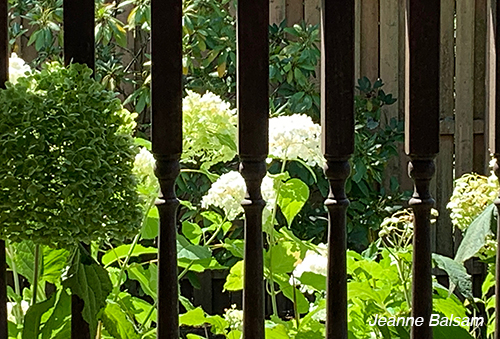
p.s. Think you’ve already seen the photo Immediately above? You’ve seen the early hydrangea blooms (left) in a previous post, but what you didn’t see are all the smaller, bright ones in the sun. They are all the new blooms that grew in spite of the deer having eaten nearly all the hydrangeas, leaving only barren stems. Those little guys are the beauty and persistence of nature.
It’s Never Too Late

Whatever our age, at one point or another, we may feel that our one big chance has passed us by. Whether it’s to be published, appear on stage, accomplish something amazing …. whatever it is, we missed that magical time. Here are some amazing facts that say we’re wrong.

At age 23, Tina Fey was working at a YMCA.
At age 23, Oprah was fired from her first reporting job.
At age 24, Stephen King was working as a janitor and living in a trailer.
At age 27, Vincent Van Gogh failed as a missionary and decided to go to art school.
At age 28, J.K. Rowling was a single parent living on welfare who was clinically depressed and at times has contemplated suicide.
At age 28, Wayne Coyne (from The Flaming Lips) was a fry cook.
At age 30, Harrison Ford was a carpenter.
At age 30, Martha Stewart was a stockbroker.
At age 37, Ang Lee was a stay-at-home-dad working odd jobs.
Julia Child released her first cookbook at age 39, and got her own cooking show at age 51.
Vera Wang failed to make the Olympic figure skating team, didn’t get the Editor-in-Chief position at Vogue, and designed her first dress at age 40.
Stan Lee didn’t release his first big comic book until he was 40.
Alan Rickman gave up his graphic design career to pursue acting at age 42.
Samuel L. Jackson didn’t get his first major movie role until he was 40.
Morgan Freeman landed his first MAJOR movie role at age 52.
Kathryn Bigelow only reached international success when she made The Hurt Locker at age 57.
Grandma Moses didn’t begin her painting career until age 76.
Louise Bourgeois didn’t become a famous artist until she was 78.

Just because we haven’t found fame and fortune by the age of 21, it doesn’t mean we’re over.
Maybe we’re still figuring out what our big dream is, what it is that sets our soul on fire.
Things can change on a dime, so never tell yourself you’re too old to make it.
Never tell yourself you missed your chance.
Or that you aren’t good enough.

It’s never too late.

.

.

Photo by Jared Weiss on Unsplash