Thanks for always being proud of me, Mom.
Happy Mother’s Day.
Are you looking to make some healthier changes in the way you eat? Here’s one way – lower your intake of pesticides. The timing is perfect as yummy fresh produce is making its way to local merchants of all kinds.
The Dirty Dozen is a list of produce which carries the highest pesticide load of any fruits and vegetables in the U.S. This list has been publicized by many including Dr. Andrew Weil, Martha Stewart, Prevention Magazine, Oprah, the Environmental Working Group and more, yet this information still seems to not have reached a great deal of the general public. Pesticides, particularly organophosphates, which are the most widely used, can harm the nervous system and are stored in tissues. The developing brains of young children and festuses are at the highest risk. Organophosphates are also used to make nerve gas, and often remain present even after washing and peeling. What to do? Don’t be discouraged … just make better choices.
The Dirty Dozen – it is recommended that these 12 fruits and vegetables be purchased as 100% organic** and that baby food including these 12 be also purchased as 100% organic. Here are the Dirty Dozen – apples, celery, peaches, strawberries*, spinach, nectarines (imported), grapes (imported), sweet bell peppers, potatoes, blueberries (domestic), lettuce and kale/collard greens. (Prevention Magazine – see link above – covers this more broadly and includes how pesticides are also found along the food chain in meat, dairy, etc.)
The Clean Fifteen – and now the good news – the following fifteen fruits and vegetables carry the lowest pesticide load and can be eaten safely: onions, sweet corn, (this is
one of the most common GMO crops in the U.S. — if a concern, buy organic), pineapples, avocado, asparagus, sweet peas, mango, eggplant, cantaloupe (domestic), kiwi, cabbage, watermelon, sweet potatoes, grapefruit and mushrooms.
It is always recommended that we eat a good variety of fruits and vegetable to assure we are not taking in particular pesticides to excess.
*According to Prevention Magazine – “Strawberries are the crop that is most heavily dosed with pesticides in America. On average, 300 pounds of pesticides are applied to every acre of strawberries (compared to an average of 25 pounds per acre for other foods). Thirty-six different pesticides are commonly used on strawberries, and 90% of strawberries tested register pesticide contamination above safe levels.”
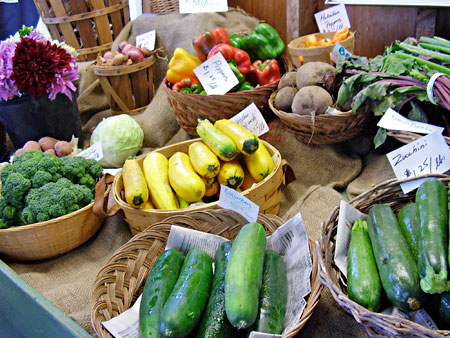
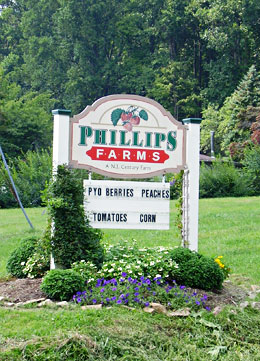
* *Here’s more good news. With the arrival of Spring, farmer’s markets and roadside stands are popping up and selling fabulous fresh produce. Ask your local farmer about how he uses pesticides. Increasing numbers of farmers may be growing organically but not going through the costly, (as I understand), process of being certified, or are growing their food sustainably with a minimum of pesticides. Don’t be shy … ask! They’ll usually be happy to share what they do, and you can make more informed, safe and delicious choices.
(Note: Although this is not generally the subject matter of this blog, I thought I would share this information due to the timeliness and the season.)
Did you know that Google holds an annual contest – Doodle 4 Google – whereby children in 5 different school grade groups design the Google logo on a specific theme? I just found out, and the voting ends May 10!
The contest is sponsored by the New York Public Library, Crayola, and, of course, Google. This year’s theme is “If I could travel in time, I’d visit ….” There are several tiers of prizes but the National Winner can really clean up! That person “will have his or her doodle featured on the U.S. Google.com homepage, will be awarded a $30,000 college scholarship to be used at the school of his or her choice, a trip to New York for an event on May 17, 2012, a Google Chromebook computer, a Wacom digital design tablet, and a t-shirt printed with his or her doodle on it. We’ll also award the winner’s full time school a $50,000 technology grant towards the establishment or improvement of a computer lab or technology programming.” Holy moly! Go vote and help out some talented kid!
Check out the Doodle 4 Google web site for information, but be sure to vote for your favorite. In New Jersey in the Grade 10-12 group, Cynthia Cheng, an 11th grader from Edison, NJ, is our state’s winner, and chose the Vikings. Her artwortk is really fantastic, featured above in smaller format, and you can vote for Cynthia here.
What a great chance for young artists — and perhaps future illustrators — to be recognized. Signing off … I’m going to vote!
How to Save A Life by Sara Zarr is aptly titled, though it’s not quite clear whose life (or lives) will ultimately be saved nor how until the tension starts building well into the book. I really liked this novel. The story is told in first person in alternating chapters by the two main characters, Jill and Mandy. The book designer was insightful enough to use a different font for each chapter and head it with the character’s name, which made it ever so easy to always know who was speaking. (Unlike an adult book which I am reading now with 2 characters alternating, but which does not help the reader with this very simple aid.)
Jill, a senior in high school, is trying to adjust to the sudden death of her father, with whom she was most closely identified. In addition to her future plans being unclear, Jill now has to adjust to her mother, Robin, having decided to adopt a baby. Mandy is a pregnant teenage girl from Omaha, who needs to get away from an abusive home situation and who has connected with Robin online to give her baby away. Additionally, there is a love interest or two for Jill, but plenty of conflicts for all of the characters.
One of the things that is so very impressive in How to Save A Life is the absolute consistency of voice of both Mandy and Jill, and I say kudos to Sara Zarr for pulling this off so amazingly. I found the story to move along at a slow and gentle pace for quite some time, gradually revealing Jill and Mandy’s situations, feelings and conflicts. It builds quite seamlessly to the point that could change everything, and then the pace picks up rapidly.
Mandy and Jill are as different as day and night, as are their life circumstances, but Zarr never gave me any real reason to change my mind about how I felt about them, no matter how they behaved or what choices they made. Mandy and Jill’s choices were always understandable, always forgivable, no matter how seemingly selfish, unwise or uninformed. This is the mark of a great author, to create characters we genuinely care about and with whom we can identify.
I recommend How to Save A Life to anyone who enjoys a good read and wonderful character development. For those of us who are writing, how Sara Zarr has put it all together is enlightening, as well.
Because I love having it covered with paw prints within minutes of my leaving it in the driveway. And … not even my cat!
However … I took this shot through the window, screen and all, because I didn’t want to interrupt Pumpkin’s beauty nap. When you’ve been adopted, you just learn to make certain allowances.
Life is an interesting journey. Here are journals, stories, reflections of a traveller of this journey. (songoftheheartsite@gmail.com)
Sharing my journey of a calm, intentional life.
Sharing Information About Writing and Illustrating for Children
Aren't songs of grief lullabies to the lost?
Immersive Tales for the Curious Explorer
Life in a flash - a bi-weekly storytelling blog
Becky Ross Michael: author & editor
Observing, Gathering, Gleaning, Sharing
Official Home of Lavinia and Rick Ross
Thoughts on life, writing, creativity and magic
Canadian Author & Memoir Writing Coach