Look Who’s in My Neighborhood

Although I am surrounded by country, I do live “in-town,” as they say. But perhaps it is exactly because open space surrounds us that there is no shortage of wildlife so close to our homes.
NeighborhoodDeer-3

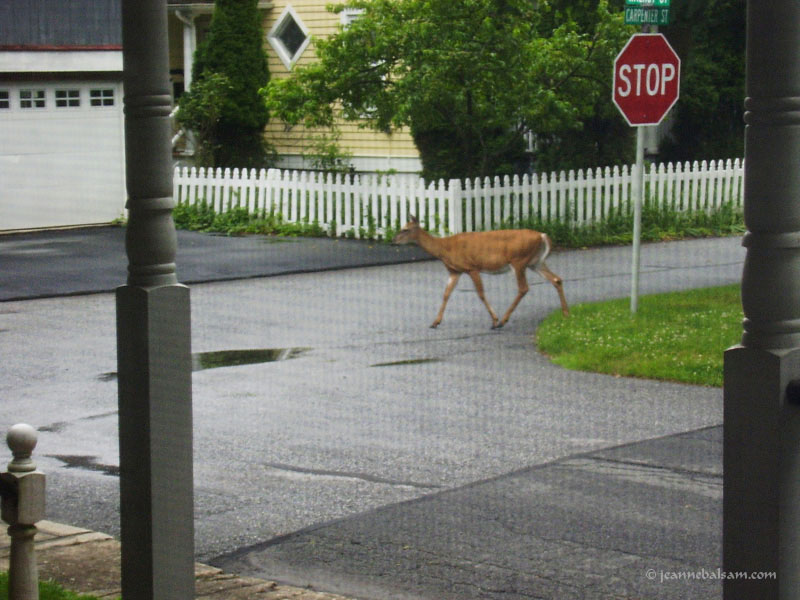
Working at my computer just this past June, I looked out front and saw a doe nonchalantly strolling down the street. She did not observe the Stop sign, but continued walking, looking for the tastiest greens she could find. Unfortunately, this is at a particular neighbor’s home who happens to be the most ardent gardener for a few blocks around. Of course! She has the delicacies!

But Ms. Doe wasn’t stopping and no sooner was she out of sight, than she came through the hedges bordering my property and casually walked down my driveway at an angle. This made me believe this may be is who is responsible for the deer tracks I see in the snow in roughly the same places – she must have a route.

DoeAndFawn3

Today I looked up and saw … the same doe? a different doe? and her still-spotted fawn. Mama could easily scale that white picket fence for the best nibbles while baby clearly hasn’t yet mastered leaping hurdles. I was able to go outside and get a few shots before the more worried fawn walked further down the road.

While I enjoy watching animals of all kinds, having deer so at-home in our neighborhood isn’t good. They have become accustomed to our smells and sounds and are no longer frightened. The offspring they produce will become even more acclimated to being around people. It is certainly wreaking havoc on our properties as the deer now consume shrubbery and flowers year-round even though there is plenty of browse in the nearby woods and fields.

Sadly, it just creates more enmity towards these beautiful creatures, even referred to by some as “vermin.” It’s a problem for farmers as well as residents and a complex one, yet it is we who have taken more and more of their land through endless development. It’s not a problem with an easy solution.

Meanwhile, I truly do enjoy seeing them even though they have “deer-scaped” the plantings around my home as well.
The Walking Reward

Flowers-July2

I am not ashamed to admit it. I do not like to exercise. (Although I do love to dance. That’s exercise, right?)

Flowers-JulyB-2Over the course of my life I have at times been a jogger and a regular walker. Once I got out there, it was okay, but I could think of soooooo many things I’d rather be doing. The time has come that I need and want, (very abstractly), to get out there once again. My incentive? I’d bring my camera and hope that might help.

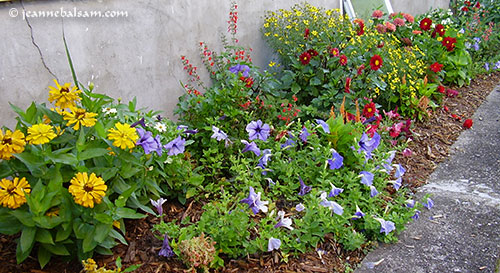
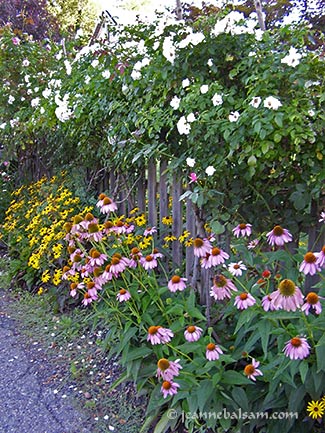
So I made use of it and took some shots of the beautiful garden flowers that so many of the folks in my town take the time to plant and tend.

Will it be enough inspiration for tomorrow? I guess we’ll see.

Top 100 Teen Reads

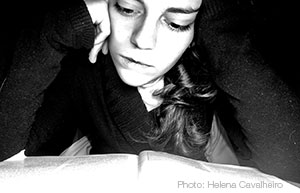
GirlReading-HelenaCavalheiro2Only because I’d decided to start reading a book I’ve had for a while on my “to-read” list by Sherman Alexie, The Lone Ranger and Tonto Fist Fight in Heaven, did I go on to check out his website and blog, and come across this list compiled by NPR, (National Public Radio.)

Alexie linked to the list because his terrific YA novel, The Absolutely True Diary of a Part-Time Indian was ranked #31. I do enjoy lists, and figured why not check it out. So what are teens reading? The list, a result of 75,220 votes in NPR’s Best-Ever Teen Fiction poll and compiled in August 2012, has ranked J. K. Rowling’s Harry Potter series number 1, followed by Suzanne Collins’ The Hunger Games.

It’s a list of classics such as The Last Unicorn by Peter S. Beagle and The Outsiders by S.E. Hinton, and more recent offerings by Laurie Halse Anderson, Lauren Oliver and John Green plus many other popular current authors. I’m surprised to see how many classics actually make it in the top portion of this list.

Want to see what NPR says are the Top 100 Teen Reads? Check it out here as well as the 235 other finalists. Descriptions of all books are also on the site. Have some summer reading time? You may want to start here!

Fishing for Heartbreak

When I was a child of  10 or 11, my Dad suggested we all go fishing at Cooper’s Pond in the town nearby. He made it sound like fun, so off we went.

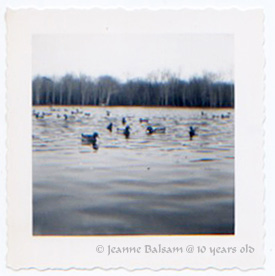
CoopersPond-1bCooper’s Pond was a lovely park, the same place our family went to enjoy picnics or walking. On these outings, I brought along my Brownie camera that I’d been given at 9 years old, and I loved taking photos of the ducks on the pond as well as feeding them. What wouldn’t be enjoyable about fishing?

We didn’t have real fishing poles, just long sticks to which my Dad had secured some kind of line, maybe string, with a hook on the end. On the hooks, we put a piece of bread, and then we cast our lines into the water. It didn’t take long before I got a nibble, and something tugged at my line. My father got all excited, and instructed me to pull it toward me and then lift it out of the water.

There on the end of my line was a carp, probably only about 7″ long, writhing and twisting to free itself of the hook I had managed to snag in its sensitive mouth. I was horrified that I was the cause of this poor creature to be flailing about so, and I immediately began to cry, screaming, “Daddy, take it off! Daddy, take it off!” Daddy removed the hook from the fish and gently let him go back in the water, but I was inconsolable.

Who was I to have caused this animal such pain and make him fight for his life? As a child, I had not been able to make the connection between “having fun fishing” and the reality of a fish writhing on the end of my hook until I saw the results firsthand. I was heartbroken, I who fed all the ducks in that exact same spot, I who loved all animals from the earliest age I can remember.

It wasn’t until many years later, even still, that I made the next major connection that the meat or fish I cooked and ate had once been a sentient being. This is not what we’re ever told as children. The meat or fish served at meals appeared as a finished dish, prepared in some usually delicious way. One had nothing to do with the other.

The constantly evolving realization over time that the food on my plate had indeed been a living creature … and one who most likely suffered enormously before getting to my plate … enabled me to gradually eliminate almost all meat and fish from my diet in recent years. This is a plus as I move along the path to becoming vegan, but the earliest seeds of this transformation were sown when a little girl went fishing and found a humble carp to be her teacher.

Here is a dilemma I ponder nowadays … how, in writing children’s books, can I impart to young readers, without scaring them to death, of course,  that the animals they eat for dinner are no different in their capacity for contentment or pain than the animals they love as pets? That animals from chickens to elephants, honeybees to pigs, have complex lives of their own, social structures, families, attachments to their babies, and that maybe it’s not the right thing – the kind thing – to use them for our own ends, to cause them such suffering.  Is it enough to simply engender a love and appreciation of animals?

The Kitchen God’s Wife

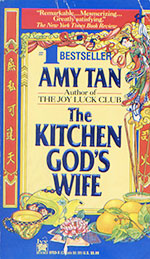
KitchenGodsWife-AmyTan2Had you asked me if I were interested in reading the story of a Chinese woman growing up in China in the late 20’s through the end of World War II, now living in California, and her relationships with family, I probably would have said `no.’ Had you told me the author was Amy Tan, who wrote The Joy Luck Club, I would have immediately changed my answer.

I am so impressed with how Ms. Tan immediately pulls you into her story; it seems so simply written. I don’t know how she does it, but I am engrossed from the first page. Pearl, the American born daughter of Winnie Louie, who grew up in China, begins the tale in the first person. She is observing her mother’s and aunties’ behaviors, their reliance on custom and tradition, and its seeming irrelevance to current day life. She doesn’t really understand her mother and is critical of her negativity and superstitions. They’ve had a rift between them since the death of Jimmy, Pearl’s father, when she was fourteen.

What becomes apparent in the first few chapters is that there are many secrets being kept by both Winnie and Pearl. But even deeper secrets are kept by Winnie and longtime friend, Helen …  secrets that are bound by fear, pain, dreadful memories, and the need to follow traditional Chinese customs. Believing she may be dying, Helen threatens to reveal the secrets kept for over 50 years and free herself of the burden. For Winnie, this cannot happen, and so, with current day family relationships established, the story switches to Winnie becoming the narrator and looking back at the past. She will be the one to at long last reveal the secrets, not Helen.

She begins her story when a child of six in China, when her beloved mother, and fifth wife to her father, disappears, and how Winnie’s upbringing falls to Old Aunt and New Aunt and their deeply traditional views. As in The Joy Luck Club, the story is not only about the characters, but about a culture and a country of which I suspect most of us know little. As Winnie tells her story, we learn about the critical qualities of politeness, respect and saving face, the role luck – or belief in it – plays  in people’s lives, and the inability to escape a traditional marriage, no matter how abusive.

The unfolding of Winnie’s life, her dangerous marriage, the loss of her children, the toll taken by war, all are answering the questions that her daughter has about her mother and why she is the way she is. This would be a deeply moving story of one woman’s life and her survival against enormous odds in any culture, but in The Kitchen God’s Wife, we also learn about China and a span of time and series of events that changed the country and its residents forever.

Ms. Tan brings it all together in the final chapters, a satisfying conclusion, and one which had me go back and read Pearl’s chapters a second time. Highly recommended.