A Very Best Friend

Growing up in a house with a very anxious mother wasn’t easy. It affected everything and everybody. While I understand as an adult why things were the way they were, it was difficult as a child living with someone who needed to control just about everything. I didn’t consciously know it then, but I longed for someone in the house I could just `be’ with … without intrusion, always accepting, always comforting, and who’d never give up a secret. And my dog became that someone.

When I was 5, my brother 9, our parents decided we were old enough to have a dog, so at Christmas they gave us a beautiful Boxer puppy. I don’t think either of us quite `got’ the concept of having a dog at Christmas when there were still so many other exciting presents to open and play with. But Tinkerbell, as she was named, was not to stay with us very long. Within a few months she developed epilepsy. I don’t remember seeing the seizures my mother described Tink having on the kitchen floor, with blood and foam spewed all over the room. Perhaps I willed myself to forget. There were no cures for epilepsy back then, and Tinkerbell’s only option was to be returned to spirit. I was so young, and hadn’t become very attached to her yet, I don’t think I completely understood what had happened.
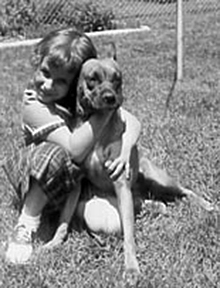
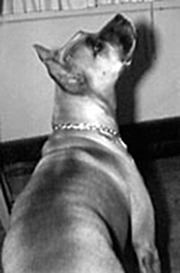
Then our parents got another dog. She was sold to them as a Boxer, 6 months old. I recall my mother being so happy that she didn’t drool like other Boxers whose faces were pushed in. There was a reason for that … she wasn’t really a Boxer. At best, she was a Boxer/pit bull terrier mix. My obedience trainer, when he looked at my childhood photos of her, told me that she was pure, and that was how they bred American Pit Bull Terriers back then. It didn’t matter … she quickly became the best friend and confidante I longed for. Her name was Dutchess. My mom had `officially’ named her Dutchess Von Wiggles because she had a butt that was constantly in happy motion.

Dutch couldn’t sleep with me as she wasn’t allowed on the second floor, so I slept with her whenever I could downstairs. We watched TV together, me resting my head gently on her side; and we curled up in sleep on the living room floor. Dutchess learned all the tricks a dog learns, and loved to go for walks or play outside in the yard. I can honestly say, in a way that only a dog or animal lover would understand, she was everything to me … she was my best friend. I did have a human best friend – happily, I always had friends — and I had my big brother to play with and taunt, but Dutchess was different. She was just what I needed – another soul in the house that simply loved me straight out, no matter what. And I adored her for that.

When I was little, my parents would cover her eyes and ears and I would hide. Then they’d let her go … “Find Jeanne!!” And Dutchess would search every nook and cranny downstairs to see where I was hiding, just bursting into wiggling, wagging joy when she found me. What child doesn’t live for those moments? She made me feel safe in a childhood where feeling emotionally safe wasn’t easy. Dutch was the heart, soul, and embodiment of unconditional love. She was both my rock and my wings, my compass and stars; she was my comfort and confidante. She was one little girl’s very best friend.

* This story was originally posted in 2007, and has been edited and updated.

All You Dream of …

A new year is on the horizon.

For this new year, may we all find our dreams, our peace,
our perfect right place in the world.

May our world also grow in peace, in love. and in acceptance of all,
both human and creature.

And may we always remember that peace begins with us.

Here’s to you and your dreams fulfilled.

It Is What It Is

This little phrase is bandied about all over the place nowadays; it’s on mugs, tee shirts, posters and more. And like so many sayings that become pop sensations, there is an undeniable element of truth in it.

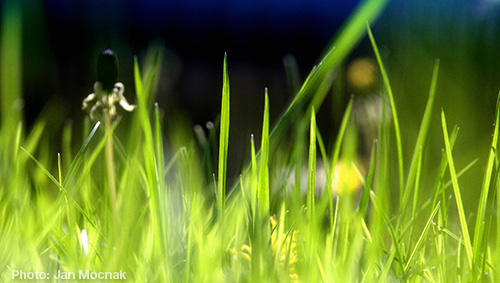
Grass-JanMocnak2

I was reading, (kind of re-reading and reflecting on, actually), Deepak Chopra’s small volume titled The Seven Spiritual Laws of Success, which are, according to Chopra, really the same as the Seven Spiritual Laws of Life. In the chapter about the fourth spiritual law, the Law of Least Effort, he writes about how easily we can fulfill our desires by learning, as nature can exemplify, how to do less and accomplish more. There are three little lessons within this law, and the one that reflects this post’s title is the one I am currently pondering.

The idea is to accept people, events, and situations exactly as they are in this very moment, versus what we would like them to be. Sounds so easy, but it’s not always the case. So much of our unhappiness comes from our disappointment and frustration that people and situations are not what we’d hoped, expected and/or planned. Think about it. We did something nice and so-and-so didn’t even have the courtesy to thank us, or didn’t thank us enough, soon enough, or whatever. We planned so carefully for a party and it rained. In addition to that, some people didn’t show up, and they never called or texted, etc. And we become miserable. The variations are endless, and of course, run the gamut from day-to-day occurrences to life-changing events.

7SpiritualLaws-DChopra2Life is filled with all kinds of disappointments and we have a choice to accept them and let them go … or not. When we don’t, and we grab on like the proverbial dog on a bone? we become yet more miserable. We can make ourselves crazy. This accepting of “It is what is is” seems to me to be a lifelong lesson, to be learned again and again in different circumstances and at different levels of awareness. While expending less energy on what isn’t or what might have been, we gain so much more for other things.
Chopra makes analogies with nature, such as fish – they just swim, or grass – it just grows. Imagine if grass worried if it would be mowed or chewed on by cows or destroyed by weed killer. It doesn’t — it just grows. We can do that, too. Accept this exact moment as it is. It’s not to say we can’t intend for things to be different in the future, but right now? It is what it is.

It can be easy. Or a worthwhile challenge. Or the ruin of our day. Our pick.


Teaching Tolerance through Food

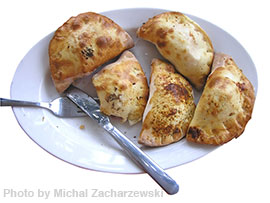
Pierogies-MichalZacharzewski2At first that may sound like a wacky idea, but who could argue with teaching tolerance to kids and who doesn’t like food? The idea is not mine*, and actually I’m focusing on just a part of the author’s three recommendations to remove judgment, be aware of your own behavior, and diversify your life as a way of inspiring your kids. The third idea is about broadening a child’s frame of reference so that those kids who might seem “different” can seem “normal.” (their words.)

The recommendation was eating out at international restaurants or creating a regular family event that features different ethnic foods while learning about that culture. This is really genius to me. Unless you have a super-picky eater, you can generally find a dish in almost any culture that is tasty and palatable, even to children. Think about starting with your own heritage. For example, I have six different nationalities between my grandparents and great grandparents. That’s where I’d start, right with one’s own family.

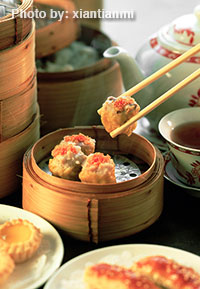
DimSum-xiantianmi2Let’s pick one … how about Irish? It might not be easy to find an Irish restaurant nearby, (although there is at least one in Manhattan), but we can cook up some Irish goodies at home. There’s lots of ways to cook up potatoes and cabbage, and if you eat meat, there’s corned beef for starters. Or …. Irish soda bread anyone? And perhaps some stout for the adults. These are the obvious choices, but exploration reveals greater variety in any country’s cuisine. Meanwhile, you could learn about Ireland’s history and of the Irish when they came to America, what they ate in the past and what they eat now.

Today we are seeing more different cultures than we did even a decade ago, between immigration, (the very same way so many of our own forefathers got here), but also in increased adoptions from overseas. Our children now go to school with Russian, Vietnamese, African, Chinese, Korean, and Colombian children, among others, all adopted. Understanding what these children eat in their native culture and serving something from it at our house while learning about that culture is to help them be understood and accepted.

Chimichanga-JavierArmendariz2Depending where you live, you can also visit restaurants of different cultures. Skipping the chain food restaurants, it’s still possible to find authentic Chinese, Mexican and Italian foods in many places. It’s now becoming easier to find Thai, Indian, Vietnamese, and Korean for not too long a ride. Without leaving my state, you can also find authentic Hungarian, German, Ukrainian, Polish, Szechuan, Portuguese, and Cuban food and more. The key is to learn about the culture as well as enjoying the food.

Maybe your kids have some new students in their class. They’d like to learn more about them but are feeling shy in reaching out. Let’s find some facts and enjoy their food! It’s often been said that knowledge is power, and in this idea, that’s half of it – knowledge AND good food can be the power of tolerance. Bon appétit!

* My post is inspired by one segment of the Better Homes and Gardens‘ series called The Good Kid Project which explores the qualities that are key to a happy, well-adjusted child. Their January  column is devoted to tolerance. Visit their website for more info.

Searching for Serenity

Sunrise-ByCherylEmpey2

Recent events have me pondering … journaling … rather than recording my thoughts in a public forum. As you are well aware, there are times in our lives when we have to take certain events and look at them from every angle, trying to get them in some comfortable spot so we can live with them, especially since there’s nothing we can do to change them. And aye, there’s the rub.

I am not good at helpless. I am particularly not good at helpless watching another – in this case, an animal – who is suffering, and for whom I can do nothing. There are times when we really have to come to grips with whatever it is and accept our own limitations in action regardless of how our hearts are reaching out. In all the years I have been involved with animals, rescuing and healing them, and, depending on the circumstances, finding them homes, those situations that have been the most painful have been those where I could do nothing.

I have been told many times along the way that it was not/is not my responsibility to save everyone .. or every animal … that each of them, like each of us, is on his or her own journey, and I can only do as much as I can do. Whatever the issue is, and it may be different for many of us – animals, children, the elderly, loved ones, those persecuted unjustly for any reason, anyone suffering – if we have a heart, we want to do something … make it better.

But sometimes the change has to be within ourselves. To accept our limitations and to understand that our inability to alter one circumstance does not mean we are failing … it only means that sometimes, despite our desire, it is not ours to change.

So I have found myself thinking a lot of the Serenity Prayer, written by twentieth century American theologian, Reinhold Niebuhr. As short as it is, it is brilliant and to the point. I’m sure you are familiar with it.

God grant me the serenity to accept the things I cannot change;
The courage to change the things I can;
And the wisdom to know the difference.

I believe that sometimes we need to accept that just being who we are is enough. And that sometimes, achieving that may be a lifelong lesson given to us again and again until we finally know it to be true.