The Advantage of An Older Sibling

There are often advantages for a younger sibling having an older (in this case) brother or sister. The one I’m writing about has had an unintentional and lifelong impact.
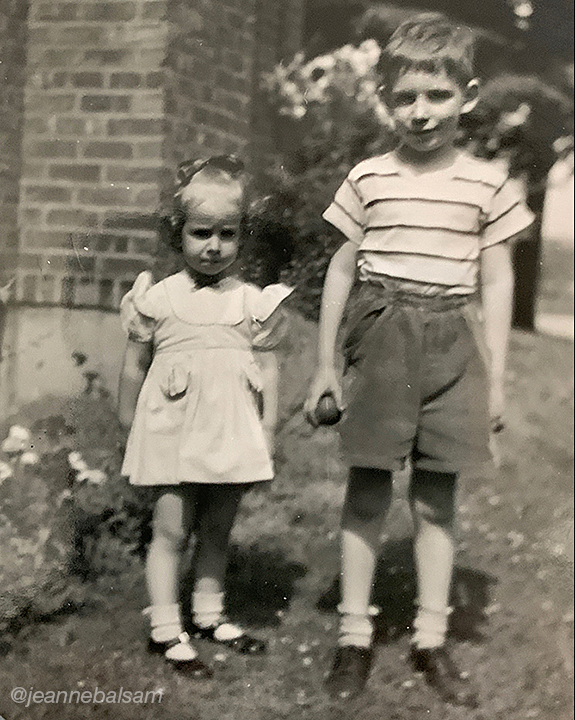
We grew up in a family of readers. It made perfect sense that we would be read to as children. Where the older-brother-advantage came in was when my Mom would read to him, I was also on her lap. I was likely only about 1 year old then, but I looked on, taking in every word on the pages.

As we grew, I continued to soak up the words and stories meant for an older child. I was three years old when he was seven, the reading level of the New York Times. The amazing and unintentional result? My Mom realized that, at the age of 5, I could read a newspaper! She was very quick to point out that it wasn’t with full comprehension, lest I get a “big head” about it, but the truth is, without my older brother, that never would have happened.
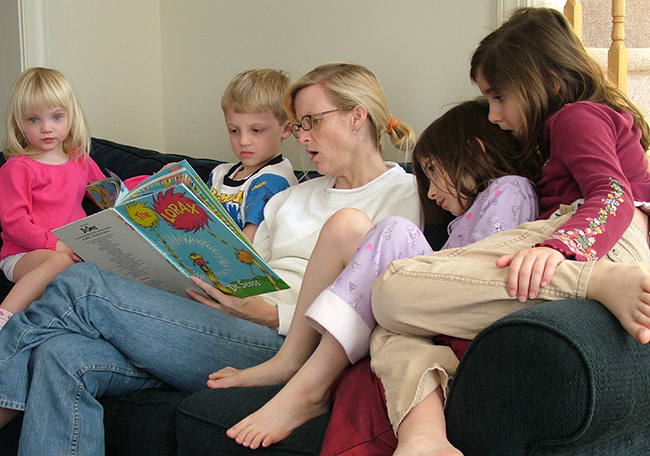
My point here? Never underestimate the ability of a child to learn at an early age. If you have kids or grandkids, keep the youngest one(s) close by while you read to their older siblings because they, like me, will soak it in and get a head start on both reading and learning.

Let’s always read to the little ones at bedtime. It’s worth making the time, even for one story. It undoubtedly helped that my brother and I were both read to each night before we drifted off to dreamland.

It also helped that our family were readers. Our parents and grandparents were always reading novels and/or newspapers. They were my role models. Do we really want our kids having the idea that the only way to read is on a phone?
Having a membership to the local library is invaluable. Bring the littles along whenever possible. Let them experience the magic of so many books at an early age, to feel the joy of `what do I want to read now?’

As I move along in life, I become increasingly aware of what our future needs. One of those things is adults who can think and reason, learn and have compassion, all of which are inspired by an early love of reading.

p.s. Did you know that reading picture books to children is proven to develop compassion? Read more here.

It’s Banned Books Week

AbsolutelyTrueDiary-SAlexie2I’m always glad to see that more and more publicity is given to banned books. Why? Because to me, banning books is the same as infringing on the right to free speech, except in print. Simple, right? Maybe even obvious.

I’ve pictured here the cover of number one of the ten top most frequently challenged YA (young adult) books in America, The Absolutely True Diary of a Part-Time Indian by Sherman Alexie. It’s a YA novel about a boy on the Spokane reservation who starts going to an all-white farm-oriented high school. (I apologize for the blandness and brevity of that description, but I’m not going for a book review in this post, so please do read more about it.) However, this novel also tops the list of ALL of the top ten banned or challenged books of 2014.

Why is it challenged/banned? The ALA, (American Library Association) provides the following reasons:”anti-family, cultural insensitivity, drugs/alcohol/smoking, gambling, offensive language, sex education, sexually explicit, unsuited for age group, violence. Additional reasons: “depictions of bullying”.

Hmmmm  – everything teenagers are facing in everyday life nowadays.

But don’t take my word for it – please read more on the ALA’s page on banned and challenged books, how they come up with their determinations, and many more links, including the top hundred most challenged book by decade. This is fascinating reading to me because I am always amazed that in a country which so strongly defends freedom of speech, we want to burn those words when they’re written down.

Banned Books Week: September 21 – 27

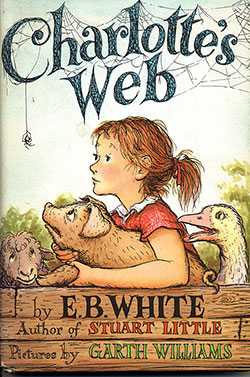
CharlottesWeb2This Sunday, September 21, marked the beginning of Banned Books Week which celebrates the freedom to read. An annual event organized by the American Library Association, (the same people that award the Caldecott and Newbery Medals) , Banned Books Week is sponsored by a number of organizations who are against censorship. The website presents a wealth of information on books that are and have been banned, by whom and why, plus activities for teachers to discuss the important issues of censorship, banned books and the books themselves with their students. Additional information on Banned Books Week can be found on the ALA’s own site. On this site you can also find the 10 most frequently challenged books by year. In 2001, the most frequently challenged book was Harry Potter with John Steinbeck’s Of Mice and Men right behind.

The most common reasons for censorship are drugs, nudity, violence, offensive language, sexually explicit, anti-family, homosexuality, racism, religious viewpoint, suicide and unsuited to age group but there are a few others.

A fascinating article on BuzzFeed is about fifteen children’s classics that have been banned, where and why. This includes James and the Giant Peach by Roald Dahl, Charlotte’s Web by E.B. White, Winnie the Pooh by A.A. Milne and Where the Wild Things Are by Maurice Sendak. Granted some of these were banned  quite some time ago, and some by local municipalities, but some were banned as recently as 2010.

I don’t know about you, but I find this all fascinating. Censorship is no small issue, and the facts about who censors which books and why is an insight into the fabric of this country – what we, as a people, are afraid of, offended by and threatened by to such a degree that we can’t allow our children to read about it. As best I can tell, it’s usually the truth.