Yes, I find crows magical, and I am a fan. Whoa, whoa! OK, all you farmers out there – I see you throwing your hands up in the air with a loud and unified “OY!” But hear me out. Let’s look at these magnificent creatures from three standpoints – science, myth and magic, and personal experience.
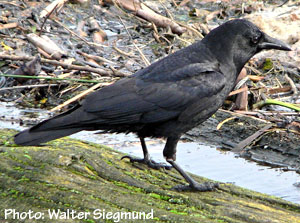 First a little science. Did you know that crows and ravens (same family) and macaws have the highest brain to skull ratio of any bird on the planet? In fact, their brain to skull ratio is higher than in humans! This in part accounts for their high intelligence, not to mention they have been on the planet for 60-65 million years. Crows also have a skill accorded to one of the most intelligent mammals on earth, the great apes, i.e. they create and use tools. Crows also will gather around one of their own when it has died to try and determine the cause of its death. They will learn the facial configuration of a mean human and teach all other crows to know it as such and avoid that human. When a crow leaves its flock and joins another, it immediately acquires their “dialect” by taking on the characteristics of the most popular crows in that flock. No intellectual slouches, these crows. Learn more about them.
The magic. When I designed my own website a number of years ago, I drew the header for it myself. The header featured none other than the crow, and I have utilized that symbol for my blogs. Why?

Because in certain cultures and mythology, the crow is believed to be the symbol of magic and creativity, something near and dear to every artist’s soul. In some cultures the crow has been the symbol of evil and/or death, juxtaposed against the white of the dove and purity. I don’t see life in black and white terms, and for all their brilliance, I like the crow’s mythology in Native 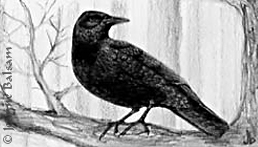 American terms and Crow Medicine. As such, Crow is a guide on the path to spirituality and enlightenment and is the keeper of sacred law. It is said that Crow has known the darkness and when they appear in our lives, may be guides through our own darkness on the path to enlightenment. Granted, these may be mythological ideas, but it can be said that all religious/spiritual beliefs are mythology, just different. I am not arguing that point, just drawn to the many inspiring aspects of the beautiful and intelligent crow.
Personal experience. I have a very deep back porch, and during the day, next to my back door, is a bowl of water and dry food for my neighbor’s cat. I’m working at my computer when I hear a rather loud caw. “That sounds mighty close,” I think. I look out the back door, and there is a good-sized crow 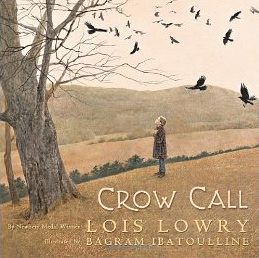 pilfering the dry food. She sees me and flies away. Not 10 minutes later, I hear the caw again. I appear and she flies away. Shortly thereafter, out of the corner of my eye, I see a flash of black through the side door window. She has learned in only two incidents that her caw brings me to the door, and now flies in silently. Seeing me again, her next attempt was from a different angle that I could not easily see.
Another time, I hear muted crow noises and slip quietly and unseen to watch four of them on the porch. They are talking amongst themselves and jostling for position, pushing one another away from the cat food bowl. I take their verbiage to mean “Wait your turn” and “Get out of my way.” It is likely a dominance issue. I knock on the window and they disappear, but I could have watched their antics for hours; they were quite amusing. Now, as a result of this, I have to bring in the dry food for a while.
 Occasionally, I will see a crow on my walks or on the fence near the window where I work. I always say hello and am sometimes acknowledged with a look and a “caw”. When a crow -– or any animal – appears unexpectedly and/or repeatedly in my life, I may look into its possible meaning. In the case of a crow, I might be at a crossroads, looking for or ready for a change, and need to pull more on my own intuition. Even if that has nothing to do with the crow, when is it ever a bad idea?
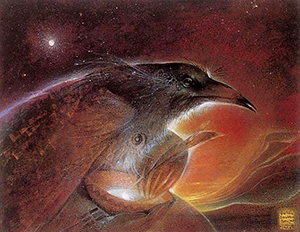
One last thought .. there is so much amazing art regarding crows, among them gorgeous paintings by Susan Seddon-Boulet ( above left), but also in a favorite children’s book, Crow Call by Lois Lowry and revered illustrator, Bagram Ibatoulline.
The natural world is filled with wonder and beauty. Depending on the day, I could happily write about pangolins, pandas, or hammerhead sharks. Today, it’s crows.
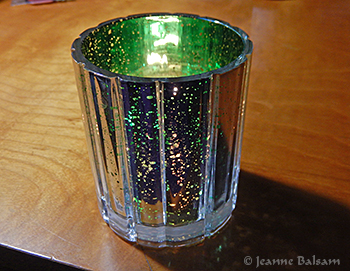 It was Wednesday, a day predicted to be cloudy and cold with possible snow showers in the afternoon. The perfect day to be inside as I had a good project to focus on. But first, something lovely to light my day. I realized, after I’d taken a few pictures, that the sparkle of a tea light in the unique beauty of mercury glass could not easily be captured with a camera. It’s quite magical, so I’ll offer my best try, and you can imagine the light shimmering within.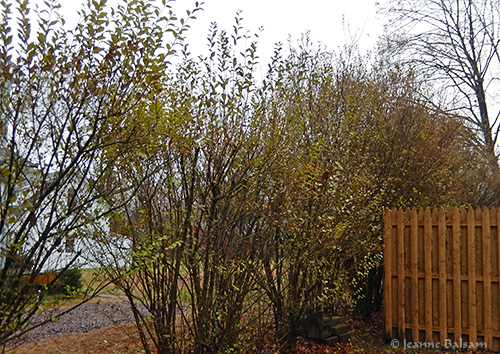


 Still A Dreamer