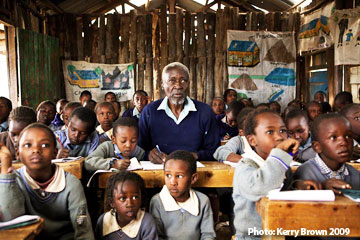
History seems determined to find me. I haven’t been looking for history, but somehow I am bring coaxed into looking at periods in time of which I know little or nothing, most recently British colonial rule in Kenya in the 50’s. I know. How did that happen? (Well, one look at the photo, and you may know.)
 Like the experience of many others in a time past – and perhaps still the present – history was taught in such a way that it was guaranteed to, at the very least, leave no lasting impression, and at the worst, develop in one a real distaste for it. The latter would be me. I dutifully swallowed the dry rattle of names, dates, places and events and dutifully coughed them back up for tests. Not until I got to college and had a brilliant professor who made history truly come alive did I suddenly realize the fascination of history. And by then it seemed too late; I had such a fragile and spotty framework of knowledge on which to hang any new historical insights.
But history seems to be hunting me down through books and/or movies as of late … Afghanistan before and after the Taliban took over through The Kite Runner; the deep South during the Civil Rights movement in The Help; the Civil War period in Oklahoma in what I’m reading now, Paradise, medieval times in Britain in The Last Templar and so on. History isn’t the subject; it’s the backdrop, but it’s impossible to not be drawn into the history of the time period when reading the book or watching the movie.
Most recently it’s The First Grader, a movie set in Kenya in 2003. It’s based on the true story of an 84 year old villager, Maruge, who, when primary education was made available to all, wanted to learn to read. The story is absolutely inspiring. There he sat, having fought repeatedly for his right to do so, with six year olds, five to a desk, learning the alphabet. His rapport with Jane Obinchu, the instructor, and the children is a testament to the spirit of those who believe in something enough to pursue that dream and love doing it in spite of all odds.
What was far more difficult to watch, shown in sporadic flashbacks, was what happened to Maruge in the early 50’s when he was sentenced to a prison camp under British colonial rule. The Mau Mau tribe, whom Maruge had joined, had risen up against the corrupt British but were defeated and captured. To force him to renounce his vow of loyalty, his captors forced him to watch the execution of his wife and children, (this was not shown onscreen), and tortured him brutally. It was hard to not wake up the following morning flooded with sadness as to what has gone so wrong in human beings that they can treat others as they did.
But in the long run, that does not change my recommendation to see this incredibly rich and touching movie. The First Grader was filmed in Kenya, and all the children are actual attendees of one of the schools in the Kenyan bush. Their glowing faces just light up the screen. One little girl named Agnes, seemed mildly deformed and had a severe limp like Maruge. She told him she wanted to go to school so she could be a doctor … and then she could make him better. The children have almost as much impact as Maruge himself. It’s hard not to smile when thinking about this movie, in spite of the reflection of such a terrible time in history.
Maruge became the oldest recorded person in the world to ever attend first grade and drew his own bit of celebrity for his devotion to education. So much so, that he was flown to New York to speak at the UN. Should you watch The First Grader, be sure to watch the short documentary and you will see the real Maruge, Jane Obinchu and others. You will also see how the director worked with the children who had never seen a television or movie. You may be inspired.

 Still A Dreamer