The Creative Sweet Spot

For most of us, our lives were built around the security of routine. For us creatives, routine can become a prison. Where is the sweet spot between the necessity of routine and stepping outside it to create? I’m working at finding that balance.

It’s an established fact that children thrive on routine. In our earliest years, it provides stability, safety, and a kind of certainty that life is predictable.

Photo thanks to: Arthur Krijgsman / pexels

School provides more of the same. Our earliest schedules prescribe the beginning of our day, the order of subjects, teachers and classes, and a 3 o’clock bell. In time, we evolve to work – get on the train, the subway, in the car to arrive at work at 9, finish at 5 (or some variation.)

The one-time comfort of routine can easily become a sturdy fence of limitation around us. Even when schedules shift, there may still be an insistent subtext.

Where and when is the space to be creative? Does it have to wait until the end of our day or the weekend? I still struggle with this even though I freelance from home. While I continue to mostly work a traditional workweek for clients, I do have some flexibility.  
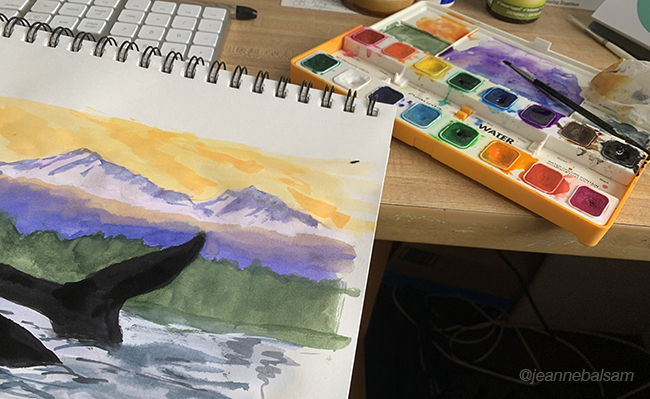
Yet I wonder – can I just leave what I’m doing at the computer and go draw or write in my studio for hours at a time? Can I just leave my desk and go walking and take photographs? And as crazy as this sounds, can I take a Monday-Friday “workday” and spend it cleaning, or cooking and baking – instead of doing something work-related?

Changing our habits is how we grow. To create is to step outside our comfort zone, to let go of what feels safe and secure, and take a leap, of whatever size it may be. To break a habit is to rewire our brain, one which, for many of us, has been wired for life to fit a schedule.

Breaking that kind of habit can be a challenge, and while I wish it were otherwise, it often still is for me. I’m pushing through, little step by little step, often grappling with guilt, but it’s the only way out. I actually have no idea what my sweet spot will look like, only that it can’t be this, and for now, every little push has to be enough.

Do you struggle with breaking the habit of routine to find your creative self?
Beginning Early in Life

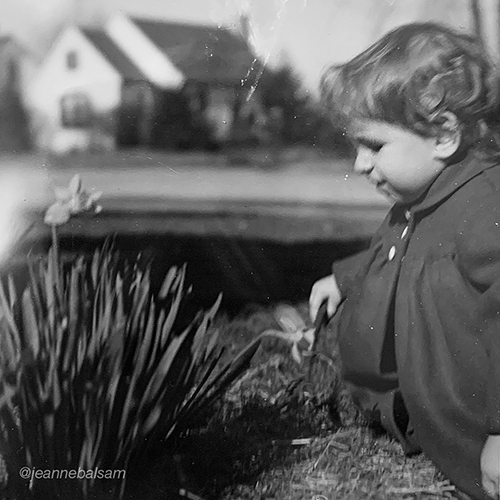
My love of nature and animals began when I was very, very young. I give some of the credit to my Dad, who was the gardener in the family, and who was always so kind and considerate to all creatures, including the bumblebees and wasps that occasionally got in the house.

People were often surprised that I knew the names of so many flowers and plants at such an early age. Generally, it was because my Dad had planted them somewhere around the house or in the yard, and I followed him with endless questions. At other times, it was because our family visited places like the Bronx Botanical Gardens, or the Bronx Zoo (now the Bronx Zoological Park). I consider myself very lucky to have had my innate love of animals and nature nurtured as I did.

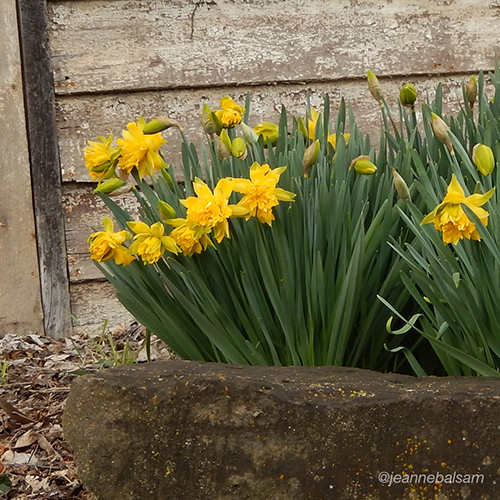
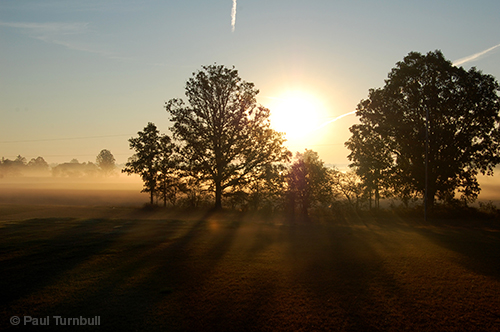
For many of us, it’s not really all that far to walk someplace to appreciate the beauty of nature. Being in nature is so healing, so restorative, to mind and spirit. I am reminding myself – and you, too, if you’d like a reminder – to take a little time among the trees, flowers, and greening earth.

The day goes quickly and we can miss the chance. Life goes quickly, and we can miss the chance.

Photo credit of me: William Spohn (my Dad)

Relief

One of the things I did not expect after getting my second COVID vaccine was the degree of relief I felt. I knew I’d be glad to have it done, knowing that in two more weeks I’d be as protected as I could be, but it was almost a mild euphoria. The start of a new day!

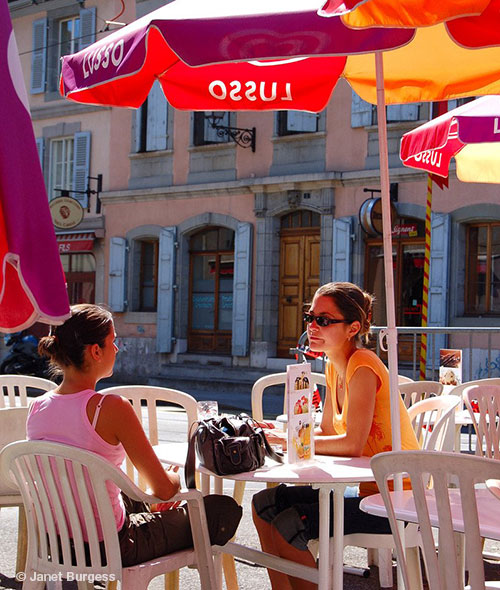
The pandemic is not over by any means, but COVID is on the run. I can now finally meet with my vaccinated friends or family at outdoor eateries with confidence. Or just hang out with them outside without a mask so long as we’re not cheek to cheek. It really IS a relief.

And a big change. I had not realized the degree to which I have been stressed over the last year, emotionally holding my breath, knowing that COVID really could be anywhere. It’s a lot about degree.

The facts – My state is 46.8% fully vaccinated as of today. And 50% of those with COVID continue to show no symptoms. The vaccine is 94% effective (Moderna). Clearly, there are still risks. However, the more people that get vaccinated, the safer we will all be.

That’s what I look forward to … good health and being safe … for you, for me, for all of us.

Your Coffee Changing Your World

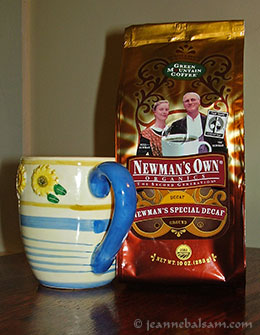
NewmansOwnCoffee2Once vilified as being a troublemaker to your health, coffee has been getting a whole new appraisal as of late. Its health benefits are now being recognized. An article in Prevention magazine wrote up how coffee can help lower your risk for Type-2 diabetes.

Researchers at Harvard University looked at 28 studies with more than a million combined participants and found that people who drank six 8-ounce cups of coffee daily had a 33% lower risk of diabetes. The good news is that each cup lowered your risk by 9%, so you don’t have to go crazy with coffee consumption, but just be aware of the possibilities.

What’s even more exciting is that it’s not the caffeine responsible for the effect, so if you drink decaf, this still applies to you. Researchers suspect that it’s a naturally occurring chemical in coffee called chlorogenic acid that reduces the rate at which the intestines absorb glucose.

So that’s how you can change your personal world, but how about expanding your vision and changing the world at large?

The coffee you drink can make an actual difference to the rainforest and to saving the lives of migratory and resident birds. With the advent of agri-technology, sun-grown coffee became the new big thing, but is not without a goodly number of drawbacks. Here are a few differences between your typical coffees and shade-grown coffees in their benefits to wildlife and the environment.

Poco-Coffee2* Migratory birds and many resident birds, (such as Poco, a rescued macaw, right), find sanctuary in the forest canopy of traditional coffee plantations, while in sun-grown coffee areas, there are 90% fewer bird species.

* Shade trees protect the coffee plants from rain and sun, help maintain soil quality, and aid in natural pest control, thanks to the birds. These traditional coffee plantations also help to conserve watersheds, leading to higher water quality and quantity for local populations. Sun grown coffee requires chemical fertilizers and pesticides and year-round labor, placing financial demands on the growers. It also leads to greater soil erosion and higher amounts of toxic runoff endangering both wildlife and people.

* Shade coffee plants can produce crops of beans for up to 50 years, while sun grown plants produce for only 10 – 15.

* The higher quality beans produced by shade grown methods produce a better tasting coffee!

FairTradeLogoWhere do you find shade-grown coffee? Most coffees marked “Organic Fair Trade” will also be shade-grown. Read the labels and check out the producers’ literature and/or web sites for details. Smaller merchants, health-oriented food stores, and, increasingly, your local supermarket now carry shade grown coffee. There is one more bonus – when you see the “Fair Trade” logo on your bag of coffee, or elsewhere, it assures you that the farmers and their families who grow the coffee are being paid a sustainable living wage for their work.

While it may be a bit more expensive than sun grown coffee, it preserves the biodiversity of our planet, the rainforest, and a multitude of bird species, plus it helps humanity. A pretty good deal all in one cup of coffee.

So you can change your personal world, and spread your wings and change a whole lot more of it.

Transitions

Just like life is filled with dreams and plans, so is it filled with transitions.

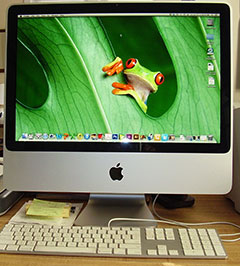
TheMac2Over the last 2 months, I’ve had a number. The most recent, though initially stressful, has been the now-happy upgrade of my beloved Mac, the primary tool of my trade.  Reliant as I am upon my Mac to make a living, I was not happy to find it behaving increasingly squirrelly as of late. It’s stood up to the test of time, but has missed a few OS upgrades as well as the accompanying program upgrades. My Mac superhero, Steve, told me that right about now is when hard drives often start to fail. Gulp.

It seemed the time had arrived. So off it went to Steve to have a new hard drive and double the memory installed as well as the latest OS and other upgrades. He brought it back, did his on-site magic, and then the biggest transition began, my learning all the (sometimes) improvements of the latest and greatest software. Trust me … a transition! (I’m much calmer now.)

But the bigger transition has been – and will be –  in my diet. While not really horrible by any means, my cholesterol was found to be sufficiently high that it needed addressing. Before you could say “lower your cholesterol,” I found myself plopped on 3 drugs — me who takes no meds at all, just vitamins and supplements, and eats largely organically, MainStreetVegan-VMoran2relatively low-fat and 99% vegetarian is suddenly infused with three. And so began a series of escalating side effects, med changes and so on … not a happy experience.

Meanwhile, at a recent picnic I was pleased and surprised that a friend bought me a book – Prevent and Reverse Heart Disease by Caldwell B. Esselstyn, Jr., M.D. – which she read because of the benefit of the suggested diet to the prevention of cancer. I started reading. The regimen the author describes is beyond vegan in its restriction of fats, and a possibility, but has some very strong limitations. Still, I want to find a way to change my diet sufficiently to get off the meds, so I ordered additional books, one of which is pictured here, plus  2 cookbooks, Forks over Knives and the Joy of Vegan Baking and The Skinny Bitch Book of Vegan Swaps.

If I’m to consider going vegan, I need to know I have options … lots of them. I’m a bake it with butter, sugar and eggs kind of girl, and this is going to be a HUGE transition. And so I’ve begun reading, investigating, considering and shopping. That I already eat animals rarely makes one part easier, but giving up dairy? Now THAT’s tough. So I’m cutting out more dairy and animal fat than I already have and wading in.

I know plenty about the quality, or lack thereof, of our food supply and the toll it is taking on the health of millions of people as well as the planet and the horrendous suffering it is causing billions of animals. I’ve never wanted to be a part of that and have taken many steps over the years to limit my participation. Apparently, the next step – this transition – is mine to take.