The Advantage of An Older Sibling

There are often advantages for a younger sibling having an older (in this case) brother or sister. The one I’m writing about has had an unintentional and lifelong impact.
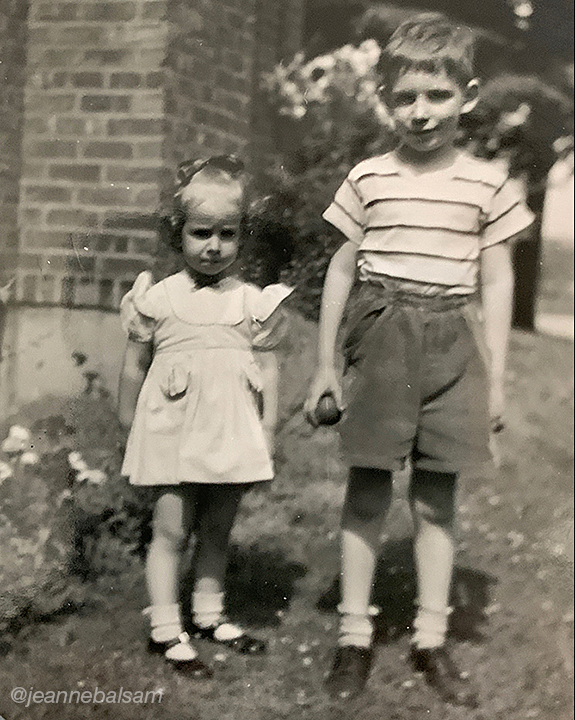
We grew up in a family of readers. It made perfect sense that we would be read to as children. Where the older-brother-advantage came in was when my Mom would read to him, I was also on her lap. I was likely only about 1 year old then, but I looked on, taking in every word on the pages.

As we grew, I continued to soak up the words and stories meant for an older child. I was three years old when he was seven, the reading level of the New York Times. The amazing and unintentional result? My Mom realized that, at the age of 5, I could read a newspaper! She was very quick to point out that it wasn’t with full comprehension, lest I get a “big head” about it, but the truth is, without my older brother, that never would have happened.
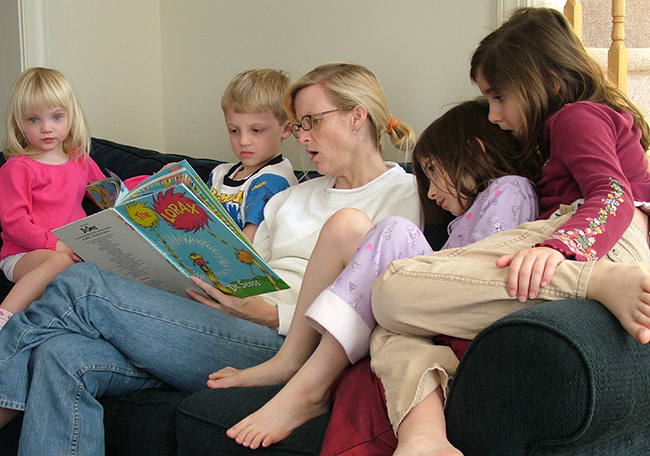
My point here? Never underestimate the ability of a child to learn at an early age. If you have kids or grandkids, keep the youngest one(s) close by while you read to their older siblings because they, like me, will soak it in and get a head start on both reading and learning.

Let’s always read to the little ones at bedtime. It’s worth making the time, even for one story. It undoubtedly helped that my brother and I were both read to each night before we drifted off to dreamland.

It also helped that our family were readers. Our parents and grandparents were always reading novels and/or newspapers. They were my role models. Do we really want our kids having the idea that the only way to read is on a phone?
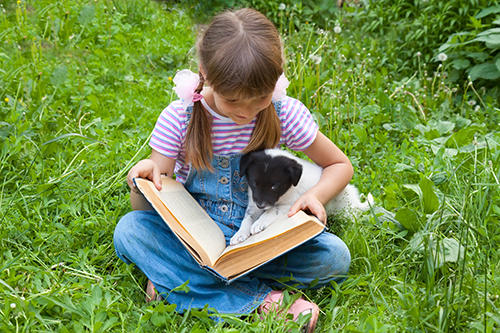
Having a membership to the local library is invaluable. Bring the littles along whenever possible. Let them experience the magic of so many books at an early age, to feel the joy of `what do I want to read now?’

As I move along in life, I become increasingly aware of what our future needs. One of those things is adults who can think and reason, learn and have compassion, all of which are inspired by an early love of reading.

p.s. Did you know that reading picture books to children is proven to develop compassion? Read more here.
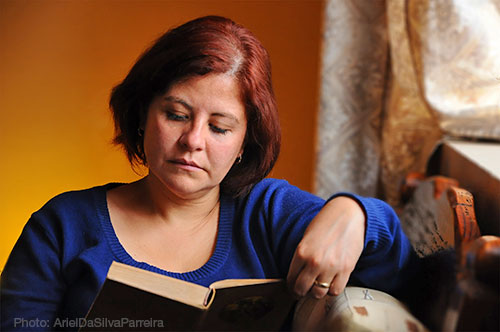
Promoting Reading for Women

That’s not what we usually see, is it? More often we find articles about engendering the love of reading in kids.

So I was pretty impressed to find in the September 2017 issue of Family Circle an article about the importance of reading for pleasure. I assume that many of you reading this blog, as writers, are already immersed in a regular reading habit, but this short article with “how-to” tips addresses how we, as women, are pulled in so many directions that we often let reading slide. And it’s true; an inordinate involvement with our phones, TV, internet – not to mention the real-life issues of our families and work – can leave us feeling we have no time to read.

But a Yale linguistics professor, Kenneth Pugh, mentions the importance of reading for pleasure as highly important for our emotional health as well as strengthening our creativity. Tips on how to get back into reading include never leaving home without a book; literally penciling in time in our daily schedule for reading; swapping a chunk of our TV addiction for reading time; keeping a book on our nightstand, etc.

For anyone not sure of how to get back into reading, the article suggested as number one – your local librarian. Librarians are a fantastic source of knowledge of the books on their shelves and with a few questions, can have you in a book you love in no time. A good local bookseller can do the same. In addition, they recommended the New York Times Best Seller list, Goodreads.com, or 2017 Popsugar Reading Challenge. What I loved most about seeing this article is that Family Circle is a magazine with a huge circulation of about 17, 560 readers that reaches a very mainstream audience.

Reading – and reading for pleasure – is important. I find myself concerned about all these moms glued to their phones. What kind of inspiration is that for their children? I’m hoping that a family-oriented magazine like this one will inspire more than a few women to reconsider their habits and pick up a book – for themselves, and also to read to their kids.


The Library Card

ChildrenReadingTintSometimes I have to stop and realize how incredibly fortunate I am to be living now, and to have grown up in a time and place where reading was always encouraged, and books always available. The two events I wrote about in the previous post are only possible for me because of these factors.

I am so grateful that, as a child, I was read to often and from when I was very young, that our mom read us a bedtime story each night before we went to sleep. Each week she took my brother and me to the library in town, a beautiful 1780’s Dutch stone house, where, after careful browsing, we emerged victorious with stacks of books in our arms. Once at home, we dove into our treasures. We had bookcases in our rooms, and it was a common sight to see our parents reading in the evening, long after the TV had become a living room fixture.

It’s easy to forget what an abundance of riches this truly is. We search the internet, e-mail, write and visit blogs and social media, and read books in a variety of 3-dimensional and electronic media with nary a thought. But that is not, and has not been, the case for many people in this world.

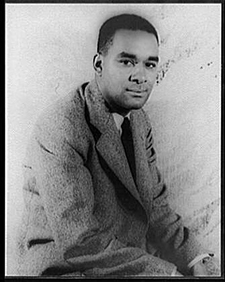
RichardWrightAwhile back, a fellow blogger shared this sentiment and gave me a link to a story by an author whose name I had not heard since I was in high school, Richrad Wright. He grew up in the deep South and in 1944, when he was 36, wrote the book Black Boy.  A particular chapter is titled The Library Card, and in first person relates Wright’s discovery of the vast reading material and knowledge to be had and to which he had no access because of his color. The books he longed to read only became available surreptitiously through the use of one trusted white man’s library card, and this depended upon Wright’s maintaining his attitude of ignorance and subservience to those around him.

For me, The Library Card eloquently makes the point of how blessed we are to be free to read, to learn, and to explore at will. There are people all around the world, including right here in our own country, predominantly children and women, who do not have access to books, nor can they, nor in some places, are they allowed or encouraged, to read.

There are plenty of ways we can bring books and reading to those who need and would benefit, but it has to start with this – the realization of how wonderful a gift we already have and frequently take for granted … a light that shines into the darkness, a transport to other worlds, an endless source of inspiration. Lucky, lucky us.

See you at the book sale.