 On to the books … Atonement by Ian McEwan. I wasn’t sure exactly what to expect from this, but knew it was a story whose initial chapters take place in London at the beginning of World War II and carries through the war, and then to the end of the century. It’s of a romance between the older sister in a very wealthy family, Cecilia, and the son of their housemaid, Robbie, their gardener. He’s a very bright young man, for whose education Cecelia’s father has been paying, with plans for Robbie going to medical school. But the story begins with the youngest sibling and third major character, Briony, a thirteen year old, who spends a great deal of her time writing. She is a very intellectual child, sheltered, and rather controlling. Early on in the story, she sees a flirtation between Cecilia and Robbie which she does not understand. When she witnesses another interaction in the library, she makes an assumption that will change the lives of these three characters forever. Her misinterpretation of what she saw and an incorrect confirmation of Robbie’s involvement in a separate incident results in his being sent to prison, and later, war. The story follows how the lives of these three were affected by Briony’s decision. It is a story about war, of love, and innocence. I did like the book – Robbie’s time in the war in northern France was remarkably and painfully well told – but the beginning was a bit difficult to get through, especially as Briony is not your most likable character. The writing was not in a style I usually read; the author was likened on the book jacket to Jane Austen. I did still enjoy it, and there is a wonderful twist at the very end.
After finishing the book, I watched the movie, which won a Golden Globe and was Oscar nominated for best picture, among others. My feeling about the movie is that I would not have really understood a lot of what was going on had I not read the book. And as is so often the case with books made to movies, there were so, so many critical, meaningful, and heart-wrenching details missing. I’d stick with the book.
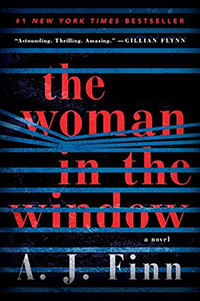 Going from soup to nuts, I then turned to something completely different – a fast-paced psychological thriller, The Woman in the Window by A.J. Finn. I read this in three days – it was hard to put down, as in you look at the clock and it’s 2 in the morning. It has been compared to two other books, Gone Girl and The Girl on the Train. The comparison is made in that the main characters are all unreliable narrators, but this book soon differentiates itself in many ways. Anna Fox, our MC, lives a secluded life; you soon find she’s an agoraphobic as a result of an unknown, horrible tragedy that occurred in her life. She’s on multiple medications, and against doctor’s orders, also drinks. She also spends a great deal of time watching her neighbors. Early on in the story, she witnesses a murder, she’s sure of it. But did she? Let me say this – The Woman in the Window reads like a house on fire, and Finn is an outstanding writer in more than one way. He (yes, it’s a `he’) spoon feeds you pieces of information, layering the suspense and all but turns the pages for you. Just when you think you know what’s going on, he throws in a major twist. Moreover, he has an exquisite use of language, not something you might expect in a thriller. I highly recommend this book. You’ll be at the (very satisfying) end in no time. Promise.
 This is an amazing historical novel, written in first person by a young woman, who, at the opening of the book, is making her entrance at the Sénat Bal in Paris, autumn of 1882. She is “La Genérale”, Lilliet Berne, famed opera singer and a falcon soprano. She is approached by a novelist who dares to get her attention, and asks her to listen to his proposition – a story he has in his possession, to which a score will be written by a promising composer, an original role created just for her. Such a thing is the apex of an opera’s singer career. And then Lilliet hears how much of the story is her own past life, which, if it came to light, would destroy her career. So few know her past; who would want to see her fall? And so begins our story.
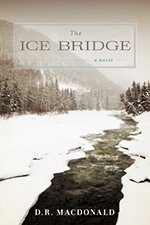 One of the very compelling features in a good novel can be place, where an author writes with such depth and attention to the environment inhabited by his characters that the location becomes a character all its own. I just finished The Ice Bridge by D.R.Macdonald, and was amazed at how quickly he had me immersed in the landscape of Cape Breton in Nova Scotia. This is an outstanding book in so many ways, not least of which was my having moved to the harsh, wintry landscape of Cape Seal Road right along with one of the main characters, Anna.
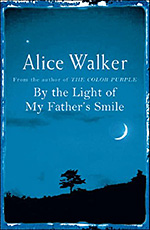 As I am beginning a new book – chosen from among the many that sit on my shelves waiting to be read – I remember exactly why I picked it up at the big book sale awhile back. I’d read a short story titled am i blue? by Alice Walker over 20 years ago in a magazine. It was about a horse in a meadow alone, bored, betrayed. The meadow was outside a home where Walker was living, and her experience of Blue told me volumes about her appreciation of the hearts and souls of animals. This story was later banned, I found, by the California School Board in 1994, as was, of course, The Color Purple, by all those who feel they know best what you and I should read and think. (You can read am i blue? and some commentary on the
 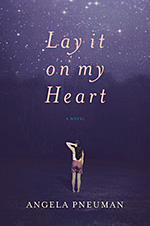 I’m looking forward to starting this novel by Alice Walker, but admittedly, my heart is still half living with Charmaine Peake in Kentucky. I just finished Lay it on my Heart by Angela Pneuman, a novel about a 13 year-old girl whose father is, or believes himself to be, a prophet. Living in a small town crammed with churches of every faith possible, where one third of all the men are preachers or studying to be one, Charmaine and her mother Phoebe have been barely getting by in the year while her father has gone to the Holy Land, instructing them to live by their faith alone. This is a coming of age story where Charmaine must come to grips with all that is implied in having the father described, a mother who has felt compelled to honor his wishes, and a growing awareness that perhaps she isn’t and cannot be the holy and God-fearing person that has always been expected of her.
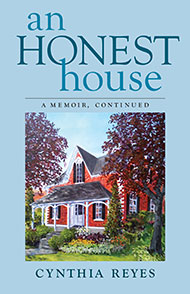 lovely
 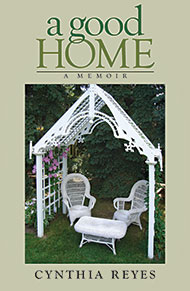 she lives in today … Full of lovingly drawn characters and vividly described places, A Good Home takes the reader through deeply moving stories of marriage, children, the death of parents, and an accident that takes its high-flying author down a humbling notch.”
 Still A Dreamer