A Thousand Splendid Suns

You think your pain and your heartbreak
are unprecedented in the history of the world,

and then you read.
~ James Baldwin
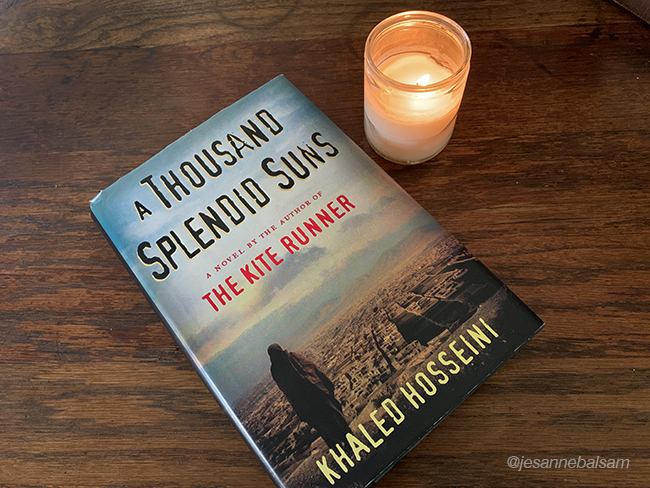
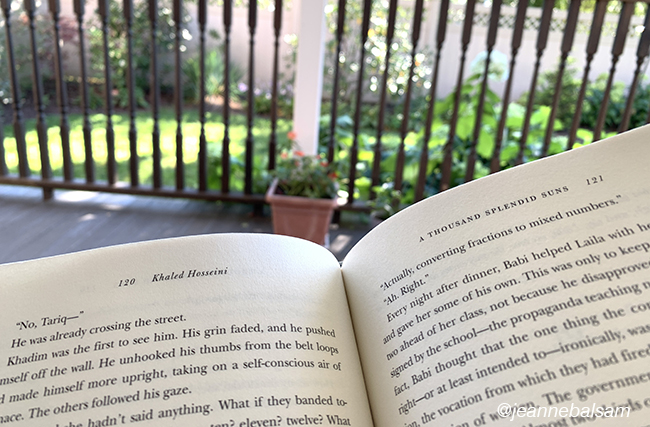
A Thousand Splendid Suns, historical fiction, by Khaled Hosseini was a very difficult read for me. For many reasons.

Most disturbing to me was the horrific brutality to women, to our two main characters, Mariam and Laila, but also to women in general under the shifting periods of leadership in Afghanistan. Under the Taliban, women were severely beaten or possibly executed for being on the street unaccompanied by a close male family member.

The abuse perpetrated on Mariam and Laila in their home by their husband was heinous. Rather than being happy for the two women, I was sometimes simply relieved that they somehow managed to survive. There were happy moments, but very few with him.

While the story begins in Herat, most takes place in Kabul over a period of decades when there is non-stop destruction between warring parties from within and from outside of the country. This would have been hard enough to read, but in the face of the horror going on currently in Gaza, the seemingly endless war in Ukraine, and an unfounded war in Iran, more war was painful to read about.

The fact that I am not a history buff by any means also made this novel a challenge, plus this is a culture I have little familiarity with. I had a lot to learn.

The story itself is essentially about two incredibly brave women who were not raised to be brave. In their fight to survive, Mariam and Laila became bonded like mother and daughter, repeatedly risking so much to protect their children and others they loved. How they endured and overcame so much loss and found strength through one another is at the inspiring core of this story.

As I write this, I find tears in my eyes as I think of Mariam and Laila, of Tariq, of Aziza and Kalmai, of Babi and Mammy, of Nana, and of Mullah Faizullah. Even for Jalil who, too late, came to understand what he had done. For Zaman, who ran the orphanage.

It is, in the end, a story of love, of heroism, of hope, and survival against all odds, but I now know why it sat on my TBR shelf so long after my having read The Kite Runner. Some books just ask a lot of you. This, for me, was one of them. It was worth it.
The Four Immutable Laws of the Spirit

These, courtesy of American author, Anne Lamott.

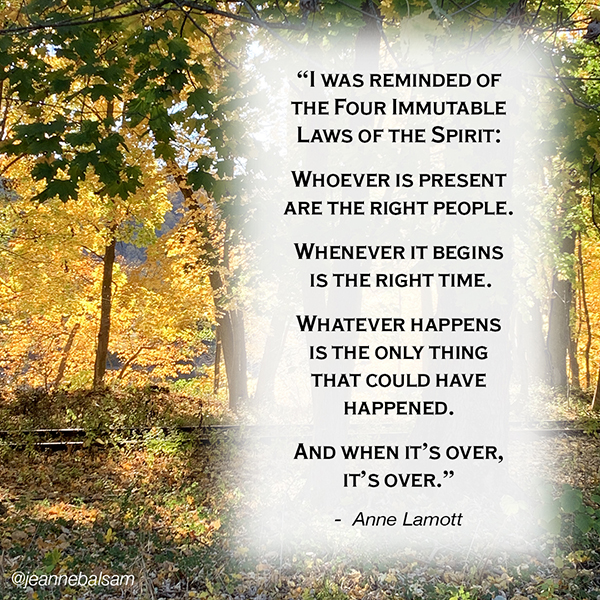
Anne Lamott is perhaps most known for her book on writing, “Bird by Bird.” This quote is from her book, “Some Assembly Required: A Journal of My Son’s First Son.”

“I was reminded of
the Four Immutable
Laws of the Spirit:

Whoever is present
are the right people.

Whenever it begins
is the right time.

Whatever happens
is the only thing
that could have happened.

And when it’s over, it’s over.”

Another quote from this book that I liked: “grace is a small white butterfly, and life is a semi-trailer careening up 101.”

All of Ms. Lamott’s books can be found here on goodreads.

What’s in A Name?

One thing we are all given upon arrival in this world is a name. That name will follow us, with rare exception, throughout our lives to the day we die. Others respond to our names, as do we. What would the effect be if we didn’t have one?

This is something I wondered about when I finished this book. Why didn’t the story, which was both emotional and urgent, have any feeling of emotion or urgency? And I questioned one unusual quality in the book – none of the characters had names. Only a dog, who was left behind when his family was taken, was given a name by the writer.

Written in first person, the writer was nameless, as was her dearest friend, who is only referred to as “the old man”, and her beloved editor, who is only known as “R”. This depersonalization by the author is obviously intentional, but what was her intent?

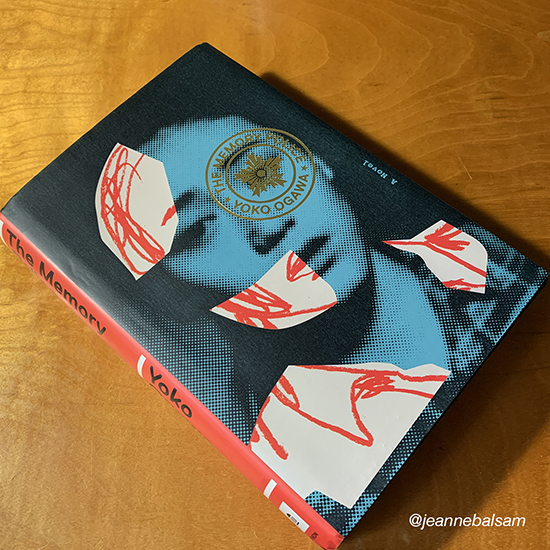
The book’s premise hooked me – an island where things are constantly disappearing, and people’s memories along with them. The disappearances are enforced by the Memory Police, a somewhat Nazi-like army. The editor, R, is able to retain all his memories since childhood despite so many of the related items having disappeared from the island. This is sure to make him a prime target to be “disappeared”, so the writer and the old man construct a secret room to hide him.

This has all the elements of a great story; but something was lacking – connection. Did all the characters remaining nameless make a difference? I think it did. Only the rescued dog was given a name – Don, and each time his name was mentioned, I perked up. Oh – what’s happening with Don?

Names are important. They are the first step in how I know you, how I call you. Who are you without a name?

Pushed by Change

We all come upon times in our lives when change becomes unavoidable.

Circumstances become such that we no longer have a choice – something has to give. The upside is that being pushed when we’re too tired to even run can sometimes yield the most unexpected and life-changing results.

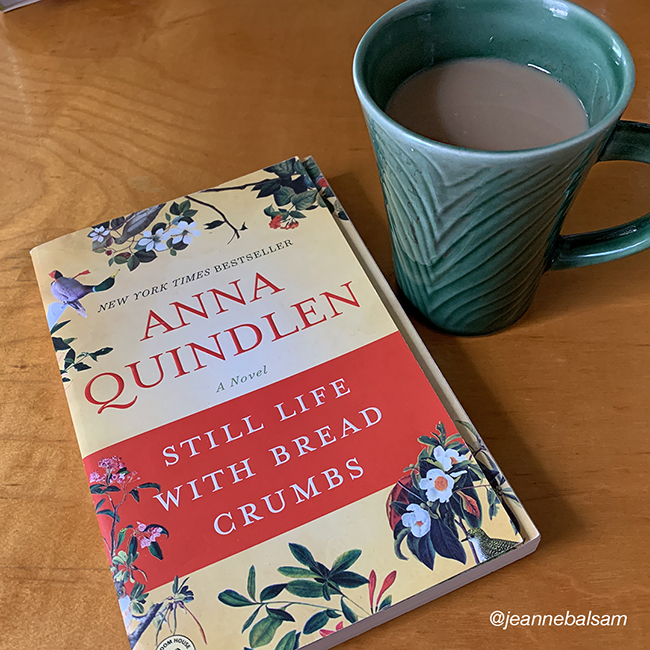
In Anna Quindlen’s Still Life with Bread Crumbs, Rebecca Winter, a relatively famous NYC photographer, faces those circumstances. She suddenly finds herself with overwhelming financial responsibilities due to family obligations no one else can carry, and a diminishing income due to a narcissistic husband and abusive agent.

To save money and sort out her life, she rents a somewhat ramshackle cottage in upstate New York. There Rebecca finds the unexpected – a very different kind of life, the life she hadn’t known she needed and the life she was truly made for.  

What an excellent read! I have read both fiction and non-fiction by this Pulitzer Prize-winning author and journalist. She has never failed to capture my heart, imagination, or intellect, often all three. Highly recommended. 4 stars.

p.s. Inspired by this novel, I’ve decided to return to Quindlen’s Thinking Out Loud and finish reading!