I can hardly believe t’s been a week already since I’ve returned from the 2-day children’s book conference in Princeton. I know I’m not alone when I say I come home exhausted, exhilarated, optimistic, grateful, exhausted, happy, enriched, hopeful, challenged, and oh .. did I mention exhausted?

Jumping into my standard 40+ hour work week the very next day does not leave a lot of time for reflecting on all that transpired, reviewing materials, notes from critiques, etc. But numerous thoughts and conclusions were ribboning through my mind on and off all week long, even while I looked forward to this weekend to catch up on some rest and start seriously considering where I was going with children’s books.
And a direction became clear. One of the big attractions of the New Jersey SCBWI Conference is that we offer “one-on-ones” to both writers and illustrators. This is often the focal point of the weekend for those writers who wish a detailed critique from agents and/or editors on their children’s books and illustrators who can have art directors review their portfolios. This year, I went full steam ahead and booked two agent critiques for my middle grade novel and one editor critique for a picture book I’m working on. Of the three critiques, one was so incredibly helpful, I was just thrilled.
In the past I have submitted manuscripts that were as finished and polished as I could get them. They’d been looked at by my critique partners, gone through numerous revisions, and perhaps even been seen at previous conferences. This year was different. The picture book is in the very early stages of development and I sought some insight and direction. The novel had once been a picture book, and through a number of professional critiques had moved through the chapter book phase to its true calling, middle grade. But I had questions, and I wanted to hear an agent’s opinion.
 The good news is that one agent confirmed my story is unique and not on the market, and she really liked the concept. The not-surprising news is I have a lot of work ahead of me, as in, now I have to write the rest of the book! This agent really paid attention when looking at my synopsis and the first 15 pages of my manuscript, and offered solid advice. I also came armed with lots of questions, and the ensuing discussion helped to highlight areas I need to focus on, existing concepts I might change to improve it, etc. So for that critique alone, the conference was worth it.
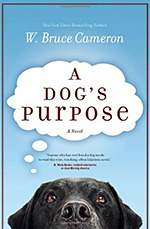
Am I writing today? Not yet. But I am making a plan on how I’m going to get this book written. One aspect of the plan is what I read. You know how you sometimes buy a book but when you get it, you know it’s not the time to read it and temporarily shelve it? The book I need to read right now is pictured here, A Dog’s Purpose. It was recommended to me at least 4 years ago by the CSR of one of the major printers I work with in my capacity as a graphic designer. As little time as she and I had to chat beyond the work-related, she highly recommended this book for me, and said she knew I’d love it on every level. I know the timing is now perfect and reading it will also enrich the story I’m writing.
More on the conference here …
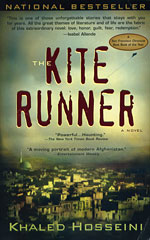 It wasn’t until college when I had an exceptional professor who taught Contemporary Civilization in the context of art, (I was at an art school), and for the first time someone teaching history had neurons in my brain firing rapidly. History suddenly came alive! Unfortunately, at that point, I had very little mental framework in my brain to hang it on. But I started to take an interest in the subject.
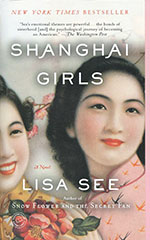 The two novels that recently afforded me that desire to delve into history were those by author Lisa See, Shanghai Girls and Dreams of Joy.The first novel begins when Shanghai was known as the Paris of Asia, and sisters May and Pearl were “beautiful girls”, models. With their father having lost all their money, the sisters, with their mother, must flee Shanghai as the Japanese invade China. The sisters were forced to emigrate to the United States in arranged marriages. From their interment on Angel’s Island to creating lives for themselves and their families in Los Angeles’ Chinatown, we follow the complex relationship of Pearl and May and Pearl’s daughter, Joy.
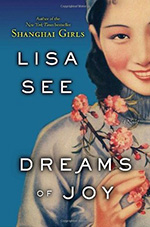 she is soon to be profoundly discouraged and isolated. Pearl leaves the states to search for her daughter, encountering endless roadblocks along the way. The backdrop of much of the novel is the time under Chairman Mao and The Great Leap Forward, a time of alleged progress in which a famine took the lives of millions of Chinese people. (




 Still A Dreamer