Juggling Books

BooksStackedWhy such a while for Weil? No doubt there are just hordes of you out there suspecting I’m the slowest reader ever.

Just kidding – I don’t think there are hordes of you out there. But there are times when it seems that we are in one book forever. Or maybe we really are. In this case, from the time I started Spontaneous Healing, I was sick 2+ weeks. I believe that’s one of the reasons I plucked him from my “to read” stack. What better to read, when we feel like crap, than a book that gives us support to get up and feel better? 

I am a firm believer in the body’s innate drive towards self-healing, so this was a perfect choice to read. I went to a little bit of it every night during a time when I dragged myself out of bed, journaled a wee bit, put in a good day’s work, and crawled away from my computer to sit in front of the telly a bit, then dragged myself to bed. Hello, Dr. Weil! He’s been great and informative company, and renewed my faith in my body’s ability to heal, as well as how I need to better focus on doing the right things to stay well.

Then came … the Hunterdon County Library’s Annual Book Sale. Thank goodness I had a time limit there! Brought home a bunch of new books, but restrained myself and read only one – Indigo – as I had plenty of work and some writing to do. Then came the realization that Angels and Demons would be opening May 15 – OK, let’s pluck that off the shelf and give that another read before I see the movie. So I’m up past my bedtime – I’ll live.

And then … the book I knew I needed to read again – one of my favorites, The Artist’s Way. This is such a wonderful book and I’ll give author Julia Cameron the credit for my daily journaling/morning pages. This is a book that encourages and helps strengthen creativity in a unique, spiritual way. And that’s why I say I need to read this. I feel some deeper period of inspiration coming on, and who better than Julia to accompany me?

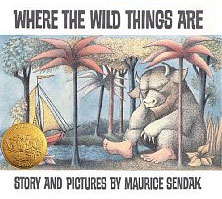
But what about children’s books? Ahhhhh – in this period, I have also read – many, many times already – one of the most wonderful children’s books I’ve ever read. The story, the illustrations, the subtle sub-text … I am deeply moved each time I open it. It is giving me the inspiration to return to an aspect of my artwork where I was struggling. I’ll get to that soon; it deserves so much more than a passing mention.

Andrew Weil, don’t give up on me; I shall return. I just have a couple more Illuminati murders to try and prevent, and then it will be all about the healing.

Angels and Demons

AngelsDemonsGet ready, fans. Angels & Demons is opening in the movies this Friday. I decided that I was going to try and reread the book so I could keep track of all the plot and intrigue that will be ricocheting around the theater. I read Angels & Demons awhile back, and after The DaVinci Code. At the time I recall liking The DaVinci Code better, but I must say, as I allowed myself the luxury of a few hours of reading yesterday, that this really is engrossing. Sometimes a book IS better the second time around.

The ancient secret brotherhood of the Illuminati, the battle between science and religion for the meaning of God, the grandeur of Rome, a conclave of cardinals in the Vatican to elect a new Pope, and a device that could destroy them all – what’s not to like? Throw in a  good dose of conspiracy theory, lots of action and intrigue – I’m ready! 

All that’s left for me to figure out is can I carve enough time out of my schedule to finish the book … and still sleep.

Alice Hoffman’s Indigo

indigo-alicehoffmanAlthough I’ve said this before, I like Alice Hoffman. I like what she writes about – essentially, magic – and how she writes about it.

Indigo, like Green Angel, is ultimately a story about healing. Written for middle grade readers, Indigo is also a story about friendship, devotion, and love of all kinds. As with Green Angel, my only complaint is that the story is over too soon. More like a novella or short story than a novel,  (how it’s promoted), it’s 84 pages in paperback.

Back to the magic – one of the main characters, Martha Glimmer, is more an ordinary girl, but who was touched by a certain magic in her mother. Her mother has recently passed away, leaving Martha feeling unsure, adrift and missing the spark in her life that was her mom. The two other main characters, Trevor and Eli McGill, nicknamed Trout and Eel for fine webbing between their fingers and toes, long to see the ocean. All three, stuck in a dry, dusty town which has all but banished water due to destructive floods in the past, yearn for something beyond what they know.

Fiercely devoted friends in search of dreams, they set out on a journey. Magic is revealed in more ways than one as Martha, Trout and Eel discover their truths, reclaim their pasts and find richer futures. It’s a lot to accomplish in 84 pages, and I love how Alice Hoffman does it. For a fast but rewarding read, Indigo is a great way to go.

p.s. I feel like I’m cheating on Andrew Weil, the book I’m currently reading, but I hit the Hunterdon County Library’s big annual book sale this past Sunday, made out like a bandit, and couldn’t resist this fast read.

The Book Thief

thebookthiefHere are two things that are connected – I couldn’t fall asleep last night. I finished reading The Book Thief.  A book that keeps me up at night after I’m done reading, can often be said to be a good book. Or maybe a disturbing book. Or maybe a haunting book. I think it’s safe to say that The Book Thief is easily all three.

I bought this book in a local bookshop in Clinton in December while shopping for Christmas gifts. I’d wandered over to the YA section and was looking for something interesting. I’d already found a few things for others, a couple for me, and was talking with one of their very knowledgeable staff. He recommended The Book Thief to me, saying it was one of the most incredible books he’d read in a long time, and gave me some background. I bought it.

And there it sat. And sat. And sat. I wasn’t sure if I was ready to read a book set in Germany at the time of the rise of Hitler, no matter how well recommended. I started the book in March, just finished last night.

This is a difficult book to read. Zusak is a phenomenal writer; he has a brilliant way with words that you practically have to read to believe. His idea to have Death be the narrator, sometimes writing in first person and sometimes in third was an extraordinary, if not startling, concept. But it was slow reading. I wondered if it was because I was usually reading it at night; were the realities of the economy weighing on my mind, and so on. But in the end, I believe it is simply the subject matter. This was a horrific and shameful chapter in the history of humankind, and you cannot read The Book Thief without your heart being broken a hundred times. Or at least I couldn’t.

The story really does pick up in the last third of the book where the characters’ lives are all moving into more intense situations seeking some hopeful, but never hoped for, resolution. Each character, including Death, is extremely well drawn. Liesel, Rudy, Rosa, Hans, Max, Ilsa Hermann … are, if nothing else, real people in real relationships. But it seemed for me that it took a long time reading before they had become characters that I truly cared about, and I’m not sure why. It may be that the weight of Hitler’s Germany, woven well into the story line, drew me away from feeling more. Or perhaps I was afraid to feel more for them, knowing that Death was always nearby, ready to reach in and carry their souls away. And as he says, it was a very busy time for him.

So while a story dealing with pain and persecution, it is, however, still a story about love, friendship, loyalty, forgiveness, triumph over adversity, hope, and compassion. Markus Zusak is an amazing writer, and he has woven his story and characters together well, even if there is tremendous loss throughout the book. I do recommend The Book Thief … but to whoever reads it, be prepared for being drawn in to the tragic misfortunes of others in a frightening period of history, even while it is oftentimes no more than a backdrop to everyday lives and commonplace circumstances.

What I’m wondering as I write … not even 12 hours from finishing this book … is do I want to pick it up and read it again. And I’m not sure what to make of that.

The Mermaid Chair – Part 2

mermaidchairWhat a terrific read! In The Mermaid Chair, Sue Monk Kidd has given us a tale of a woman searching for her lost soul. Jessie Sullivan, the main character, tells us her story in first person … that of a woman deeply restless in her marriage, lost and unhappy. She is called back to the place where she grew up, Egret Island, by friends of the family on the occasion of her mother having taken a meat cleaver and chopped off one of her fingers. 

Once at the island, the plot really unfolds with this bizarre mystery, Jessie’s unforeseen attraction to a monk, her struggle with her relationship with her husband of many years, the riches of female friendship, and the mermaid chair itself. Not the least of it all, is the magnificent description of place.

For the duration of this book, I was immersed in the physical life of Egret Island, an imaginary place off Charleston, South Carolina. Monk has nothing short of an exquisite use of words in describing the island, the marshes, birds, and sultry air. I am truly in awe of her ability to bring me to a place that lives and breathes so, that surrounds me while I read. For this, I was sorry when the book ended … I loved being there.

With a richness of characters in the women – Nelle, (Jessie’s mother), friends Hepzibah and Kat, and Kat’s daughter, Benne- The Mermaid Chair weaves the mystery — what caused her mother to brutally attack her own body this way? And then, how is Jessie Sullivan attracted to a monk? Brother Thomas/Whit is also wonderfully drawn, as is Jessie’s husband Hugh. While Jessie struggles, searching for answers in her own life as well as for her mother, she paints. And paints, in ways she’s never seen herself do before.

The Mermaid Chair is described as a coming-of-middle-age novel, which could sound kind of ho-hum unless in the hands of a very skilled writer. Have no fear – Sue Monk Kidd is that writer. It really is a book I couldn’t put down and was reading past the hour when I should have been asleep. It simply has everything … a deep mystery, love and passion, the bond of female friendship and a search for one’s soul.

When all is said and done, other than Monk’s exceptional writing, the most compelling comparison I could make between The Mermaid Chair and The Secret Life of Bees,  is that I truly never knew how it was going to end. And that’s a good thing.