Writing What We Know

This started out to be about three aspects of writing what we know, but I see that it would be a ridiculously long post. So I’ll divvy it up and start with a fairly recent example. I received a lovely personal response from an editor at one of the publishing houses represented at an NJ SCBWI event. I am very appreciative to receive such a thoughtful and detailed reply, although, of course, I wish it were better news. She complimented me on tackling a difficult subject, but found it a bit melancholy and added that quiet stories were not selling much in the picture book market these days. Happily, she was also very encouraging about my writing and my pursuing it.

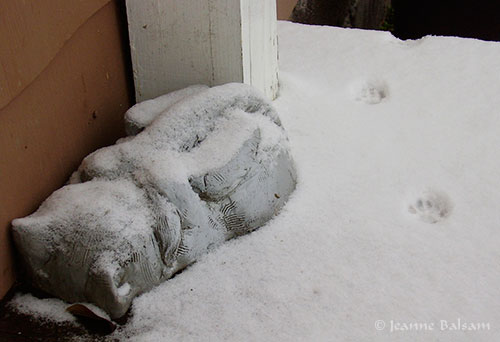
Simon's Secret Illustration by JeanneBalsamThis is where writing what we know comes in. What I know – one of the things, anyway – is about animals and their ability to affect us profoundly, both personally and through literature and imagery. This particular picture book story has a wonderful magical element to it and healing on several levels. While I don’t see it as melancholy, it still behooves me to pay attention to the perception and opinion of one who lives and breathes children’s books. But what stops me is the “quiet story” part.

I like quiet stories. I like funny stories, too, but I also like something that touches the heart and soul in some way, something that’s real, that’s a reflection of what children go through in their young lives. I get that kids like funny and action-filled, but what about the other aspects of a child? Are we no longer looking to feed that as well? Are our increasingly fast-paced and digital lives crushing the inner lives of picture-book age kids? (OK, maybe that’s extreme, but then again …)

As writers, we certainly need to be aware of the trends in the industry and what the market is looking for, otherwise we can be twirling about in our own stew of ideas that will never get published. At the same time, we need to consider what “writing what we know,” (the advice we are always given by editors and agents), actually means and where it fits in what’s being published.  It’s a challenge to all of us. So I look at the body of work I have to date. Maybe it’s time to let some of my stories go; maybe I haven’t sent them out often enough and/or to the right publisher/agent who will appreciate a particular “quiet story.”

So where does the rubber hit the road? Where do writing what we know and what’s being published intersect?
 

A House IS A Home

You’ve all heard that line from a song, “A house is not a home …”, and while that’s true in some ways, I beg to differ. A house is surely a home when you love where you live.

ST-HouseFront2

As I’m crawling out from a week with way too much work, I’m contemplating cleaning off my wonderful deep porches, and getting together what it takes to sit out there, pot some plants, etc.. This reminds me of how lucky I’ve been that the houses I’ve lived in in this side of the state have all had fabulous porches, sometimes more than one. Then I drifted further in my continued wonder/curiosity that every place I’ve lived since I left home and left my college high-rise dorm has been in a specific time period, 1810 – 1920. So for those of you that love homes, I thought I might share some of my photographic, and other house-related, memories.

ST-HouseSide2

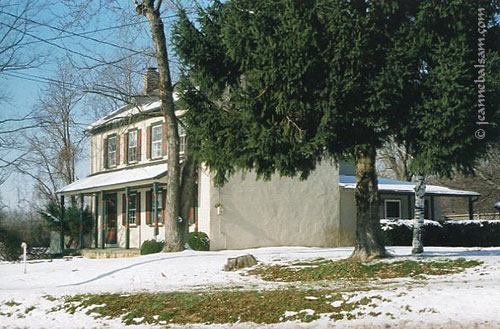
The house you see here is the oldest I lived in. The front of the house, top photo, is 1810 and that was added on to the smaller part of the house built in 1742. The 1742 portion is now the dining room, and has another room above it, connected by a narrow circular staircase. It was once the home of the farm workers who worked for the gentleman farmer who lived across the road. In the photo just above, what looks like a large addition in the back is the original house. The small section in front with hedges was my entrance and housed a full kitchen, a full bath and a huge walk-in closet, (just to give you a sense of scale.) This was added on about 30 years ago by a woman who restored the house down to the last authentic detail of each period and added those modernizations.

ST-DRFireplace2

The dining room has original, unpainted wide-plank floors, a beamed ceiling and a walk-in stone fireplace with a bread oven and original wrought iron hooks to hold pots of cooking food and meat. When I was looking for my next place to live, I walked into this room, and knew this was it. It was so warm and cozy; I loved sitting in this room. The 1810 part of the house was built by the gentleman farmer and included two stories, a full attic and basement. He brought his family to live here after his home across the road had a fire. The 1810 portion included two large rooms in the front and the same above with another full bath. The main bedroom was approximately 18′ x 18′, and did I mention, every room had a fireplace, (all non-working, which was a good thing for me, as I know nothing about building fires, properly or otherwise.)

ST-RopeBed2

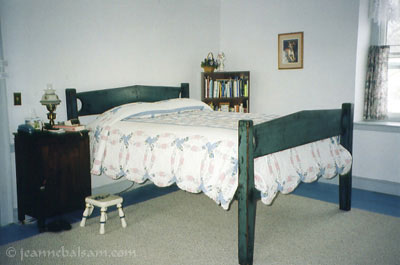
I painted much of the house when I moved in, keeping more or less to what was there before, but a bit nicer. The bedroom had in it, left by the previous owner, this gorgeous replica antique rope bed which she had custom built. The cats loved playing underneath it, and it was quite an experience at first, sleeping that high up. This house, excepting the dining room, had wonderful 9′ ceilings throughout.

ST-DRWindow-Claude2

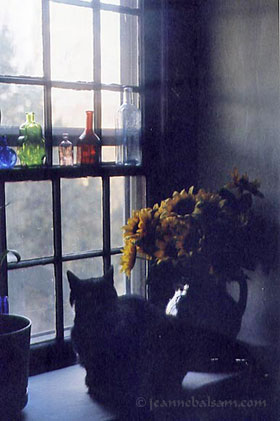
Because it was a stone farmhouse, the walls were about 18″ thick and provided outstanding built-in space for cats to enjoy at every window. Above, dining room window with Claude.

If there were any drawbacks to this house, I’d say the heating system, which was forced air and left the house feeling cold again as soon as the heat went off, but on the flip-side, it felt like air-conditioning in the summer with  nothing more than a dehumidifier in the DR and an occasional fan. And then there were more than enough small creatures – centipedes the size of alligators and plenty of field mice. The centipedes were too big too kill, for me anyway, so they got used to being herded, and the mice? I had a humane mousetrap and plenty of farmland all around me where they could start a new life.

These were a small price to pay to live here – two porches,  deck on the back, a wide circular staircase in front and bright, airy rooms upstairs, cozy ones down. It was a great house, and indeed it was a home.

Stay tuned … we’ll soon be going forward to 1870.

“There is no place like home.”  – L. Frank Baum, The Wonderful Wizard of Oz

Coming Home and (Re)Finding My Path

That may sound like a contradiction in terms, but actually, it’s two different subjects.

Coming home? That would be coming home to cooking and trying something new.

VeganPancakes2

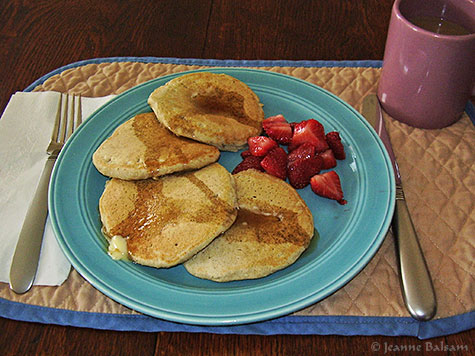
Here you find my first effort at scratch vegan pancakes. They look pretty yummy, but in fact, were only okay. Granted, that is because the ingredients are quite different than what I’m used to. There are no eggs, instead Ener-G Egg Replacer; almond milk instead of real milk, and the least problematic, Earth Balance instead of real butter. We are very used to our fats and dairy, and eggs and butter do make a difference in taste. For a first effort, I’m okay with them, because I know what I have to do is learn how to adjust the recipe, as I always have, to make something taste better. Maybe soy milk instead of almond, maybe a touch of vanilla. I’m not giving up yet. And the texture was perfect.

I only regret I don’t have more time to cook and noodle around with things, but sooner or later, I’ll find it.

(Re)finding my path? That would be getting back on track in children’s books – setting new goals and timelines for illustrating, dummying and re-working specific stories; finding publishing houses and agents who are a good match for my work. It’s a lot of work, but it’s good work. Being on our path is always a good thing.

Jazzy-WorkDesk2

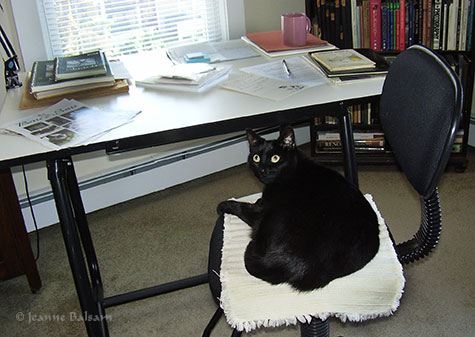
So after a stimulating breakfast with one of my children’s book buddies, I returned home and cleared off and cleaned both my work/art desks, sorted out where I’d left off on my projects, and yup, made a new plan, Stan! I wasn’t the only one who had plans for my studio chair … one kitty named Jazzy wanted in on the action. OK by me. Well, OK until Mama needs the chair and then there’s that lovely patch of sun by the window.


What Happened to the Animal in the End?

StrayDog2There is never a shortage of amazing things one can find on the web, and the site I recently came across is no exception.

As both an animal and movie lover, I am particularly sensitive to animal suffering and death on film. I have a very hard time watching cruel or violent  treatment of any animal even if I know it’s an animatronic sit-in for the real animal. It’s still inordinately painful. I also much prefer to know that the animal lives happily in the end, but I know, realistically, that may not be the case. I also know, despite the oversight by a humane organization, that unacceptable behavior towards animals in film has been known to occur.

So if I’ll be upset by animal suffering, what about children? How much and at what age can they accept and understand animal suffering or the dog/cat/horse/whatever dying at the end, even though it may be a logical plot ending?

Well, here’s the site that will guide you to whatever you or your kids can tolerate – Does the Dog Die?  Does the Dog Die has currently reviewed 680 films and indicates by a happy, neutral or crying dog icon if animals live, recover or die in the end. Click on any of the film names and you’ll get details about how every animal in that film is treated and what happens to it.

There’s an awful lot of violence and death in films (and TV) today, both human and animal. Sometimes we just don’t need to watch it. So check out Does the Dog Die? and decide for yourself how much you want to take in.