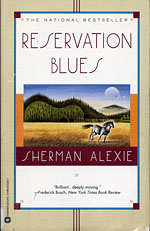
Reservation Blues – Sherman Alexie

There’s plenty written about Reservation Blues, including that written by Alexie himself, so I’m not going to write any summaries or anything like that other than what appealed to me, personally. And that’s a lot. First, I realized I’m going to have to buy the book to have my own copy, as what I read belongs to my local library. That’s so I can go back in and visit from time to time.

I am moved by Alexie’s writing style – in some ways, almost a stream of consciousness, but we all know one doesn’t get published by going with only that. It’s HOW he writes that I’m drawn to – the fluidity, the interjections of things that may seem unrelated or perhaps we just never connected before. Like Big Mom and her relationship to the slaughtered horses … how they brought their songs back to her in the forms of others – Jimi Hendrix, Janis Joplin and Marvin Gaye, (the latter two whom I was very fortunate to have seen in concert), and then they returned to earth. Is it so surprising that Robert Johnson, who bartered away his freedom, should come to Big Mom? Or that Thomas Builds-the-Fire should let Johnson’s guitar pass through his hands and Victor to become ensnared by it?

I read Reservation Blues and wished I knew Big Mom. Everyone needs Big Mom – loving, giving, spiritual, a healer, and yet objective, claiming to no particular situational outcome for anyone. I wish I couldn’t hear the horses scream … a too-piercing song. But Big Mom’s there to mourn for them and to keep their songs alive. And I am thankful. Woven into the story, the violent massacre tells part of the tribe’s history.

I am drawn in by Alexie’s subtleties,  such as the harmonica that Big Mom made for Robert Johnson and tossed to him. “He could feel a movement inside the wood, something familiar.” Was it his music, or was even Big Mom not powerful enough to out The Gentleman? Is it why Johnson decided to stay in Wellpinit? It was only one line that may have gone unnoticed but Reservation Blues seems packed with such subtleties, such fluid turns of the wrist. It’s a style I like, kind of filled with asides that maybe you get, maybe you don’t.

Reservation Blues follows a core group of characters that have strengths and weaknesses, their acceptance of life and their desires to escape or rail against it. Some of them survive the adversities, some don’t. And those who do, some better, some not so well. And if it’s hard to like Victor? a note from Junior to Big Mom tells us why he’s not as bad as he seems. But Victor’s weak and Johnson’s guitar has him in thrall. Again, maybe smaller points in the novel … maybe ones that encompass the whole story in one vignette.

And there’s magic – things that couldn’t be real, such as Junior’s appearance to Victor in the car, the guitar talking, the strings catching fire – or could they? Woven into the story, they become so believable they cannot be extricated. For me anyway. I surrender and I believe. And I follow the band Coyote Springs and its evolution, how it helps me get to know who’s in it, who they meet, where real hell is, where it’s not.

Does Reservation Blues depict life on the reservation today? I have no doubt. It doesn’t give the reader any kind of romantic view of the American Indian such as Alexie says seems common to some white people, New Agers, etc. The view is sometimes painful, sometimes simply life, sometimes just of people like the rest of us dealing with what every day brings. But it’s a different life than that of the rest of us – one with a different history, a different set of memories and tradition, and different challenges – not ours. And I like Alexie’s telling of it. He connects me. And I like how he does it.
What I’ve Been Reading …

Or perhaps I should say what I’ve been reading, but haven’t been blogging about. It seems there are just times when blogging about books isn’t as compelling as reading them and moving on to the next one. Here’s my book list over the last few months from the most recent back …

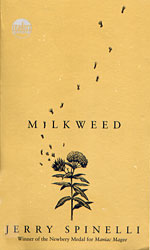
Milkweed by Jerry Spinelli – what a wonderful, extraordinarily well-written YA novel.  Truly this book deserves to be written about at great length, (and I’m sure has been elsewhere on the web), but as this being only the second of Jerry Spinelli’s books I’ve read, I must say how impressed I am. Told in the first person by a child who only knows his name to be stop thief, the tale takes place in 1939 during the Nazi occupation of Warsaw. How the lives of everyone changed as the Jackboots settled in the city, as Jews and others were herded into the newly-created ghetto and later forced onto trains, as people slowly starved, as smugglers were hung, and friends made and lost is what the author describes. Stop thief goes through many transformations during this time, including being given a history as a gypsy to try and protect him, and observes the horrors of the Nazi occupation. Yet somehow, these horrors became an integral part of everyday life in ways I cannot imagine, and the story is seamlessly told through the eyes of this child. Milkweed is so different from The Book Thief, and seemed so much more accessible to me, for lack of a better word. I highly recommend it.

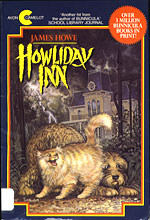
Bunnicula, The Howliday Inn and The Celery Stalks at Midnight by James Howe (and Deborah Howe in Bunnicula only) – I had expected more of Bunnicula, the vampire bunny, but in these three consecutive middle grade mysteries, each becomes better than the previous with funny dog and cat characters trying to solve them. The best of the three for me was The Howliday Inn, as it was the most complex and the humor was getting better, too.

Great Joy – Kate DiCamillo and illustrated by Bagram Ibatoulline – I picked this picture book up for the magnificent illustrations, but was disappointed in the story. And I really do enjoy DiCamillo’s writing. Something was missing for me, but the illos were fabulous.

Criss Cross by Lynne Rae Perkins – this YA novel is a Newbery winner. For me, it wasn’t as absorbing as many of the other YA novels I’ve been reading, but it was a very true-to-life depiction of  that awkward time when kids grow into adolescents. It takes place in the 60’s, and shows the growth of several young boys and girls and their relationships. Not heavy on plot, but nice – and nicely drawn –  characters.

Wolves in the Walls by Neil Gaiman – this was unexpected as I hadn’t realized it would be a graphic novel/picture book! For some reason I had expected a YA novel like The Graveyard Book (yet to be read). However, I loved the story and the fabulous illustrations by Dave McKean, who also did Coraline, and which really make this book come alive.

Black and Blue by Anna Quindlen – a story of an abused woman, who finally reaches out to get help to save her life, taking her son with her as well. This help takes place in being given another identity and being relocated in another part of the country by a little publicized agency who specializes in helping abused women. However, Fran Benedetto cannot escape her police officer husband forever as he wants his 10 year old son back, and somewhere, in an untold story behind hers, is searching for both of them. This book is hard to put down, and recounts, through her eyes, the “accidents” that she can no longer bear nor justify to others, and her new life which almost seems normal. The abuse is harrowing and painful to read at times, and her new life is always overshadowed for the reader with the anxiety of Bobby finding her. A good read.

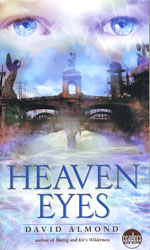
Heaven Eyes by David Almond – a YA novel by one of my favorite authors. Almond’s characters and plots are so uniquely his own. There is a magic threading through all of his stories which happens to resonate with something in me every time without fail. Heaven Eyes is a child who is living with an elderly man who saved her from the muck outside a deserted industrial site. Three runaways from an orphanage up the river land on the edge of the brackish mud adjacent to where she lives, and their intertwining stories unfold slowly to reveal a deeply disturbed man and a child who’s been given a history not based in reality. The three orphans are well-drawn characters in their own right with their own history, and find drama and revelation in their encounter with Heaven Eyes and Grandpa. Ultimately, they  must decide to stay in an unreal environment or hope to return to the world from which they came, bringing Heaven Eyes and her spirituality with them. A Fantastic read, (and I’m truly not doing it justice here.)

No Small Thing by Natalie Ghent – a middle-grade novel about 3 children who acquire an unwanted pony during very rough times for their family. Their mother tries to keep it together after their father walked out on them, profoundly affecting them all. It is a story in part about the responsibilities of owning a pet, but also of the children’s relationships, caring for one another and managing their lives together. Some good spots, but for me, was just OK.

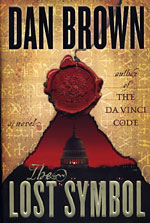
The Lost Symbol by Dan Brown

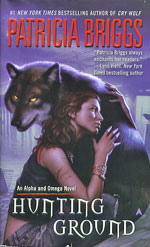
Hunting Ground by Patricia Briggs – from the Alpha and Omega Series. Fabulous. The first Briggs novel I read was Moon Called, and this is a storyteller whose books I cannot put down!

During this time I am reading one or more metaphysical books on an ongoing basis, but that, for another time …

Letting Go of Fear … in Creativity, in Life

Fear is the antithesis of love. We are in fear when we bemoan our fate that we are not yet published. We are in fear when we relentlessly edit and re-edit and edit yet again something that, in all likelihood, is just fine. We are in fear when we overwork an aspect of our illustration, striving for some elusive perfection. It’s not that uncommon to think and behave this way. Most of us were raised to be good, to be perfect, to be loved conditionally. As were those who raised us.

And what we most need in our lives, our work, is not fear, but love. When we write and illustrate books for children, we always bring forth our best work when it is coming out of love … not anxiety about its success or perfection, or how well we are faring compared to others, or how much recognition we’ll gain. But love. It would seem so easy, but for so many of us it is not.

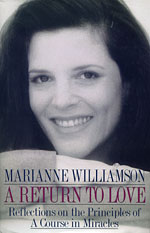
Below is the quote that I had mentioned in my last post. It is by Marianne Williamson, metaphysical teacher, and from the book A Return to Love, her reflections on  the principles of A Course in Miracles, published in 1975. All of Williamson’s work is focused on growing into our richest selves, letting go of fear and living truly in love. And I believe it has a profound meaning for us as we  venture forth as writers and artists, aspiring to light the way for children.

Everyday Grace

My deepest fear is not that I am inadequate.
My deepest fear is that I am powerful beyond measure.
It is my light, not my darkness, that most frightens me.
I ask myself, who am I to be brilliant, gorgeous, talented, fabulous?
Actually, who am I not to be? I am a child of God. My playing small
does not serve the world. There is nothing enlightened about shrinking
so that other people won’t feel insecure around me. I am meant to
shine, as children do. I was born to manifest the glory of God that is within me.
It’s not just in me; it’s in everyone.
And as I let my own light shine, I unconsciously give other people
permission to do the same. As I am liberated from my own fear,
my presence automatically liberates others.

These words struck me so deeply in their undeniable truth. As a writer and illustrator of children’s books, aspiring to bring my gifts to young people, I can soar to heights in joy as I work or tumble to crushing frustration. Fear. All fear. And though living lives through fear in varying degrees is common to so many people on the planet, it seems to almost be the inheritance of all sensitive, creative people. I know there is a better way; I’ve known for a long time, and so, I suspect, have you.

From time to time, books, individuals, ideas, etc.  cross our paths, and usually, at times when we are ready to take the next step out of fear and into grace … into love. This book has been sitting on my bookshelf for about 9 months, and through a mention of the quote above from a friend, I took this book from the shelf. It was time – there are no coincidences.

Living in love, free of fear, is a great challenge. We were not raised that way. Shaman and author Don Miguel Ruiz calls it “domestication.” It is all the same. And what’s so wonderful is that there is never a bad time  to take another step, to let go of fear and our belief that we should be small, to believe instead  in the love and brilliance we are.

I find A Return to Love an amazing book, as is A Woman’s Worth, both by Williamson. Perhaps an inspiration for you, too. Please also know, if it makes a difference to you, that Williamson’s writings do not espouse any specific religious orientation – her writing is of a spiritual nature, and so speaks to us all.

Scarecrow’s Dance – Jane Yolen and Bagram Ibatoulline

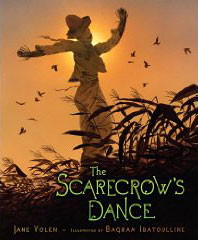
When I first planned on buying this book, I admit it was largely for the magnificent illustrations of Bagram Ibatoulline. I first came across Scarecrow’s Dance as a yet-unbound copy and part of an illustrating exercise at the NJ SCBWI Illustrators’ Intensive in 2008.  I was, and still am, utterly entranced by the rich, yet soft, colors at dusk, and the beauty Ibatoulline has created in the cornfields and farm setting. If you are an illustrator or one who appreciates excellence in illustration, this book is worth the cost of that alone. And the story, in the brief exposure I had to it at that time, was so touching as to bring me to tears, and it still does.

I eagerly awaited it’s publication with my primary interest in the art. It finally arrived so I could appreciate both story and text. Jane Yolen is the author of Scarecrow’s Dance, and recipient of the Caldecott Medal for Owl Moon, and many, many other awards in her rich and extensive writing career for children. As I examined this book more closely, several thoughts did cross my mind … as beautiful as I found the illustrations, would they appeal to the target age group, 4 – 8? Would a child that age lose interest in the dusky light’s subtlety on page after page? Would a barn described “as red as blood” be disturbing to a small child? Might some parents find both a child and scarecrow kneeling and praying to God a predominantly Christian message they may not wish to read to their child in a picture book story?

I don’t actually know the answers to these. I found the overriding message to be of the greatest importance, and that is finding who we are and knowing our place in the world to be unique and one of value. I think a parent reading this story to a child with the feeling Yolen has put into it, will easily impart that as the primary message, and it is very beautifully done in both word and image.

I visited Jane Yolen’s web site, and found a wonderful section just for us writers – lots of sound advice to guide us on our journey to becoming not just published, but still sane when we get there. Kathy Temean, the RA of NJ SCBWI, also posted 20 Yolen writing tips as transcribed from the recent SCBWI Conference in New York. All great stuff.

And then, Bagram Ibatoulline. I kiss the ground this illustrator walks on. His work is simply magnificent. In addition to Scarecrow’s Dance, he has done two books by Kate DiCamillo, The Miraculous Journey of Edward Toulane and Great Joy. He illustrated a beautiful book, Crow Call, by Lois Lowry, The Serpent Came to Gloucester, and many, many others. Next time you’re in a bookstore, I highly recommend you take a look at Ibatoulline’s work.

The Lost Symbol – Dan Brown

I’m trying to figure out – why didn’t I love this book?

I thought The DaVinci Code was terrific as was Angels and Demons, yet something was missing in The Lost Code for me. What Katherine Solomon was studying and what “The Word” was really all about are right up my alley, but was there too much of it? Was there more information about the Freemasons and the Masonic symbolism than was needed to keep the plot moving briskly?

As always, once I was reading, it was hard to put down, but away from it, I didn’t feel like I couldn’t wait to get back to it! Most strange. I still say that Brown has an excellent way of jamming suspense and intrigue into a very short timeframe in which the novel takes place, and for that I enjoyed The Lost Symbol. But something wasn’t right.

While I never saw it coming who Mal’akh actually was, I also found him to be somewhat of a 2-dimensional character. Yes, he was a psychopath at this point, but I don’t know if I was given ample reason to understand how he got that crazy considering his background. I also don’t recall the interior dialogue of characters in italics in previous books, though I just may not be remembering, and I’m not sure that I liked it.

I was fascinated by the information about the Washington Monument and the surrounding buildings and their architecture, but did so much factual information pull me away from the storyline? Was there just too much? Next time I’m in D.C., I will look at the buildings described in a very different light, no doubt, but I think I was being overwhelmed with non-fiction in a fictional account. I believe Dan Brown has a message – an important message about man and his future – that he wants to share. I like the message. I guess I’m wondering if Brown is conveying it in the most accessible way.

I’m puzzled. But then, who am I to criticize? These are just my perceptions, and I wonder if others share them or feel differently.