 What happens when one of the picture books you’ve been working on evolves into a chapter book due to too much back-story? Then it’s recommended to be a middle grade novel because it’s getting too scary for a chapter book reader? One of the first things is to start reading more in that genre, so for me, it’s Welcome to Middle Grade!
I figured one of the best places to begin is with the Newbery winners, so I went to the ALA site. I also found another site which gives brief summaries of the Newbery winners (all genres) from 2000 to present and makes middle grade novels easier to identify. It also happens that the feature article of the Children’s Writer Newsletter this month is “Walking the Tightrope of Peril in Middle-Grade Fiction.” Jackpot! That’s a good read, plus they list many MG novels within the article which I’ll look into soon. And then I’ve gotten a few recommendations from my writing group, sooooooooo ….
The titles I’ve selected to start with, which have particular appeal to me, are these (in no particular order plus some have been moved down to the bottom list as time passes)
- The Underneath – Kathi Appelt
- Savvy – Ingrid Law
- The Graveyard Book– Neil Gaiman
- Star Girl and Eggs – Jerry Spinelli
- Crispin – Cross of Lead – Avi
- Holes – Louis Sacher (saw the movie, never read the book)
- Higher Power of Lucky – Susan Patron
- Invention of Hugo Cabret – Brian Selznick
That should keep me busy! Do you have any really great MG suggestions?
MG books that I’ve read recently, enjoyed, and recommend are:
- Skellig – David Almond (one of my favorite books.)
- Kit’s Wilderness – David Almond
- Walk Two Moons – Sharon Creech
- Hope Was Here – Joan Bauer
- Indigo – Alice Hoffman
- Green Angel – Alice Hoffman
- Because of Winn Dixie – Kate DiCamillo
- The Tale of Despereaux – Kate DiCamillo
- Pictures of Hollis Woods – Patricia Reilly Giff
- A Single Shard – Linda Sue Park
Local library – here I come!
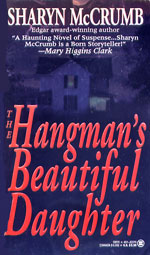 Example – A suspense/mystery novel I just finished by an author new to me, The Hangman’s Beautiful Daughter by Sharyn McCrumb, brought these questions up – and had me thinking about their relevance in children’s books. Particularly as we write stories of greater length, they are important points to consider, but they can be equally important in picture books.
 Chapter books are the next step as a child grows beyond picture books. Whereas picture books are largely illustration, chapter books are largely prose, but which still include illustration, generally in black and white. Written for the age 7-10 crowd, they feature short chapters so the book can easily be put down and picked up again by the young reader. Chapter books include a fairly good amount of dialogue, short sentences, and vocabulary that is targeted for the reader who is growing in his reading skills.
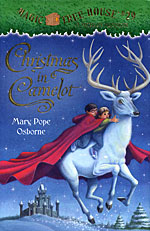
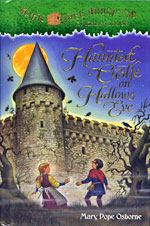 I’ve currently been reading a series within The Magic Tree House Series subtitled A Merlin Mission. These books are excellent examples for writers of what is being sought in a good chapter book, but Mary Pope Osborne has added in this selection a special richness by introducing a famous myth. In The Magic Tree House Series, our main characters are brother and sister Jack and Annie of Frog Creek, Pennsylvania. They find a tree house in the woods filled with books, and that by pointing to a picture in a book, they can go there. In time they find the tree house belongs to Morgan Le Fay of Camelot, home to King Arthur.
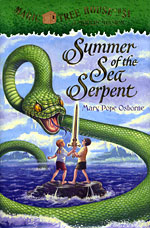 Arthur and the Round Table for children ages 7-10, filled with the symbolism of cloaks, cauldrons, magical beings and more. She has provided detailed references in the back of the book for the elements she’s introduced.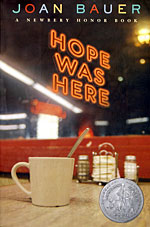
 Why such a while for Weil? No doubt there are just hordes of you out there suspecting I’m the slowest reader ever.
 Still A Dreamer