 Here’s where I’ve hitched my star – writing and illustrating children’s books – picture books, chapter books. Yet belonging to a writer’s group and SCBWI, in the company of readers and writers of other children’s genres, I find myself being drawn to those I don’t write… MG and YA fiction. And what a draw it is. My local librarian and I were discussing some of our mutual interests, and she recommended the YA novel The Absolutely True Diary of a Part-Time Indian by Sherman Alexie. I was just blown away by this book and can’t wait to read more by its author.
Although I have a fair amount of factual information about what life is like on an Indian reservation, I, as a white person in a predominantly white culture, cannot possibly know the daily challenges and ongoing pain of rez life. Sherman Alexie, a Spokane Indian, brings this to light in a way that is both tragically sad and wryly funny. I actually found this to be, on the one hand, one of the saddest books I have read in a long, long time, as the main character, Arnold – known as Junior on the rez – loses family member after family member to the direct or indirect results of the alcoholism that is epidemic there. Yet the comic style in which Alexie writes can at times make one not quite realize fully the tragedies he’s describing. Quite a feat. I was quickly drawn in to Junior’s first person narrative beginning with his severe health problems up to age 7 and his continuous struggle to survive and ultimately make something of himself. Along with my feeling his pain, I could not help but cheer him on and/or comfort him, through everything he experiences.
When Junior receives his 7th grade math book to find his mother’s maiden name written inside, he knows he has no choice but to leave, to go off-rez to an all white school 22 miles away. Here he truly starts a new chapter of his own life. Although deeply resented by his entire tribe for it, Junior leaves the reservation to make a future for himself, and in this move, becomes a phenomenally brave main character.
Junior’s character is insightful, honest, humble, (if not self-effacing like any typical teenager), and in spite of a life infused with hardship, incredibly funny. While he describes the problems and pain that are simply life on the reservation, he never fails to also describe the love and devotion of his family, his best friend Rowdy, and his tribe. I found Alexie’s style of relating such profound hurt mitigated with clever wit to be amazing, and I truly could not put this book down.
Last night, I looked further into the author, Sherman Alexie, finding some very interesting videos, among them, one of his receiving the 2007 National Book Award. I watched another of his being interviewed on a PBS station, where he revealed how autobiographical The Absolutely True Diary of A Part-Time Indian really is – almost entirely. To watch Alexie was to better understand his character and his book. He began as a poet and wrote short stories and a few screenplays as well. (He wrote the screenplay for Smoke Signals, a movie based on one of his short stories.) This is Alexie’s first YA novel. He discussed in the interview how thrilled he was that so many teens resonated with Arnold/Junior. Not just teens, I’m sure. He already added this fan to his base in just one book, and I look forward to reading more from this terrific author.
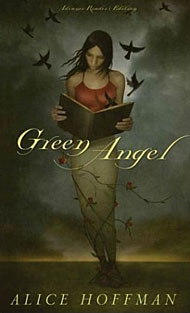 There’s always something a bit sad about finishing a book. Maybe the word is empty. For so many pages we’ve been engrossed in others’ lives, an adventure, an intimate voyage through the eyes of another … the story reaches its peak then twists, turns, slips into its resolution. The last page. And it’s done. Sigh. Can’t there be more? (At least for the really good books.)
 Fast forward to a stop at my local library to try and find some reference material for an illustration I’ll need to start. There, among some book jackets featured in a display, a word jumps out – Skellig. I know Skellig. It’s a song from a favorite

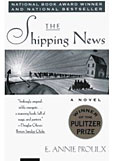 Reading the book after I’ve seen the movie is a rarity for me. Usually, like many people I know who still love to read, I read the book first, and if a movie is made, go see it if I feel a decent interpretation might be made or if actors are in it who could carry the author’s characters. And usually, like many people I know who still love to read, I am disappointed in the movie.
 Still A Dreamer