That’s not what we usually see, is it? More often we find articles about engendering the love of reading in kids.
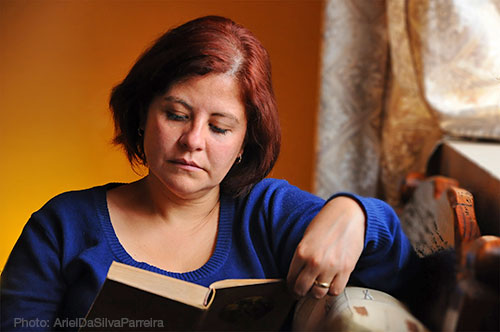
So I was pretty impressed to find in the September 2017 issue of Family Circle an article about the importance of reading for pleasure. I assume that many of you reading this blog, as writers, are already immersed in a regular reading habit, but this short article with “how-to” tips addresses how we, as women, are pulled in so many directions that we often let reading slide. And it’s true; an inordinate involvement with our phones, TV, internet – not to mention the real-life issues of our families and work – can leave us feeling we have no time to read.
But a Yale linguistics professor, Kenneth Pugh, mentions the importance of reading for pleasure as highly important for our emotional health as well as strengthening our creativity. Tips on how to get back into reading include never leaving home without a book; literally penciling in time in our daily schedule for reading; swapping a chunk of our TV addiction for reading time; keeping a book on our nightstand, etc.
For anyone not sure of how to get back into reading, the article suggested as number one – your local librarian. Librarians are a fantastic source of knowledge of the books on their shelves and with a few questions, can have you in a book you love in no time. A good local bookseller can do the same. In addition, they recommended the New York Times Best Seller list, Goodreads.com, or 2017 Popsugar Reading Challenge. What I loved most about seeing this article is that Family Circle is a magazine with a huge circulation of about 17, 560 readers that reaches a very mainstream audience.
Reading – and reading for pleasure – is important. I find myself concerned about all these moms glued to their phones. What kind of inspiration is that for their children? I’m hoping that a family-oriented magazine like this one will inspire more than a few women to reconsider their habits and pick up a book – for themselves, and also to read to their kids.
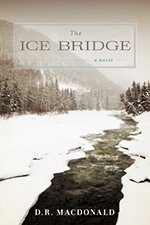 One of the very compelling features in a good novel can be place, where an author writes with such depth and attention to the environment inhabited by his characters that the location becomes a character all its own. I just finished The Ice Bridge by D.R.Macdonald, and was amazed at how quickly he had me immersed in the landscape of Cape Breton in Nova Scotia. This is an outstanding book in so many ways, not least of which was my having moved to the harsh, wintry landscape of Cape Seal Road right along with one of the main characters, Anna.
 (hopefully not out loud), “take me.”
 in the Vietnam War and see through her eyes.
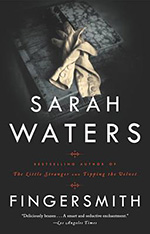 Take me where I may know the deepest and most heartbreaking love, be outraged and demand justice, or laugh because sometimes life is just funny.
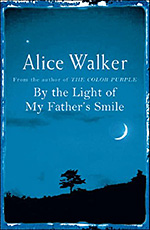 As I am beginning a new book – chosen from among the many that sit on my shelves waiting to be read – I remember exactly why I picked it up at the big book sale awhile back. I’d read a short story titled am i blue? by Alice Walker over 20 years ago in a magazine. It was about a horse in a meadow alone, bored, betrayed. The meadow was outside a home where Walker was living, and her experience of Blue told me volumes about her appreciation of the hearts and souls of animals. This story was later banned, I found, by the California School Board in 1994, as was, of course, The Color Purple, by all those who feel they know best what you and I should read and think. (You can read am i blue? and some commentary on the
 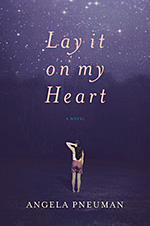 I’m looking forward to starting this novel by Alice Walker, but admittedly, my heart is still half living with Charmaine Peake in Kentucky. I just finished Lay it on my Heart by Angela Pneuman, a novel about a 13 year-old girl whose father is, or believes himself to be, a prophet. Living in a small town crammed with churches of every faith possible, where one third of all the men are preachers or studying to be one, Charmaine and her mother Phoebe have been barely getting by in the year while her father has gone to the Holy Land, instructing them to live by their faith alone. This is a coming of age story where Charmaine must come to grips with all that is implied in having the father described, a mother who has felt compelled to honor his wishes, and a growing awareness that perhaps she isn’t and cannot be the holy and God-fearing person that has always been expected of her.
 Still A Dreamer