If you had asked me 5 or 6 years ago if I liked historical fiction, my answer would have been “Meh.”
Sadly, I was effectively turned off to all things history as a child, when my first learning experiences labeled “History” were nothing more than an endless dry and boring series of names, dates, places and events to be absorbed and later regurgitated on tests. In retrospect, our teachers had to cover 7 or 8 different subjects daily, so what were chances that any of them would be a real history buff and would teach us history with great enthusiasm and insight? Apparently, pretty slim.
 It wasn’t until college when I had an exceptional professor who taught Contemporary Civilization in the context of art, (I was at an art school), and for the first time someone teaching history had neurons in my brain firing rapidly. History suddenly came alive! Unfortunately, at that point, I had very little mental framework in my brain to hang it on. But I started to take an interest in the subject.
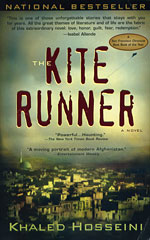
What really kicked my interest into high gear has happened in more recent years when I would come across a novel set in a particular place and time period, so rich and textured, that I wanted to learn more. One of those books was The Kite Runner by Khaled Hosseini, and it sent me flying to the internet to learn about the Afghani people and what was transpiring in Afghanistan during the time this novel took place. I cannot recall the country of Afghanistan mentioned once in history or geography in my childhood education, but now, here was a piece of fascinating history.
 The two novels that recently afforded me that desire to delve into history were those by author Lisa See, Shanghai Girls and Dreams of Joy.The first novel begins when Shanghai was known as the Paris of Asia, and sisters May and Pearl were “beautiful girls”, models. With their father having lost all their money, the sisters, with their mother, must flee Shanghai as the Japanese invade China. The sisters were forced to emigrate to the United States in arranged marriages. From their interment on Angel’s Island to creating lives for themselves and their families in Los Angeles’ Chinatown, we follow the complex relationship of Pearl and May and Pearl’s daughter, Joy.
In Dreams of Joy, Joy, now in college and angry at her family’s deception and distraught over one family member’s suicide, secretly runs away to China to find her true father. Her studies have convinced her that Communism is the best of all systems, and she is determined to start her own life, although  she is soon to be profoundly discouraged and isolated. Pearl leaves the states to search for her daughter, encountering endless roadblocks along the way. The backdrop of much of the novel is the time under Chairman Mao and The Great Leap Forward, a time of alleged progress in which a famine took the lives of millions of Chinese people. (From Wikipedia – “The Great Leap ended in catastrophe, resulting in tens of millions of deaths, estimated from 18 million to 32.5 or 45 million. Historian Frank Dikotter asserts that “coercion, terror, and systematic violence were the foundation of the Great Leap Forward” and it “motivated one of the most deadly mass killings of human history”.)
Lisa See writes about family and relationships and this alone would have held my attention, but told against the backdrop of both China and the United States in times of political change and turmoil of every kind, I searched to know more. My knowledge of history is still spotty, but through the pages of beautifully written historical novels, I continue to learn. It seems history stands at my back door, always with a hand raised, always ready to knock.




 I could not believe how much stuff was coming out of one small Cape Cod house. Aside from the desired items they were loading up into a very large trailer, making repeated trips to their new place, there was a ton of stuff bagged and more piled in front of their house for garbage. Mind you, when the garbage truck came through Monday morning, it stopped still in front of this wide mound; one of the fellas made a phone call; and they emptied the two actual garbage cans – exactly what we’re allowed – and moved on leaving everything else there.
 The beginning of each New Year spreads out in front of us – a year of promise, of dreams, of hopes and plans. I leave resolutions for those who are so inclined, and prefer to believe that I will take those steps in exactly the right time.

