Banned Books Week: September 21 – 27

CharlottesWeb2This Sunday, September 21, marked the beginning of Banned Books Week which celebrates the freedom to read. An annual event organized by the American Library Association, (the same people that award the Caldecott and Newbery Medals) , Banned Books Week is sponsored by a number of organizations who are against censorship. The website presents a wealth of information on books that are and have been banned, by whom and why, plus activities for teachers to discuss the important issues of censorship, banned books and the books themselves with their students. Additional information on Banned Books Week can be found on the ALA’s own site. On this site you can also find the 10 most frequently challenged books by year. In 2001, the most frequently challenged book was Harry Potter with John Steinbeck’s Of Mice and Men right behind.

The most common reasons for censorship are drugs, nudity, violence, offensive language, sexually explicit, anti-family, homosexuality, racism, religious viewpoint, suicide and unsuited to age group but there are a few others.

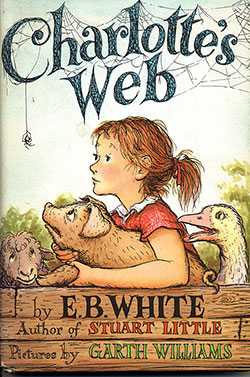
A fascinating article on BuzzFeed is about fifteen children’s classics that have been banned, where and why. This includes James and the Giant Peach by Roald Dahl, Charlotte’s Web by E.B. White, Winnie the Pooh by A.A. Milne and Where the Wild Things Are by Maurice Sendak. Granted some of these were banned  quite some time ago, and some by local municipalities, but some were banned as recently as 2010.

I don’t know about you, but I find this all fascinating. Censorship is no small issue, and the facts about who censors which books and why is an insight into the fabric of this country – what we, as a people, are afraid of, offended by and threatened by to such a degree that we can’t allow our children to read about it. As best I can tell, it’s usually the truth.
 

Restore Your Faith in Humanity

In the humane field, we see a great deal of cruelty and insensitivity to animals. It can be frustrating. It can be heartbreaking. It can be soul-wrenching.

But we can never forget that there are also many, many kind people in the world as well. Below is a video of a few of those kind, everyday people who know that a life is worth saving. And which, as the caption says, can restore your faith in humanity in 4 minutes flat. Enjoy.

Tough Acts to Follow

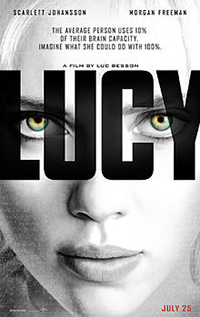
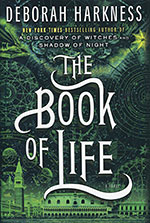
BookOfLife-DHarkness2There’s always a sense of being a bit lost after finishing a fabulous book, not to mention the third and final in a fabulous series. Here I am referring to Deborah Harkness’ The Book of Life, the final in the All Souls Trilogy. But couple that with just having seen the movie, Lucy – well, what will I read or watch that will measure up to either of them?

I can tell you the movie it isn’t and that’s August: Osage County. Great cast, but maybe I’m just not in the mood for such a visually dark movie about family dysfunction, drug and alcohol addiction, and suicide. And that was the first 20 minutes. All that was needed to take it out of the DVD player.

Lucy-MovieI searched my many awaiting library sale books – I realized that after Diana Bishop in The Book of Life and Scarlett Johanson in Lucy, I needed to read about another brave heroine, as totally different as those two were. Probably neither this book series nor the movie is for everyone, but both amazed and captured me. (If interested this is a description of Lucy, but it does tell you how it ends, too, and here is Deborah Harkness’ website for more info on the All Souls Trilogy.)

After a search, I came up with Gathering Blue by Lois Lowry, whom I know as a brilliant writer in another venue, picture books. Its book jacket describes it as a companion to The Giver, but it is a story that also stands independent of that book. I’m hoping Kira is the heroine who will further capture my imagination.

p.s. Cheers to our small town library! Not only had our librarian remembered my interest in reading The Book of Life, but she e-mailed me the moment it came in to let me know. When I returned it, I asked if  The Giver by Lois Lowry might be there, and sure enough, it was. With the movie so close to opening, I expected there’d be a waiting list to read it, but this is  small town … and it has its advantages, this one of many.

Finding Strength, Holding on to Hope

We can easily be unaware or forget how strong kids have to be sometimes, or to remember how strong even we needed to be at certain points growing up. I don’t know anyone who had a totally blissful childhood, and even those who claim to have had one? It becomes apparent in further conversations or getting to know someone better that that’s the way they prefer to see it or maybe need to see it. We all have had our share of problems and pain growing up – some more, some less.

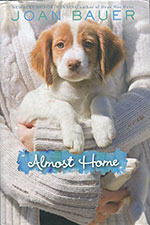
AlmostHome-JBauer2But if we were lucky, we had something or someone to hold onto – a best friend, a pet, a trusted teacher or adult, or a passion that saved us. And that was the saving grace of Sugar Mae Cole.

Reading Almost Home by Joan Bauer, reminded me of how some kids need to be the strong ones, maybe even the parents, when really all they want and need is their parents to take care of them. In this middle grade novel, Sugar and her mother Reba found themselves evicted and homeless. Sugar’s father, who she refers to as Mr. Leeland, failed repeatedly to be responsible to his family, gambling all their money away instead. Sugar, 12 years old, got it. Her mother, in her delusion, still believed he was their knight in shining armor who was always going to come through, but never did.

The story at first reminded me of Jeannette Wall’s The Glass Castle, her autobiography, in which her mother always believed that everything was going to turn out just fine.  She chose to see and never failed to point out the bright side in everything to her children even though they were suffering horribly. In either case, being the adult is a lot to ask of a kid when one or both parents aren’t grounded in reality.

Almost Home was a great story that drew me in the more I read. Sugar accepted a puppy name Shush from another little girl who foisted him upon her because her father was abusing him. Shush became an important constant in Sugar’s life, as pets often do for a child. The unconditional love offered by an animal is a phenomenally powerful form of healing. Sugar had something else – she wrote. She wrote poetry about what was happening in her life, and she wrote thank you letters to people frequently. She believed in the sweetness in life, though she found herself often struggling to find it during this time. She also had a teacher who believed in her and kept in touch even though Sugar and Reba had moved away.

What made this story such a winner is that I could easily relate to Sugar. I’m sure her reading audience does as well. One doesn’t have to be homeless to understand conflict and loss. Holding on to your dreams and hope in the midst of it all is the challenge, and getting to know this young heroine who wasn’t about to give up is what made this read so worthwhile.


The Book Thief

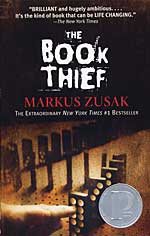
thebookthiefIt is not very often in my experience that you find a book and the movie made from it both outstanding, but in the case of The Book Thief by Markus Zusak, I do. I just finished reading it for the second time … my first a couple years ago, but after seeing the film, I dove back in and read it again, and enjoyed it even more.

The Book Thief is promoted as a YA novel, but it cannot help but reach the heart of any reading adult. Told over a period of about 5 years, the story takes place in Germany during Hitler’s rise to power. The heroine, Liesel, is being surrendered, along with her brother, to another family to foster as the mother cannot afford their care. The sickly brother passes away on the train ride to Molching, is buried in a patch of snowy land alongside that town’s train station. And this is where the book thief, Liesel, steals her first book.

The tale that follows is about Liesel’s life with her foster parents, Hans and Rosa Hubermann, her new and very dear friend, Rudy, and Max, the Jew the Hubermann’s come to hide in their basement. And, of course, it is about Liesel’s learning to read and her stealing books.

There are two factors that set this book apart from so many others. First is Zusak’s exquisite use of language; the book must be read to truly appreciate the author’s brilliance with words. Second is the narrator … Death. Not creepy Death of some stereotypic kind, but a narrator who shares what it is like to gather souls endlessly; how he is present and exhausted at every war; how he sometimes must carry the souls of numerous adults at once, perhaps over his shoulder, but how he always carries children in his arms. His experience of what it is like to be a gatherer of souls is interspersed but does not dominate his third-person narrative of Liesel and those about her.

Because of this unique take on events, the reader is made aware of this shameful period of history in a way that is like no other I’ve ever read. Zusak develops such compassion for his characters, for the Germans, the Jews they are brainwashed to despise, and even many of the soldiers. And shining in the middle of it all is a little girl, who despite losing those she loves time after time, has the courage and compassion to read to all those huddling in a neighbor’s basement during an air raid, who still can risk sneaking into the wealthy mayor’s house to steal a book, giving her one of the true joys she comes to know, reading.

In the movie, Geoffrey Rush and Emma Watson are outstanding as Hans and Rosa, (Papa and Mama). Liesel is played by a newcomer, Sophie Nelisse, one of literally hundreds of girls who auditioned for the part, and she is perfect.

If you were to choose between reading the book or seeing the movie … I can only recommend both, in whatever order suits you. I cannot imagine you will be disappointed. You can visit The Book Thief‘s official website, (click through the opening page and go to videos, upper left or find additional trailers/videos here), and perhaps gain a taste of the book. Importantly, the author was thrilled with the movie rendition of his book. More importantly, I cannot imagine you reading this book, seeing this movie, and not being touched to the core.