Symbiosis in the Natural World … and at My House!

You may know from watching nature shows that there is something in the animal world called symbiosis or mutualism. What it means is that two unlikely creatures form alliances for their mutual benefit. I will offer a few examples with stunning photographs from Wikipedia and then my own humble example.

Perhaps the most well-known example of symbiosis in the animal world – only because there have been so many photographs circulated about it – is that of the clownfish and the anemone.
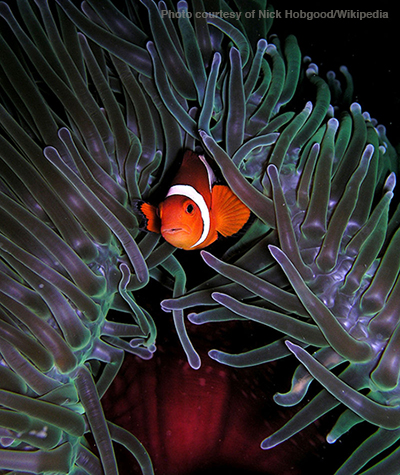
Clownfish-Nick Hobgood2

The charming little clownfish seems to be one of the only, if not the only, sea creature that is immune to the anemone’s sting. That works out perfectly. The clownfish has a place of safety to which he can swim when predators pursue, and in turn, brings dinner right to the anemone.

Then we have cleaner shrimp. These slender, delicate shrimp perform an important function for a variety of sea-dwellers from groupers to anemones to eels, as we see below.
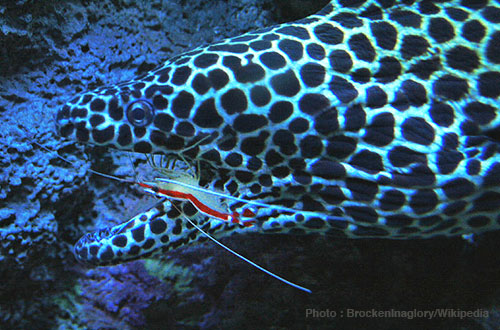
CleanerShrimpMorayEel2

Here a cleaner shrimp does a tidy-up on the mouth of a moray eel. The benefit to the eel is that of a good dental/oral cleaning as bacteria is removed from its mouth. For the shrimp, who is a scavenger, a meal on the go.

Not all examples of symbiosis are under water. For example, oxpeckers are birds that often co-habit with zebras, (and other large mammals), for mutual advantage. The oxpeckers eat lice and ticks from the zebras’ coats and help the zebras by screaming when predators are nearby. Crocodiles and plovers co-exist with the plovers popping right into the crocodile’s mouth. Once again, in exchange for a good dental cleaning, the croc allows the plover whatever morsels he can find.

And then we come to my personal example:
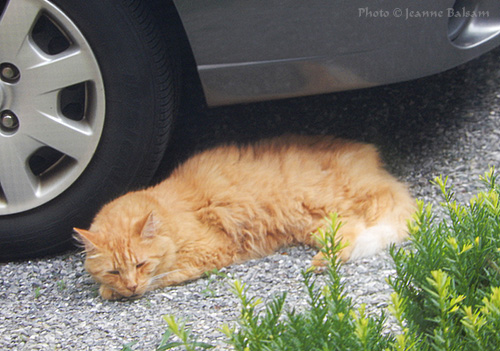
Pumpkin-Symbiosis2

A cat and a car. Perhaps the most mysterious and least understood, (to the average passerby), of symbiotic relationships, there are even tertiary benefits in this relationship – to me!

Pumpkin, my buddy from next door, likes to take his nap in the shade of my bumper. The hotter it gets, the deeper in the cool shade he lies. The benefit to Pumpkin is obvious, but what about the car?

Two stories came to my attention awhile back. My neighbor across the street found one day that his truck wouldn’t start. It was taken by flatbed to his mechanic who found that a goodly number of field mice had set up housekeeping in his engine and chewed through all the wires. So bad was it, that it couldn’t be repaired. It was either a new engine in the truck or a new truck. The neighbor across the street on his other side was driving to work when her car simply stopped running. She coasted to the side of the road, was taken by flatbed to her mechanic, who found that a goodly number of field mice had set up housekeeping in her engine and chewed through her wires as well. Luckily, her car could be repaired.

Getting my drift? So while I am always aghast to see the occasional mauled mouse that Pumpkin, (or his cohort Cloudy, my other buddy from next door), leaves lying about, I also know his presence is keeping my engine intact. Which means I get to drive knowing my wires are not chewed through, both cats get shade and bottomless bowls of food and water on my back porch, and we all get some cuddling and hanging-out time.

Beats eating ticks and lice or screaming at the approach of predators, eh?

Two Eagle Chicks Hatched and Growing!

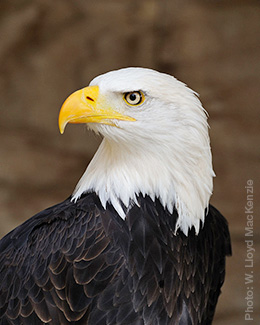
BaldEagle-Headshot2Each year, a pair of nesting Bald Eagles builds their nest on the Duke Farms Estate, and lay their eggs. This alone, is wonderful, but the entire process is caught live on the Duke Farms Eagle Cam.

Bald Eagles had become nearly extinct in New Jersey thanks to the excessive use of DDT, but they are slowly on the rebound, and this pair can be counted on to lay 2 or 3 eggs each spring. Through the eagle cam, you can watch the baby chicks and their doting parents high up in the tree. The first egg was laid on February 17, and the second of the two eggs hatched March 30. You can catch these youngsters as of this date in their pale baby feathers, then watch them grow right through fledging from the nest.

At times, there’s not much to watch on the eagle cam, but at other times, you have the opportunity of watching either or both of the parents bringing in food and feeding their chicks, moving around the nest, and the youngsters trying out their wings. In addition, there are weekly updates on the family as well as photos showing what you may have missed.

It’s a rare opportunity to get a peek at nature, so enjoy the Duke Farms Eagle Cam.

p.s. In reading more of the post notes, I see that one of the eagles hatched in the Duke Farms nest in 2009 was identified 150 miles away in Connecticut, where he had mated with a female, and fledged two chicks in 2014; the pair has nested again this year.

Live Eagle Cam

BaldEagle2


My apologies – I have been remiss! As in years previous, there has been a live eagle cam at the Duke Farms in Hillsborough, New Jersey, and I have lost track and not gotten it up in a blog post til now!

This year, the bonded pair hatched 3 eggs and have 3 growing chicks. Please check them out here! The first egg was laid on February 17, and the third egg hatched on April 1 – so they are growing!

PeregrineFalcon2And to apologize for my negligence, nature lovers, here is a second live stream cam – on the top of a skyscraper in Jersey City, NJ – a nesting box of the endangered species, the peregrine falcon.  The young falcon nestling is 23 days old today, June 3rd. Check out the baby on the Jersey City Falcon Cam.


Your Coffee Changing Your World

NewmansOwnCoffee2Once vilified as being a troublemaker to your health, coffee has been getting a whole new appraisal as of late. Its health benefits are now being recognized. An article in Prevention magazine wrote up how coffee can help lower your risk for Type-2 diabetes.

Researchers at Harvard University looked at 28 studies with more than a million combined participants and found that people who drank six 8-ounce cups of coffee daily had a 33% lower risk of diabetes. The good news is that each cup lowered your risk by 9%, so you don’t have to go crazy with coffee consumption, but just be aware of the possibilities.

What’s even more exciting is that it’s not the caffeine responsible for the effect, so if you drink decaf, this still applies to you. Researchers suspect that it’s a naturally occurring chemical in coffee called chlorogenic acid that reduces the rate at which the intestines absorb glucose.

So that’s how you can change your personal world, but how about expanding your vision and changing the world at large?

The coffee you drink can make an actual difference to the rainforest and to saving the lives of migratory and resident birds. With the advent of agri-technology, sun-grown coffee became the new big thing, but is not without a goodly number of drawbacks. Here are a few differences between your typical coffees and shade-grown coffees in their benefits to wildlife and the environment.

Poco-Coffee2* Migratory birds and many resident birds, (such as Poco, a rescued macaw, right), find sanctuary in the forest canopy of traditional coffee plantations, while in sun-grown coffee areas, there are 90% fewer bird species.

* Shade trees protect the coffee plants from rain and sun, help maintain soil quality, and aid in natural pest control, thanks to the birds. These traditional coffee plantations also help to conserve watersheds, leading to higher water quality and quantity for local populations. Sun grown coffee requires chemical fertilizers and pesticides and year-round labor, placing financial demands on the growers. It also leads to greater soil erosion and higher amounts of toxic runoff endangering both wildlife and people.

* Shade coffee plants can produce crops of beans for up to 50 years, while sun grown plants produce for only 10 – 15.

* The higher quality beans produced by shade grown methods produce a better tasting coffee!

FairTradeLogoWhere do you find shade-grown coffee? Most coffees marked “Organic Fair Trade” will also be shade-grown. Read the labels and check out the producers’ literature and/or web sites for details. Smaller merchants, health-oriented food stores, and, increasingly, your local supermarket now carry shade grown coffee. There is one more bonus – when you see the “Fair Trade” logo on your bag of coffee, or elsewhere, it assures you that the farmers and their families who grow the coffee are being paid a sustainable living wage for their work.

While it may be a bit more expensive than sun grown coffee, it preserves the biodiversity of our planet, the rainforest, and a multitude of bird species, plus it helps humanity. A pretty good deal all in one cup of coffee.

So you can change your personal world, and spread your wings and change a whole lot more of it.