Women Helping Women or ….

If you give to any charities, you are aware that most charities sell their mailing lists to other charities. So where you may be a regular supporter of a few, you receive scores of other appeals requesting your donations to support their mission.

I understand this. What I find particularly difficult is that because I truly believe in the charities I donate to, those organizations with similar missions often resonate deeply with me as well. How do we decide to whom we give when the funds available to give are limited? I already have a stack I’d like to give to and more requests continue to pour in. In the last couple weeks, I must have received at least 20 appeals, some from those I already give to, and many other charities with worthy missions that want me to come on board with them.
The piece in all of these that really caught my eye told me that:

  • One in three women worldwide are beaten, coerced into sex or otherwise abused in their lifetime
  • Up to 70% of women worldwide encounter violence.
  • As many as 6 out of 10 migrant women from Central America are raped on their journey to the United States
  • Native American and Alaska Native women are 2.5 times more likely to be raped or sexually assaulted than women in the U.S. in general
  • In 2010 alone, an estimated 15,000 women were raped in eastern Congo.

The letter went on to describe the circumstances of individual women, one in the Democratic Republic of Congo who spoke out about being raped by a soldier and was raped again and bayonetted in the stomach. There are numerous other bone-chilling instances of women being burned because their dowries were too small, stoned to death because they “dishonored” their families, etc. Reference is made to the many women who, unable to support themselves, endure years of domestic abuse.

It is hard to believe that in our so-called enlightened world with all its technological advances that we remain so utterly barbaric towards one half of the human race … women. Madeleine K. Albright said, “There is a special place in hell for women who do not help other women.”

I feel compelled to help, but how? Do I give financially? Should I give to this organization, (Amnesty International), or to local organizations? Or should I help organizations that fight mammoth industrial giants who will knowingly destroy entire geographical areas and cause widespread species extinction?  Or help American Indian elders without food and heat? Or organizations that fight the worst of animal cruelty? Or … or … or?

Is there not a special place in hell for those of us who are aware of such need and do nothing? I was profoundly struck by these egregious offenses against women, yet I am aware of the need in every corner of the planet, and I, as can we all, can always do something. Whatever it is.

Oddly enough, after reading all these appeals, I remembered why I wanted to write children’s books … I want to open children’s eyes, to show them the love and beauty in the world, but also to show them that they have the power to change what’s wrong. They needn’t know at 5 years old that women are being sexually assaulted throughout the world, but they can know that helping and caring about others, be it humans, animals or our planet, makes a difference. And a well-crafted children’s book can show that in the most un-obvious of ways. So while I’ve yet to figure out where to send my next donation, perhaps  writing from my heart is my unique gift to a troubled world, the gift I can always give.

My guess is that you, no matter how much money you do or don’t have,  have plenty to give, too.

Water, Water Everywhere and Not A Drop to Drink

Forgive me if I’ve misquoted that; it’s only a lead-in anyway … to books, books, and not a page to read. But that wouldn’t be true. I’ve got plenty of books to read. I just can’t seem to figure out what I want to read.

Do you go through periods like this? You want to read a good book, but it seems no matter which one you pick up, its not the right one for right now? That’s where I am. Restless Reader. I’ve turned back to my selection of yet-to-be-read books from last Spring’s book sale and perused other bookshelves and nothing is jumping out at me. I want the book that reaches out, grabs me and sucks me in with fast moving prose and a faster moving storyline. And, of course, it must be very well written. One of the books that comes to mind like that was White Oleander. I need one of those.

So I grabbed this book, Ghosts by John Banville, as the jacket flap reminds me of why I picked it up in the first place. Who can’t get into a good ghost story? We shall see.

And I now have a backup plan. If this isn’t the one, I’m heading over to my local library and getting The Girl With the Dragon Tattoo. Just saw that in the movies and it was one of the best movies I’ve seen in a long time. The book can only be better, right? But for now, I’m pinning my hopes on Ghosts.


A Way with Words – Heart Songs

I’m wondering if E. Annie Proulx is an acquired taste. She is unique among authors I’ve read for any number of reasons, perhaps most importantly … does she have a way with words!

I first met Ms. Proulx when I read The Shipping News, and found her style engrossing, challenging to read, and simply like no other. I most recently picked up her collection of short fiction, Heart Songs. She writes about people we average Americans rarely, if ever, see, in this case the longtime residents of rural New England, whose lives and lifestyles are coming into sharp collisions with wealthier newcomers embracing the “country life.” In this regard, reading about the people in these short stories was something akin to watching the movie Winter’s Bone, i.e., seeing for the first time how a segment of Americans live, people of whom we generally have no knowledge. It’s fascinating, sometimes disturbing and frightening, sometimes heartbreaking. Yet Proulx is not asking for pity or judgment for her characters. They are who they are; she is simply telling their stories.

But oh! her way with words … “Often his razor tongue stropped itself on the faults and flaws of his dead parents …”; “The corpse of a less-wise raven lay beneath a bush like a patch of melted tar. The fox rolled in the carcass, grinding his shoulders into it. He got up, shook himself and continued his tour, a black feather in the fur of his shoulder like a dart placed by a picador.“; ” … his face dark as a smoked ham, eyes like bird’s eyes, orange and inhuman.”

Whose writing could fail to be enlightened by an author whose use of words is so intense, lyrical, and magnificently descriptive. If, in each thing we read, we hope to not only gain from the enjoyment of the story itself but also some wonderful addition to our own skills as writers, then E. Annie Proulx’s Heart Songs speaks volumes on how to say what we mean. And how to say it with an incomparable richness.


I Wanted to Feel What They Felt

Once you become engaged more seriously in writing, you become much more observant of what you’re reading. It’s not that I am judging or critiquing as I read; I just seem to be much more aware of what is and is not grabbing me.

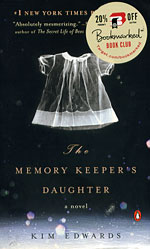
I just finished Kim Edwards’ The Memory Keeper’s Daughter, recommended by a friend. I actually found it hard to finish; it was simply not engaging me sufficiently. And I know why.

It wasn’t the premise. The premise was excellent and intriguing – David is a doctor who delivers his wife Norah’s baby in a snowstorm at his own clinic, unable to get to the hospital, further away. A healthy baby boy, Paul, and an unexpected baby girl, Phoebe, who clearly has Down’s Syndrome, are born. It is 1962 – a time in which it was sadly common to “get rid of” such babies and put them in institutions. The husband, with weighty memories of a sickly sister who died at 12, asks his nurse, Caroline, to take the girl away to such an institution, telling his wife that the infant died at birth. Caroline brings the baby girl to the institution and cannot bear to leave her there; instead, she brings Phoebe home and secretly raises her on her own. And so begin lifetimes of secrecy and deception.

The potential is here for so many feelings – Norah’s juxtaposition of  joy at her son Paul’s birth, and sorrow in her unknown daughter Phoebe’s supposed death; David’s own loss and guilt; Caroline’s joy in becoming a mother, tangled with guilt; the later developing conflictual feelings between Norah, David and Paul as he grows; and the challenges in Caroline and Phoebe’s lives. So why didn’t I feel them?

In my humble estimation, it seemed the author wrote from a distance. There was plenty of description of what these characters went through, but it wasn’t enough. I wanted to feel what they felt, and I didn’t. I wanted to spend haunted nights with Norah … I know what she did about her feelings, but I didn’t feel her heart. I wanted to feel Caroline’s conflict in a gut-wrenching way. I did not. And so it wasn’t until near the end of the book that I finally felt suspense and became more involved in possible outcomes, and that’s just too late. Overall, I was disappointed.

Granted, this is one woman’s opinion. True that I just came off reading a very powerful author, Barbara Kingsolver. But as I picked up E. Annie Proulx’ collection of short fiction, Heart Strings, I suddenly reconnected to the power of words and their ability to fully engage me, and I can’t wait to get back to this book.

Such things are always reminders of what a challenge it is to really write well, to really engage and touch a reader. Writing novels sure isn’t for sissies.

Reading Feeds Writing (still)

One of the things I love talking about with friends is what books we are reading and what we are writing. The two topics are often in the same conversation.

One friend is working very hard on her middle grade novel. I am generally working on picture books; however, a middle grade novel is slowly writing itself in my head. I’m asked if I’m not writing this down. I am not. But little by little I am getting to know my characters and I have a fair idea of where they’ve come from, what is shaping their dilemmas and where they are going. When the time is right, and when I know them better, I will begin the writing process.

Meanwhile, I read.  In talking with my friend, we discussed the 3 books I have just finished. She had not read two, but was interested in doing so for the reasons I’ll describe. She was reading, but lost interest in and abandoned, the third.

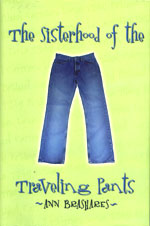
The first is The Sisterhood of the Traveling Pants by Ann Brashares. I had seen the movie – it was light, probably a “chick flick” – but I liked it.
Advantage to Writer? Observing and understanding realistic  dialogue and relationships between teenage girls.

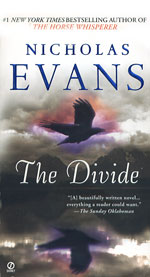
The second is The Divide by Nicholas Evans, probably best known as the author of The Horse Whisperer. I also read The Loop by him. What a way Evans has of engaging you in a story, building up suspense, then taking a sharp turn away to another character, leaving you wanting more. I only hope, whenever I write my novel, that I can hold a reader’s interest like he does.
Advantage to Writer? Learning how to pace a novel for maximum effect.

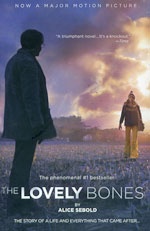
The third, (and unfinished by my friend), is The Lovely Bones by Alice Siebold. This was a daring first novel, told from the first person POV of a 12 year old girl who is raped and murdered, and is now in heaven. This could have been really strange, quirky or sappy. It was none of these, and it had my attention through to the end.
Advantage to Writer? Learning to trust in your own unique story ideas, that writing from the deepest and most real place within is where the best stories will always come from.

I trust that all I’m learning is soaking into my unconscious and always making me a better writer. And so the enjoyment of wonderful books continues. What is your reading bringing to you?