What’s in A Name?

One thing we are all given upon arrival in this world is a name. That name will follow us, with rare exception, throughout our lives to the day we die. Others respond to our names, as do we. What would the effect be if we didn’t have one?
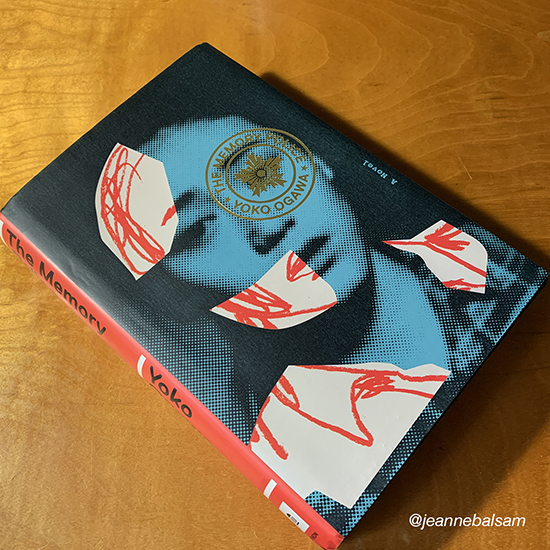
This is something I wondered about when I finished this book. Why didn’t the story, which was both emotional and urgent, have any feeling of emotion or urgency? And I questioned one unusual quality in the book – none of the characters had names. Only a dog, who was left behind when his family was taken, was given a name by the writer.

Written in first person, the writer was nameless, as was her dearest friend, who is only referred to as “the old man”, and her beloved editor, who is only known as “R”. This depersonalization by the author is obviously intentional, but what was her intent?

The book’s premise hooked me – an island where things are constantly disappearing, and people’s memories along with them. The disappearances are enforced by the Memory Police, a somewhat Nazi-like army. The editor, R, is able to retain all his memories since childhood despite so many of the related items having disappeared from the island. This is sure to make him a prime target to be “disappeared”, so the writer and the old man construct a secret room to hide him.

This has all the elements of a great story; but something was lacking – connection. Did all the characters remaining nameless make a difference? I think it did. Only the rescued dog was given a name – Don, and each time his name was mentioned, I perked up. Oh – what’s happening with Don?

Names are important. They are the first step in how I know you, how I call you. Who are you without a name?

Go Back to Go Through

Lately, I find myself drifting back through time. It seems necessary to my creativity for me to go back before I can go through.

I am searching – I want to use my writing and art to reach out in a different way than I have in the past. How will I do that?

Conversations about art, music, and writing with people in my life now get me reflecting. And remembering … recently, I felt a song trickling through my mind. It was a Peter, Paul and Mary song, but I could only grasp a phrase. A search brought it back to me – Bob Dylan’s Dream. And with it, a flood of memories.

One memory was of my junior and senior years in college when four friends and I would hang out in the evening in Susie’s apartment and play music and sing together. They all played guitar, and we all could sing and knew a wide range of folk songs. Just sitting and singing and playing by candlelight into the wee hours of the morning were such incredible times. I don’t yet know how that memory will play a part in my going forward, just that it will.

Bob Dylan’s Dream, written by Bob Dylan, sung by Peter, Paul and Mary, 1967

I recently went to see a fabulous show of Japanese printmaking from the 1950’s to the present. I looked so, so closely at those stunning prints, noticing just how they were made, recalling the necessary techniques. I studied printmaking for two semesters – woodcutting, etching, and lithography. And these masterful Japanese prints brought that back, too.

“Red Wall”-1992. Zinc etching and woodblock print on paper by Hodaka Yoshida

I am being readied. I am preparing for some leap forward that I cannot yet see, but these memories are stirring the things I need to know, so long put aside while I did other things with my life. Sometimes it seems like I’m dreaming or wasting time, but I know I’m not.

I’m taking a deep breath and – not always so easy – trusting in the process.

How We Remember the Past

Memory is a funny thing, isn’t it? It’s selective, exclusive, accurate, fictional, unreliable, illuminating, calming, and so much more. One of the ways we know how unreliable memory is is to have two people observe the same series of events and later ask that they recount them. To listen to some accounts, you would not think the people had witnessed the exact same events! If nothing else, memory is personal.

But the beauty of memories, I think, is their ability to bring peace, comfort, and happiness. The photo above, one of many likely sent around in a Power Point presentation (artists never recognized), is from a group of water-themed images. I am reasonably sure it’s Cape Cod or thereabouts. It’s had a special spot on my desktop for a couple weeks now even though I usually have a group set to change every hour.

Every time I look at it, I feel some deep sense of calm, and that calm comes from a memory. When I was a child, my parents sometimes took our family on driving vacations, that trusty AAA TripTik as our guide. Though I can’t remember how old I was at the time of this particular trip, I can remember the busy, narrow streets of Provincetown, bustling with locals and tourists alike. I can see the small, white clapboard shops and sparkling jars and bottles in every color of the rainbow, flags, kites, and … ice cream. I just remembered the ice cream.

And then there was the beach. What I remember so vividly is how totally different the Cape Cod beach was from the beaches where I grew up and frequented here in New Jersey.  The smell of the air, the texture of the sand, the look and feel and scent of the water as it rolled in — so much gentler than the crashing waves at the Jersey shore – the trees and greenery never found at any of the local beaches I’d ever been to. The fact that I have such consistently positive memories of Cape Cod tells me something else. All of us must have been happy.

So this image is going to rest a while longer on my desktop. More importantly, it is my new go-to peaceful place to visit when work gets too hectic, people unreasonable, when stress cranks up a bit. In our memories, there is always a place of calm and respite. This is mine. Feel free to come with.