Drawing Horses

What to do when you’ve been too long away from one’s children’s book illustrations? Get back in! And sometimes how I get back in is to wade in – so to speak – with a totally different subject matter than that of my current children’s book.

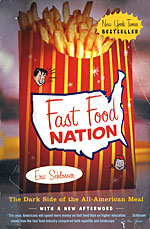
I’ve just been thinking of horses for a number of reasons, so started to look through some reference material, deciding on a color photo of 2 mares and their foals. Simple pen and ink, something that I always enjoy working in and is a very relaxing medium for me.

The result – tada!

Illustration Saturday – Featuring … Me!

I am honored to be featured this Saturday on Kathy Temean’s blog – Writing and  Illustrating – her wonderful blog all about the children’s book industry. Kathy is the Regional Advisor of the New Jersey Society for Children’s Book Writers & Illustrators, (NJ SCBWI), and blogs daily about every aspect of the field, writing in general, etc..  (And yes, I realize this is one day late, but sometimes this is how life just goes!)

Not too long ago, Kathy introduced a new feature on her blog called Illustrator Saturday in which she showcases children’s book illustrators, information about them, examples of their work, and a peek into their drawing process and where they create their masterpieces. I was honored that Kathy asked me to please be this Saturday’s illustrator feature!

And it’s quite exciting to see my artwork shown off on someplace other than my own web site, too. If you are involved in or a fan of children’s books illustrations – or just children’s books, (or maybe just a fan of my own work), please take a look at Kathy’s blog about children’s books and check out what I’ve been up to. Hope you like it!

A Writing Tip or Two

That’s one thing you can find plenty of online and in books … writing tips. But every now and then we stumble across some especially useful ones – or perhaps ones that particularly resonate with where we are at the moment.

Awhile back I found some I really liked when Kathy Temean, RA of NJ SCBWI, posted on her blog 20 Tips for Writers which Jane Yolen gave at the end of the SCBWI Winter Conference in NYC. Some very basic, some common sense, all good advice and a great post from Kathy.

I also found some tips  in a short, but very useful article as I was thumbing through my 2009 CWIM (Children’s Writer’s & Illustrator’s Market). Entitled 6 Reasons to Stop Writing (and One Reason You Shouldn’t) by Donna Gephart, each section addresses the various reasons why we all, from time to time, feel like giving up – we’re not good enough, there’s never enough time, fear of failure, etc. And of course, she tells us why they really should be ignored! At that exact moment – almost as if I knew that help was in that 2009 edition – I really needed to hear some of what she wrote. She also includes some amazing rejection stories, including Anne Frank’s Diary of A Young Girl, rejected 15 times to finally be accepted by Doubleday. Over 30 million copies are in print.

I couldn’t find this online for a link, so you’ll have to check the 2009 CWIM, but take heart – there are lots of wonderful tips out there to pull us along when our feet are dragging!

A Wind in the Door – Madeleine L’Engle

A permanent fixture in my children’s book bookcase is the classic, A Wrinkle in Time by Madeleine L’Engle. For whatever reason, I recently plucked the sequel to this book, A Wind in the Door, from among the many YA, MG and adult books that I snared from the county’s annual library book sale, awaiting to be read. And once again, a moment of synchronicity.

To me, L’Engle, who passed away in 2007, is a metaphysical teacher. Some see her writing as having a Christian bent; I, however, find it much broader. Her use of the fantastic to engage readers in the greatest battle of all time  – good vs. evil – is spectacular. Two children, Meg Murray, our heroine, and her friend Calvin O’Keefe are called to join the battle, beginning so innocently as Meg’s ailing younger brother, Charles Wallace, announcing that there is a dragon in the twins’ vegetable garden.

Proginoskes, however, with his many wings, each inhabited by many more eyes, is not a dragon, but a cherubim. “I suppose you think I ought to be a golden-haired baby-face with no body and two useless little wings?” says he.

Throughout this novel, the reader is asked to question what is and what is not real, to consider the powers we have, among them the ability to communicate with one another without words, and to understand the ultimate power of love. Love changes everything is L’Engle’s message. Indeed, it can save one small child and the entire universe. But there’s a fight to be had for it. One needs to trust in oneself and in the good of others, even though they’ve lost track of it themselves, to not judge by appearances, to believe that animals can be teachers and guides, and to be willing to travel in galactic space as well as the inner space of mitochondria.

And L’Engle does all this in a completely magical yet utterly believable way.

As soon as I finished A Wind in the Door, I knew I would go right back in and read it again. Then a re-visit of A Wrinkle in Time. Then I believe, I will order the other 3 books in her “time” series.

For more information about Madeline L’Engle, who has written so much more than these few mentioned books, visit her web site. Or to understand her in a nutshell, read her acceptance speech of the Newbery Award she received for A Wrinkle in Time.
The Call to Read Non-Fiction

Are you a voracious reader? Love to read? I consider myself blessed in that I really do love to read. As a small child, I read anything I could get my hands on, and today is no different. Books, magazines, blogs, newspapers, cereal boxes … it’s all good.

However, I would say my strongest leaning is towards good fiction … who doesn’t love a really good story? And if that’s adult fiction, YA or a picture book with fabulous illustrations, I’m in. Recent reads, which I’m hoping to post about, include Leaving the Bellweathers by Kristen Clark Venuti, White Oleander by Janet Fitch and Eggs by Jerry Spinelli … all great. But what about non-fiction? Although I am generally reading a book of a metaphysical nature at whatever leisurely pace that goes, (which is always non-fiction), every now and then I feel a call to read non-fiction of some other sort.

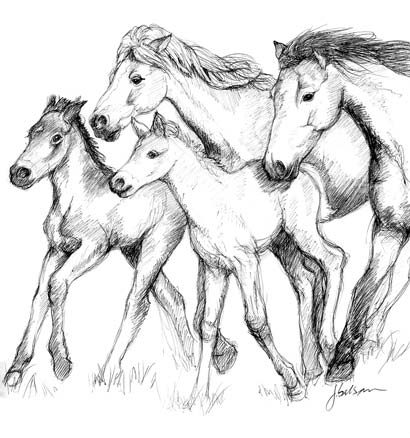
Does non-fiction cleanse the “fiction palate” for you? Does it bring you back to earth and/or provide grist for the mill? Fast Food Nation by Eric Schlosser is one of the many books I’ve picked up along the way at library sales, yard sales, etc. and has been sitting on my shelf, waiting. What inspired this read is twofold – my interest in the general subject of the status of our food supply and also, that I saw the movie. I read in advance of seeing it that the movie was nothing like the book,  and so far, this certainly is true.

It was a great movie for what it showed … but not for everyone, I’m sure. It’s packed with big name stars who clearly believe in Schlosser’s fast food message – Greg Kinnear, Patricia Arquette, Bobby Cannevale, Kris Kristofferson, Bruce Willis and more. For those who want strictly entertainment, it’s not for you. For those who want to know about the myriad areas of damage that befall people, animals, and the environment, not to mention how your health is affected, from fast food burgers, you may appreciate the wake-up call. A number of fictional story lines are artfully woven together about individuals’ lives who are all affected by the world of meat-packing and fast food. I was already aware of a great deal of this, and it was still an eye-opener for me. The movie is about as far from the book as one could imagine – good fiction created from painstakingly researched non-fiction. Quite a feat!

So back to non-fiction and why we read it …  in this case, I wanted to read the facts behind a movie and learn more about how the fast food empire in America came to be built. What about you? Do you enjoy non-fiction as well as fiction? Perhaps more? Does it cleanse the “fiction palate” for you? And last, but not least, might it inspire your own writing?