How Is Your PiBoIdMo Coming Along?

PiBoIdMoJournal2We’re halfway through November. For some writers, you are feverishly striving to complete your 50,000 words in NaNoWriMo (National Novel Writers’ Month). I have to say, while I need a swift kick in the butt to get writing as much as anyone from time to time, 50,000 words in one month is more of a kick than I’d ever want.

I much prefer PiBoIdMo, the picture book writer’s alternative for November – Picture Book Idea Month – created by Tara Lazar and in which we are challenged to come up with an idea a day for a picture book. (Though really, this could just as easily apply to ideas for novels, short stories, songs, etc.)  I find that the one idea per day happens most of the time, but sometimes the creative juices seem to produce two ideas today, brain too work-slogged for an idea tomorrow, two PB ideas the day following and so on. I just do my best to have a minimum of 30 ideas by the end of the month.

If you are doing PiBoIdMo, I suspect, like me, come Nov. 30 you find some of your ideas are laughably useless, some have a certain amount of potential, and some are actually quite promising. Where do you get your ideas from? Personal experiences past and present can inspire ideas, as well as family, friends, and pets, but also what’s going on in the world – news of all kinds, music, stuff you read. Sometimes, even an old story we’ve already written gives birth to a brand new – and better – idea.

Here’s the best idea – have fun doing it. And if this is the first you’ve heard of PiBoIdMo, join in and challenge yourself!


Letting Go and Making Room

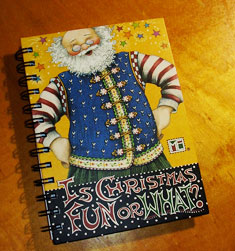
Journal-BlkLime2More and more lately I’m looking around and wanting to let things go. Personal things. (Well, aren’t they all personal things?) OK, some very personal things. Journals, things related to past loves, books, and of course, clothing. There’s always clothing we could lose. I really am not someone with a lot of clothing, yet I want it gone.

The journals. As mentioned elsewhere in this blog, I journal almost daily. I write in the vein recommended by Julia Cameron of An Artist’s Way, and use it as kind of a morning dump. Get all the crap out of my head that’s swimming around unpleasantly so I can move on with my day. I find it quite healing, comforting, and if nothing else, it keeps me writing something. When I’m done one journal, I move on to the next that I have recently purchased. (TJ Maxx, BTW, always has a great selection of journals, if interested.)

The completed journal sits on a shelf with numerous others. But why save them? So today I was in the mood to skim through one of them to see if, indeed, I had left any pearls of wisdom behind before sending it to the great beyond, aka a dump of its own. Skimming reveals certain patterns – things that I have been struggling with over the time period it covers, my search for answers, where I find clues, what I’ve accomplished, what’s made me happy, where I’m going, and what’s keeping me from getting there. It yielded one important piece of information about a medical issue, so I ripped that page out.

And now I can give this journal the old heave-ho. There’s several more that I think will get the boot in the next day or so. It will open up a small bit of physical space, but more importantly, it will open up space in me. Letting go is always helpful. Not to say we shouldn’t preserve some memories, but at a certain point, they’re not even us anymore. Do they matter? Do they all matter? or can we just let some go?

Because when we let go, we make room for what we want to come in. We are always in transition, at some times more intensely than at others. But when we’re looking to grow and change, making room in our hearts, our minds, and even the actual space in our homes can be welcoming. It can be a little scary. It can be very good. We have to be willing to … just … let … go.


Fiction Develops Empathy

We all know that reading has incalculable benefits of every kind. And although it seemed so obvious when I read an article about fiction readers having more empathy, it never had occurred to me that way.

girlreadingtodog2

It makes perfect sense that as we read about the experiences and feelings of others, putting ourselves into their shoes, we consider these things from an entirely different perspective. But now science is bearing out that each time we’ve opened a book of fiction we have been learning to understand and empathize with others in real life from when we first began to read.

Scientists have determined these results through studying the effects of reading on the brain through MRIs, polls, surveys and experiments. And when the book is more challenging, it helps us become smarter as well as more empathetic.

An example comes to mind. Some time ago I read Silence of the Lambs by Thomas Harris. Hannibal Lecter was a monster with no conscience and terrified many a reader of this novel. Later on I picked up the “prequel”, if you will, of this book, Red Dragon. What truly blew my mind about this book is that Harris, in describing the cruel childhood of Hannibal Lecter, actually made me feel understanding and empathy towards him. No small feat, but a comment on the power of the well-written word to do just what science is now proving – reading fiction engenders empathy towards others, even in as extreme a case as this one, and this was a character of fiction. The implications of how this translates to the real world are immense.

So all you readers and writers of fiction – forge on. You are making the world a better place.

Missing Us

Do you ever find yourself missing you? And by that I mean a part of you that you have always enjoyed but for which there seems to be little or no time nowadays?

Walnut-BundtCake2

On the rare occasions that I bake these days, I am reminded of times when I really used to cook and bake a whole lot more … and loved it. So when I do get in the kitchen, and take my sweet time baking a cake, (which may be to raise funds for the local equine rescue I help or when I’m a dinner guest and have offered to bring dessert), I not only enjoy it, but feel like I’ve re-found a part of myself. I call her the “domestic dolly” part of me.

Dolly likes to cook and bake – from scratch, of course – likes to sew, paint stuff – walls, furniture, do crafts – and yes, sometimes, actually enjoys cleaning … or at least the result. But as our lives get busier and stay busier, other things demand our time and attention, and these may fall to the wayside,  and hey, I’m not 28 anymore. Yeah, then there’s that.

So we pick and choose, and try, somewhere along the line, to occasionally rediscover the parts of ourselves that sometimes get lost in the shuffle. It’s a challenge. Life has different demands than in the past. We have different goals. But it’s good to remember ourselves, even if for a little while.

What about you – are you a cook or baker with no time? Love to go out dancing? Travel? Play music? Hike? Just curl up with a good book?

My suggestion? Dust off that `you’ and take her or him out for a spin. Find that time or make that time. If it’s something we love, we can’t afford to go missing.


From One Novel to the Next

While I have been rather remiss in blogging, at least I have been reading. Life can pull us in many directions, and some take our blogging time. So be it.

ByTheLight-FathersSmile-AWalker2As I am beginning a new book – chosen from among the many that sit on my shelves waiting to be read – I remember exactly why I picked it up at the big book sale awhile back. I’d read a short story titled am i blue? by Alice Walker over 20 years ago in a magazine. It was about a horse in a meadow alone, bored, betrayed. The meadow was outside a home where Walker was living, and her experience of Blue told me volumes about her appreciation of the hearts and souls of animals. This story was later banned, I found, by the California School Board in 1994, as was, of course, The Color Purple, by all those who feel they know best what you and I should read and think. (You can read am i blue? and some commentary on the The Westcoast Post blog.)

At some point later in time, I came across this (now very famous) quote by Alice Walker, “The animals of the world exist for their own reasons. They were not made for humans any more than black people were made for whites or women for men.” And though it was not a period in my life when I had the time to read novels, I simply liked her even more.

Fast forward to a few years ago, and I came upon her novel, By the Light of My Father’s Smile. How could I not pick up a book with a title like that?  Knowing that, if nothing else, she and I shared something so important in common – a respect for, and appreciation of, animals.

LayItOnMyHeart-APneuman2I’m looking forward to starting this novel by Alice Walker, but admittedly, my heart is still half living with Charmaine Peake in Kentucky. I just finished Lay it on my Heart by Angela Pneuman, a novel about a 13 year-old girl whose father is, or believes himself to be, a prophet. Living in a small town crammed with churches of every faith possible, where one third of all the men are preachers or studying to be one, Charmaine and her mother Phoebe have been barely getting by in the year while her father has gone to the Holy Land, instructing them to live by their faith alone. This is a coming of age story where Charmaine must come to grips with all that is implied in having the father described, a mother who has felt compelled to honor his wishes, and a growing awareness that perhaps she isn’t and cannot be the holy and God-fearing person that has always been expected of her.

Charmaine’s relationship with her mother is best-described as that beginning struggle for independence, yet she feels constrained by her father’s beliefs of how she should behave as defined by the Old Testament and her desire to please him. Charmaine makes her own way in this story slowly, finding hypocrisies and truths all along the way. She grows to find friendship where she would have least expected it and a willingness to look at life in a way she would have never thought possible. The characters and relationships in this novel are very well-defined, so much so, that you are almost unaware at times of the truly impoverished state she and her mother are forced to live in because of her father’s choices. My one criticism of this book, even though I understand why they’re there, is the seemingly never-ending quotations from the Bible in the first third to half. I have no doubt that this is indeed the reality for the population written about (especially since the author is from Kentucky), but it often felt excessive, and made me wonder should I continue on. I’m glad I did, and I’m still digesting it all. Alice may have to wait just a wee bit.